I remember the first time I sat across from a new teacher who was nearly in tears. She had a classroom full of students who were both English Language Learners (ELLs) and had significant cognitive disabilities. She looked at me and said, “I have 50 minutes for English, and I’m spending 40 of them just trying to help them decode the first sentence. The data says they aren’t moving. What am I doing wrong?”
I’ve been in that exact spot. In our specialized setting, we often feel the “Double Burden” of language acquisition and cognitive barriers. We want our students to be workforce-ready, but if they can’t access the text, the door to that certificate feels locked.
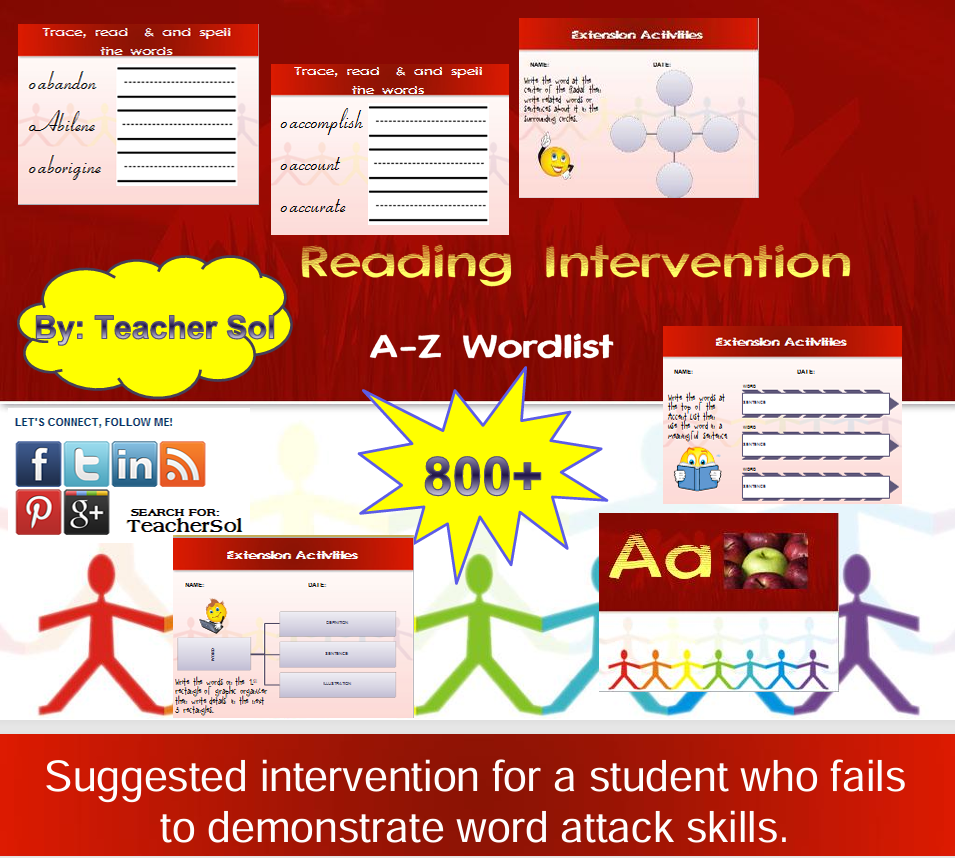
Today, I’m pulling back the curtain on the reading intervention strategies that actually move the needle—backed by the latest 2026 data. We’re going to talk about how to stop “testing” their English and start “teaching” their reading. And since I know your time is non-existent, I’m sharing this FREEBIE Reading Intervention 800-Word List A-Z to give you a head start on your word walls.
1. The Data: Why Scaffolding Isn’t “Cheating”
Recent meta-analyses from 2024 and 2025 have shifted our understanding of “Productive Struggle.” For years, we thought we had to immerse ELL students in English to “force” the brain to adapt. The data now shows the opposite: Bilingual scaffolding increases English reading retention by up to 35% in students with learning disabilities.
When we use the student’s home language to anchor a concept, we aren’t slowing them down; we are giving them a cognitive “hook” to hang the new English word on. In our 3-hour daily block, this is the difference between a student who checks out and one who stays engaged.
2. Bilingual Scaffolding Techniques (The “How-To”)
When you are in your “Whole Group Instruction” (I Do) phase, try these three techniques to bridge the gap:
A. Cognate Consciousness
Did you know that 30-40% of all English words have a Spanish cognate?
- The Strategy: Highlight words that look and sound similar in both languages (e.g., Family/Familia, Computer/Computadora).
- Workforce Connection: In Digital Literacy, we use this for technical terms. It builds immediate confidence.
B. The “Preview-View-Review” Method
- Preview: Spend 5 minutes explaining the “Big Idea” of the text in the student’s native language (or using high-contrast icons).
- View: Conduct the 50-minute English lesson in English using the FREEBIE Word List as a desk reference.
- Review: Spend 5 minutes summarizing in the native language to check for comprehension.
C. Multimedia Glossaries
Don’t just provide a translation; provide a video.
Video Example Idea: Create a 30-second clip of yourself performing a task (like “logging in”) while saying the word in both English and the student’s native language.

By modeling the metacognitive process, you are teaching them how to be their own teacher. You are showing them that “struggle” is just a part of the investigation.
3. Progress Monitoring: Moving Beyond “Yes/No”
If your data sheet only has “Got it” or “Didn’t get it,” you are losing 80% of the story. For students with significant disabilities, we need to track The Prompt Hierarchy.
The 2026 Progress Monitoring Chart (Example)
| Date | Task: Decode “Earn” | Level of Support | Accuracy |
| 2/1 | Read word from card | Physical Prompt (Hand-over-hand) | 20% |
| 2/3 | Read word from card | Gestural Prompt (Point to first letter) | 50% |
| 2/8 | Read word from card | Natural Cue (Word on FREEBIE List) | 80% |
Why this matters: Even if the accuracy stayed at 20%, a move from a “Physical” to a “Gestural” prompt is massive progress. That is the data that wins at IEP meetings.
4. Apps That Actually Help (My 2026 Top Picks)
I don’t have time for “fluff” apps. These are the tools I use during “Individual Work” (You Do) to boost independence:
- Rewordify: This is a lifesaver. It takes complex text and simplifies the vocabulary instantly.
- Immersive Reader (Microsoft): It’s built into almost everything now. It provides picture dictionaries and word-by-word translation.
- Tar Heel Reader: A collection of free, easy-to-read, and accessible books on a huge range of topics. I use it for my Level 1 and 2 learners.
5. The Metacognitive Shift: “Think Alouds”
In my Digital Literacy block, I never just “do” a task. I narrate my brain.
“I’m looking at this word… ‘Budget.’ It starts with a /B/. I know that sound. Let me look at my FREEBIE Word List… ah, here it is under ‘B’. This means my money plan.”
By modeling the metacognitive process, you are teaching them how to be their own teacher. You are showing them that “struggle” is just a part of the investigation.
Conclusion: You Are the Bridge
New teacher, you aren’t just teaching a student to read “Cat” or “Hat.” You are teaching a student to read their future paycheck, their safety signs, and their digital rights.
Using interventions that respect their primary language isn’t “watering down” the curriculum; it’s building the scaffolding that allows them to reach it. Start tomorrow by printing out that FREEBIE Reading Intervention 800-Word List and taping it to a few desks. Watch who reaches for it. That’s your first win.
Ready to Deepen Your Impact?
Don’t navigate this alone. Let’s build your “Think Tank” together.
Your Action Plan:
- Select a “Power Word”: Pick one word from the intervention list and find its cognate tonight.
- Update Your Chart: Add a “Support Level” column to your next data sheet.
- Join Our Community:
Reflection Question: When you look at your students who are struggling to read, do you see a “Decoding” problem or a “Confidence” problem? How could a bilingual scaffold change that for them tomorrow?