How My Special Education & ELL Students Used “Making Inferences” Lesson — And What Actually Worked

As a Special Education and English Learner teacher, I used this lesson with students who struggle with reading comprehension and written expression at my Washington DC school. For my students—many of whom navigate the world through Individualized Education Programs (IEPs) for significant cognitive disabilities and the added layer of English language acquisition—abstract concepts like “inferencing” … Read more

Why Did I Put Myself Through National Board Certification?

National Board Certification for Exceptional Needs Specialists isn’t just a fancy title; it’s a grueling, beautiful process that forces you to analyze every single instructional move. By focusing on “clear, consistent, and compelling” evidence of student growth, this journey turns “good” teachers into reflective masters who meet the complex sensory and linguistic needs of every … Read more

AI Tools for Special Education Teachers in 2026: 20 Time-Saving Apps I Actually Use

I’ll never forget the “Spring Break of 2024.” I spent the entire week huddled in a coffee shop, surrounded by piles of data, trying to write 12 annual IEPs and plan a new vocational unit on office safety. By Wednesday, I was crying into my latte. I loved my students—especially my learners with significant cognitive … Read more

10 AI Prompts for Every Subject Area in Special Education

Welcome to the front lines of modern special education. If you’re reading this, you’re likely a few weeks or perhaps a few months into your first year, feeling that familiar mix of passion and “how-am-I-ever-going-to-finish-this-paperwork” dread. I’ve been where you are—standing in a classroom in Washington DC, balancing the needs of students with significant cognitive … Read more

How My Special Education & ELL Students Used This “Analyzing Text Features” Lesson— And What Actually Worked

I used this lesson with students who struggle with reading comprehension and written expression, and what I discovered was that for my students, a picture truly is worth a thousand words—especially when those words are embedded in a complex digital manual or a dense informational text. My name is Maria, and my classroom is a … Read more

From Data to Direction: What Assumption Iloilo’s Teachers Told Us — and the Strategic Plan That Answers Them

I’ll be honest with you. I walked into the 2-Day A.C.C.E.S.S. Literacy Framework™ Introductory Masterclass at Assumption Iloilo with a mix of excitement and nerves that I haven’t felt in a long time. Not the nervous-I-don’t-know-what-I’m-doing kind. The nervous-this-matters-so-much kind. These are Filipino teachers. My teachers. The kind of educators who show up for every … Read more

Books, Belonging & the Bilingual Brain: Celebrating Autism Acceptance Day and International Children’s Book Day in Your Inclusive Classroom

April holds two powerful celebrations — Autism Acceptance Day and International Children’s Book Day — and for bilingual special educators, they belong together. Diverse books with visual supports, social stories, and sensory accommodations aren’t “extras.” They’re the instructional backbone of an inclusive, neurodiversity-affirming classroom. Read on for practical strategies you can use this week, plus tools that make implementation easier.

Designing Lessons for Real Kids, Not Pinterest: What Actually Works in My SPED Classroom

Effective support for bilingual students with disabilities requires a shift from viewing labels like “SPED” or “ELL” as deficits to seeing them as intersections of unique strengths. Key strategies include using Universal Design for Learning (UDL) to provide multiple means of representation, such as digital books, tactile symbols, and visual schedules.

Consistency is vital; use the same vocabulary across home and school settings to reduce cognitive load. Scaffolding—starting at a student’s current level and using sentence frames or graphic organizers—empowers learners to engage with complex content. Finally, leverage assistive technology like speech-to-text and translation apps to bridge communication gaps. By fostering collaboration between families and educators, we create inclusive environments where every student can advocate for themselves and succeed.

From “Cheating” to “Solving”: The New AI Mindset

The integration of artificial intelligence in education necessitates a shift from a “cheating mindset” to a “solving mindset,” where AI serves as a Socratic partner rather than a shortcut. By adopting “directive prompts,” students can use AI to deconstruct complex problems, bridge knowledge gaps, and enhance critical thinking rather than simply generating final answers. This approach transforms AI into a personalized tutor that fosters productive struggle and strengthens academic integrity. For the full article, visit Bilingual SPED.

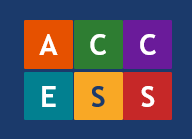
Why the A.C.C.E.S.S. Literacy Framework Image Is Built Like a Bridge — And Why That’s the Whole Point

ACCESS is a structured, scaffolded framework designed to ensure all learners can engage with grade-level literacy tasks. A – Activate Background Knowledge: Connect new learning to prior
knowledge C – Clarify Language & Vocabulary: Pre-teach and reinforce academic language C – Chunk
Complex Text & Tasks: Break tasks into manageable steps E – Engage with Evidence: Support
students in citing and explaining text evidence S – Support with Scaffolds: Use sentence frames,
visuals, and guided instruction S – Synthesize & Show Understanding: Demonstrate learning through
structured output Why ACCESS?
• Bridges the gap between the Science of Reading and classroom
practice
• Aligns with Universal Design for Learning • Designed for SPED, ELL, and struggling readers

Maintains rigor while increasing access Outcome: From access → to independence for every learner.