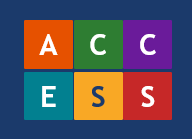
What happens when the A.C.C.E.S.S. Literacy Framework meets real classrooms—and real teachers look honestly at what was missing
I want to start with something a teacher wrote that stopped me mid-read.
Cherry May, a Filipino language teacher, described a Grade 9 lesson on pang-abay—adverbs—where students were quiet, blank-faced, not connecting. She had a prepared lesson. She had examples. She had explanations. And the students still got lost.
Looking back, she wrote this:
| Effective teaching begins with connection before instruction. — Cherry May Dianne T., Grade 9 Filipino Teacher |
Seven words. And they contain one of the most important shifts a teacher can make.
Not: my students weren’t paying attention. Not: the material was too hard. Not: we were running out of time before the end of the school year.
Connection before instruction. That means the lesson didn’t fail because of the learners. It failed because of where the lesson started.
That shift—from examining the learner to examining the instructional design—is what the A.C.C.E.S.S. Literacy Framework is built to create. And what you’re about to read is documented evidence that it’s working. Across 31 teachers. Across 14 subjects. From preschool to Grade 12. In the Philippines.
What This Case Study Is—And What It Isn’t
This isn’t a survey. It isn’t a workshop evaluation form. It isn’t a list of strategies teachers said they liked.
These are authentic teacher reflections collected after professional learning through the A.C.C.E.S.S. Literacy Framework. The task wasn’t to recall techniques. It was to do something much harder: identify a specific moment when your learners got lost, and examine what the instructional conditions were that contributed to that confusion.
That’s a different kind of professional learning. Most PD asks teachers to receive new strategies. This asked teachers to turn the diagnostic lens on themselves—not punitively, but honestly.
The result is 44 written reflections across three A.C.C.E.S.S. pillars—Activate, Chunk, and Support—from 31 teachers at multiple grade levels and subject areas. Each reflection surfaces a specific classroom reality. Taken together, they tell a story about what changes when teachers understand that learner confusion is often an instructional design problem, not a student problem.
The A.C.C.E.S.S. Framework pillars represented in this case study: A — Activate (background knowledge) C — Clarify (academic vocabulary and language) C — Chunk (complex texts and tasks while maintaining rigor) E — Engage (evidence-based reading and writing) S — Support (intentional scaffolds and accommodations) S — Synthesize (learning through reflection and visible thinking) The reflections in this case study primarily document teachers internalizing the A, C (Chunk), and S (Support) pillars through authentic classroom examination.
Finding 1: When Activation Is Missing, Confusion Is the Lesson
Twenty-one teachers responded to a single prompt about the Activate pillar: Think of a lesson where learners seemed lost. What would have been different if prior knowledge had been activated?
The breadth of what came back was striking. Grade 9 Filipino. Grade 5 mathematics on dissimilar fractions. Kindergarten phonics. Grade 1 short vowel sounds. Grade 11 academic essay writing. Grade 12 research design. Music. Science. Values education. Filipino literature. Catholic Living Education. Araling Panlipunan.
Different subjects, different grade levels, different campuses—and the same root problem appearing in every single reflection: the lesson began at the wrong place.
The Fraction Teacher Who Actually Fixed It
Raymund, teaching Grade 5 mathematics, described students who added numerators and denominators directly when confronted with 1/2 + 1/5. Some remained silent. He could have reteached the same way. Instead, he describes what he actually did:
| I used visual aids such as fraction strips and drew models on the board to show that the parts were not equal. And I asked questions like, ‘Are these fractions the same size?’ and ‘What should we do to make them equal?’ Students were asked to discuss their ideas with a partner and write their answers. As a result, the learners became more engaged, participated actively, and showed improved understanding. — Raymund M., Grade 5 Mathematics |
What Raymund describes is Activate functioning exactly as the framework intends. He didn’t give students the procedure. He made the invisible thinking visible: the fractions are different sizes, and students had to name that problem before he could teach them the solution. The concrete representation came first. The abstraction followed.
The Preschool Teacher and Picture Walks
Aember, teaching kindergarten, describes students who go silent when asked whether they know a new word. Her proposed solution is layered and exactly right:
| Picture walks seemed helpful since most of the students prefer learning with images or pictures, so showing them words associated with pictures might be able to help the students learn the new word easier. Word association can also be helpful. Home language connection is also helpful for the students to understand the new words easier if translated to their preferred or most comfortable language. — Aember Duane P. V., Kindergarten Teacher |
This is not a bag of isolated techniques. It’s a sequenced approach to the same problem: how do I help a non-reader access new vocabulary without the prior language exposure most activation strategies assume? Picture walks. Word association. Home language bridge. In that order. That’s the A.C.C.E.S.S. principle of meeting learners where their knowledge actually is—not where we wish it were.
The English Teacher Who Named the Real Problem
Samantha, teaching Grade 10 English, didn’t just describe confusion. She named the structural cause: pandemic-era foundational gaps combined with digital distraction. Her proposed shift was the clearest statement of what Activate is actually doing:
| If prior knowledge was activated, the learning experience would have shifted from passive memorization to active construction. — Samantha C., Grade 10 English |
Passive memorization to active construction. That is the instructional shift that the Activate pillar exists to create. When students have nothing to connect new information to, they memorize—or they don’t—and they forget either way. When they connect new information to something they already know, they construct. They remember. They transfer.
Across all 21 activation reflections, the same thread appeared: students didn’t fail to learn because they were unwilling. They failed to connect because the lesson didn’t build a bridge first.
Finding 2: Chunking Is Not a Shortcut—It’s the Path to Rigor
This is the finding I want to spend the most time on. Because there’s a belief embedded in many teachers that breaking content into smaller pieces is somehow cheating—making things easier than they should be, giving students less than they’re capable of handling.
Rommel, who teaches Araling Panlipunan, put his version of that belief on the table—and then named what happened to it:
| Prior to the seminar, there was a guilt in me for I was really doing this ‘chunking’ the passages making sure not to miss very important context. I thought I was making a shortcut on my lessons. But today, I was relieved because I understand that chunking is not making shortcuts—hence making delivery of the long texts easier and comprehensive. — Rommel P., Araling Panlipunan Teacher |
That guilt is real. And it runs through a lot of what we do as teachers when we try to make content accessible. Am I lowering the bar? Am I doing their thinking for them? Am I making them dependent?
The A.C.C.E.S.S. framework answers that question directly: chunking doesn’t lower the bar. It builds the path to the same bar. And Rommel’s description of what his chunking actually looked like proves it—pairs or triads reading together, discussing, processing in their own words, synthesis, validation. That’s not a shortcut. That’s structured academic discourse.
From Overwhelmed to Achievable: The Grade 1 Reader
Joyce, teaching Grade 1, describes the specific mechanics of what happens when a complete text lands on an emerging reader all at once: difficulty sustaining attention, difficulty decoding multiple unfamiliar words, difficulty understanding overall meaning, hesitation and guessing in response. Then she names the transformation chunking creates:
| If the task were chunked into smaller, manageable parts, learners would likely experience the activity in a more structured and supportive way. Reading becomes more manageable and less intimidating, learners demonstrate increased participation and engagement, comprehension improves as meaning is constructed step by step, and learners gain confidence in their reading ability. — Joyce C., Grade 1 Teacher |
Step by step. That phrase is doing real work in Joyce’s reflection. Meaning isn’t transmitted—it’s constructed. And construction requires sequence. You can’t build the second floor before the foundation is there. Chunking makes the sequence explicit, visible, and achievable for learners who would otherwise be overwhelmed before comprehension has a chance to begin.
Reflection Writing in Four Steps
Jomeille teaches CLE—Catholic Living Education—and describes asking students to write a reflective paragraph about moral values like forgiveness or kindness. The task requires understanding the lesson, retrieving a personal example, and organizing ideas into a paragraph. For many students, she observed, the combined demand is simply too much.
Her chunked version:
- First: identify the main value from the lesson
- Second: find an example from the story as evidence
- Third: connect the evidence to a personal experience
- Fourth: combine those answers into a paragraph
Same task. Same standard. Same cognitive goal. Four visible steps instead of one overwhelming ask. Jomeille anticipates that students will feel less overwhelmed, stay more focused, and produce more organized responses. And she’s right—because she’s not reducing what students are asked to think about. She’s structuring the pathway so they can actually do it.
Rachel, teaching 21st Century Literature and El Filibusterismo to senior high school students, applies the same principle at scale. Reading Rizal’s novel in full within a school term would be impossible for most of her learners. Her approach: chapter by chapter, with guide questions after each section that connect the content to current social realities. She notes that this strategy serves as a pace-setter for learners who struggle to sustain attention, keeps engagement high, and deepens understanding of the novel’s historical meaning by grounding it in the present. That’s not a shortcut through Rizal. That’s the only door most of her students would have into Rizal at all.
Finding 3: The Scaffold vs. Simplification Distinction Is the Equity Question
The third set of reflections surfaced something that I believe is the most practically urgent finding in this entire case study.
Twelve teachers were asked to reflect on a time they modified a task for a struggling student—and to examine whether that modification was a scaffold or a simplification. The distinction matters enormously:
Scaffold: keeps the destination the same and builds a better path to get there. The learning standard is intact. The cognitive demand is maintained. The support changes how the learner reaches the goal. Simplification: quietly changes what the student is being asked to think about. The task gets easier because the standard has been lowered—often without the teacher or the student realizing it.
Rachel’s reflection is the one that got loud for me:
| I realized that I unintentionally contributed to inequity by lowering my expectations, which is unfair to my learners. This strategy only created thinking gaps rather than supporting their growth. — Rachel May D., Filipino Literature Teacher |
She was teaching figures of speech in Filipino. To make it more accessible for students who struggle with the language, she had been simplifying her questions—softening the intellectual demand so students could answer more easily. She thought she was being responsive. She learned she was being unintentionally inequitable.
That’s not a comfortable realization. But it’s an honest and important one. When we simplify instead of scaffold, we don’t protect struggling learners. We widen the gap between what they’re experiencing and what they need to learn. We make today easier at the cost of tomorrow’s capability.
The Kindergarten Teacher Who Named It Precisely
Kristine, a preschool teacher, described asking a struggling child to copy a sentence from the board instead of forming their own. The child finished. The task was “completed.” But she recognizes exactly what happened:
| This was a simplification because the child only copied words instead of forming their own sentence. Scaffolding in kindergarten means guiding children step by step, not removing the thinking part of the task. — Kristine Ann P., Preschool Teacher |
Not removing the thinking part. That’s the whole Support pillar of A.C.C.E.S.S. in one sentence. The scaffold is the structured path to the thinking—not the replacement of it.
Her revised approach: a sentence frame (“I see a ___”), picture choices, modeling, “I Do / We Do / You Do” progression. The child is still forming a sentence. The cognitive demand is intact. The scaffold changes how the child gets there, not where they end up.
The Hardest Scaffold to Remove
Several teachers named a second question: which scaffolds are hardest to remove once learners have become comfortable with them?
The answers clustered around three types—worked examples and step-by-step solutions (Andrea, Grade 6 Math), sentence frames and writing starters (Khate, Grade 3; Angela, Grade 2), and teacher-led guidance during reading (Joyce, Grade 1). In each case, the challenge was the same: learners develop security inside the scaffold, and removing it too quickly disrupts confidence before independence has been built.
Joyce describes a progression that every teacher who works with diverse learners should have in their mental model: full guidance → prompts → minimal cues → independent performance. That’s not removing the scaffold all at once. It’s a gradual release that respects the pace of actual learning.
The Bigger Finding: This Is a System, Not a Bag of Strategies
Here’s what matters most about these 44 reflections taken together.
Every teacher who engaged with this professional learning applied the framework across a different subject, a different grade level, a different student population, and a different instructional challenge. Filipino grammar. Preschool phonics. Araling Panlipunan. Science. Math. Literature. Music. Values education. Research methodology.
The A.C.C.E.S.S. Framework didn’t get applied differently in each of those classrooms because the teachers received different instructions. It got applied consistently because the underlying principles are transferable. Activate, Chunk, Support work the same way whether the content is dissimilar fractions, pang-abay, El Filibusterismo, or the Fruits of the Holy Spirit—because the underlying cognitive challenge for learners is the same in every case: new content lands without a bridge, or arrives in chunks too large to process, or gets “simplified” in ways that quietly remove the learning goal.
What changed in these teachers wasn’t the addition of new techniques. What changed was the diagnostic question they asked when learners got lost. The question shifted from “Why don’t my students understand?” to “What instructional conditions contributed to this confusion?”
That’s the shift from strategy to system. And that’s what these testimonials document.
What the evidence shows across 31 teachers: • Preschool to Grade 12 — the same principles transfer across every level • 14+ subject areas — language, math, science, music, values, literature, and research • Multilingual classrooms — home language activation named by multiple teachers • Students with diverse needs — chunking and scaffolding applied to emerging readers, struggling writers, and learners with attention and comprehension challenges • Changed professional belief — teachers who felt guilty about chunking learned it was rigor-enabling, not rigor-reducing • Changed instructional diagnosis — teachers began looking at design, not deficits
🛒 CLASSROOM TOOLKIT | If you want the ready-made version of the tools these teachers used—the A.C.C.E.S.S. Framework activation protocol, chunking templates by grade band, scaffold-vs-simplification reflection guides, and gradual release planning tools—the complete A.C.C.E.S.S. Classroom Toolkit is available now. Grab it on TpT here → teacherspayteachers.com/store/maria-angala-nbct
How This Connects to the HCAIT Continuum
The Human-Centered AI Teaching Continuum that I’ve written about elsewhere on this blog is built on the same foundation as the A.C.C.E.S.S. Framework. Both begin with the same premise: the teacher’s professional judgment and knowledge of their learners is the non-negotiable center. Everything else—strategies, frameworks, and now AI tools—is in service of that.
What the teacher reflections in this case study make visible is exactly what Level 1 of the HCAIT Continuum describes: the expert teacher who knows when learners are lost, can diagnose why, and selects an instructional response based on that diagnosis.
Cherry May diagnosing that her lesson failed because she started with definitions instead of connection—that’s expert teacher judgment. Rommel recognizing that what felt like a shortcut was actually rigorous structured discourse—that’s expert teacher judgment. Rachel naming the moment she realized simplification is an equity problem—that’s expert teacher judgment.
AI tools can accelerate the production of activation prompts, chunked texts, sentence frame banks, and scaffolded reading guides. But they cannot make the diagnostic call that determines which tool the learner actually needs. That’s the teacher’s job. That’s always been the teacher’s job. These 31 teachers just got more deliberate about doing it.
References & Further Reading
1. Hammond, Z. (2015). Culturally Responsive Teaching and The Brain — Corwin Press
2. Ritchhart, R. (2015). Creating Cultures of Thinking — Harvard Education Press / HEPG
3. Vygotsky’s Zone of Proximal Development and Scaffolding in Education — Simply Psychology (2024)
4. Short on Resources, Special Educators Are Using AI — The Conversation (2026)
Frequently Asked Questions
Q1: What is the difference between scaffolding and simplification—and why does it matter for learners with disabilities or language differences?
A scaffold keeps the destination the same and builds a better path to get there. A simplification changes what the student is being asked to think about—typically by lowering the cognitive demand or the learning standard. The distinction is legally significant in special education, where IEPs require that accommodations maintain the standard while changing how a student accesses or demonstrates it. If a teacher unintentionally simplifies instead of scaffolding, they are not meeting the student’s documented learning goal—and they may be creating a long-term capability gap by reducing the intellectual demand of every task the student encounters. For English learners, the same risk applies: students who receive simplified content instead of scaffolded content miss the grade-level academic language development their peers are receiving, which compounds year over year. Scaffolding is the equity-preserving choice. Simplification is the one that feels supportive but quietly narrows opportunity.
Q2: How does the A.C.C.E.S.S. Framework apply to multilingual learners and students with disabilities—not just general education?
The A.C.C.E.S.S. Framework was built specifically with multilingual learners and students with disabilities in mind. The Activate pillar explicitly recognizes that students in these groups may hold background knowledge in a home language or through non-academic experience that traditional lesson openings don’t surface. The Support pillar distinguishes between accommodations (same standard, different access pathway) and modifications (changed standard), which is the same distinction that governs IEP and 504 plan design. The Chunk pillar reduces cognitive overload for students with attention, processing, or working memory challenges—without removing the intellectual demand of the content. The teacher reflections in this case study show the framework being applied in multilingual Filipino classrooms where home-language activation, visual supports, and gradual release were central strategies. These aren’t add-ons for special populations. They are the framework’s core design.
Q3: Can teachers apply the A.C.C.E.S.S. Framework without extensive training or preparation time?
The teacher reflections in this case study suggest that meaningful application can begin with a single conceptual shift—the diagnostic question: am I examining my students, or am I examining my instructional design? Several teachers in this case study described applying A.C.C.E.S.S. principles to lessons they had already taught, simply by revisiting what had gone wrong through a different frame. That retroactive analysis is itself a form of professional growth. Going forward, the most accessible entry point into the framework is the Activate pillar: before any lesson, ask what your students already know—including in their home language—and build a bridge from that knowledge to the new content. That single habit, applied consistently, will change what your students are able to do with what you teach. The rest of the framework follows from there.
The Line These 31 Teachers Keep Teaching Me
I’ve been building the A.C.C.E.S.S. Framework for years. I teach it. I write about it. I co-facilitate it with colleagues in the Philippines and in Washington DC and in international spaces.
And then a teacher writes something like what Kristine wrote from her kindergarten classroom—“scaffolding means guiding children step by step, not removing the thinking part of the task”—and I realize the framework is doing the thing frameworks should do. It’s not just being received. It’s being internalized. It’s being translated into a teacher’s own words, in their own classroom, with their own five-year-olds who are trying to figure out what letters sound like.
These 31 teachers didn’t attend a conference and take notes. They looked honestly at the moments their students got lost and asked themselves a harder question than most professional development asks: what did I fail to build, and what would I do differently?
That’s the beginning of responsive teaching. That’s the beginning of instructional equity. And it’s the most important thing a framework can produce—not compliance, not fidelity to a script, but a changed diagnostic habit that a teacher carries into every lesson they ever teach from that point forward.
Literacy without limits. AI with a human heart.
You Might Also Like
📖 Case Study: What 113 Pre-Service Teachers Said After One HCAIT Session
📖 Real-Time Differentiation Without the Extra Prep Hours
📖 Why Thinking Routines Matter More Now That AI Exists
📖 Why the A.C.C.E.S.S. Literacy Framework Is Built Like a Bridge
📖 Designing Lessons for Real Kids, Not Pinterest
📖 10 Executive Functioning AI Prompts for SPED Teachers, OTs and SLPs
📬 Get the Research. Get the Tools. Get the Community. The teachers in this case study are part of a growing professional learning community built around the A.C.C.E.S.S. Framework. If you want access to the field notes, new case studies, framework updates, and classroom-tested tools as they're developed—not six months after—join thousands of SPED and ELL educators already in the community. → Sign up at: www.bilingualsped.com
Before You Go — A Reflection Question
| 💬 For You: Think about the last time you modified a task for a student who was struggling. Now ask the harder question: was that a scaffold—keeping the same destination with a better path—or a simplification that quietly changed what your student was being asked to think about? And if it was a simplification: what would the scaffolded version of that same task have looked like? Drop your honest answer in the comments. The teachers in this case study did exactly that—and what they found changed how they teach. Your reflection might do the same. |