
Press Kit Download: Author Bio Description
Read Privacy Note, Table of Contents, Foreword, Epigraph, and Prologue from Kindle
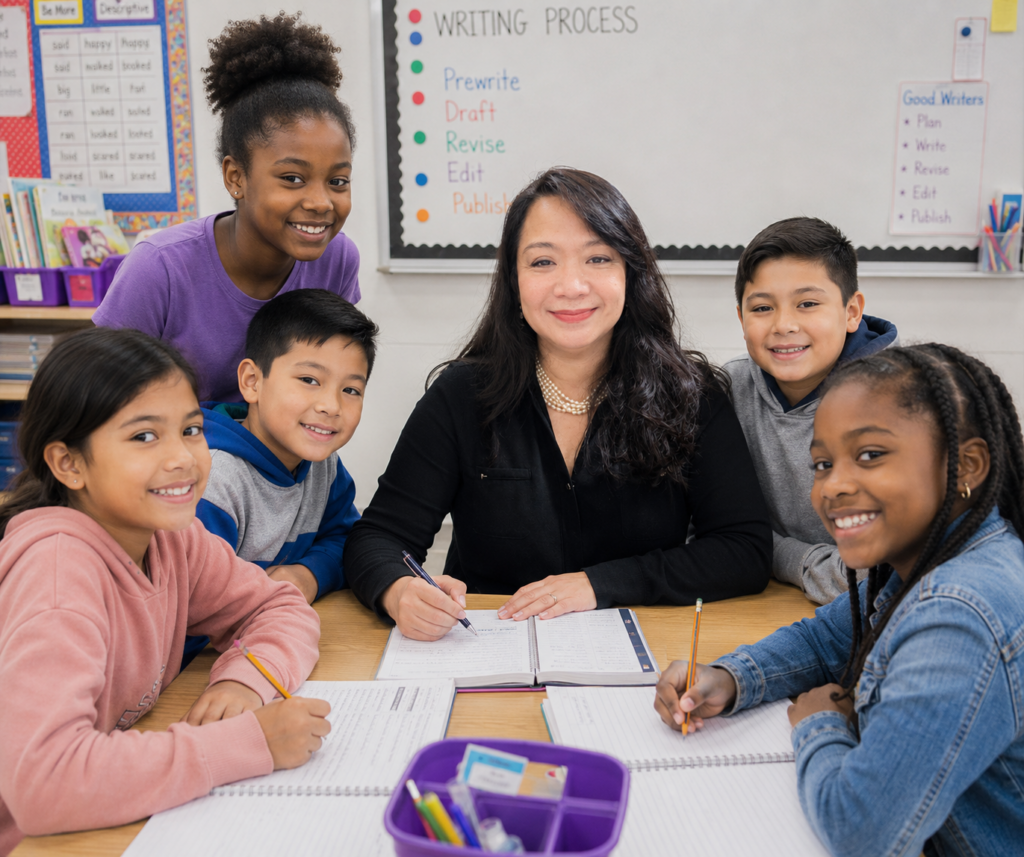
About Teacher Sol
I’m a Filipina teacher in Washington DC who spent 22 years figuring out why our multilingual kids were falling through the cracks. I built a framework to fix it. Now I’m bringing it home.
I left the Philippines on a full scholarship to medical school — and gave it up to teach. I was too young and didn’t know how the world worked. Twenty-two years later, here I am still in the classroom. Still in the same inner-city school system that tested every assumption I arrived with. I built the A.C.C.E.S.S. Literacy Framework without a grant, without a university affiliation, without release time — lesson plan by lesson plan, during lunch breaks and weekends, across 22 years of teaching the students most systems had already decided were too complicated to serve. I am a Filipina educator working inside one of the wealthiest school systems in the world, building a framework I send to my colleagues back home — to teachers who earn $250 a month, in classrooms of 60 students, without the resources I take for granted every single day. The struggle is real and it isn’t behind me…it’s the reason I keep going.
I wrote my book as a teacher in a real classroom in Washington DC with real students. This book explains why I built the A.C.C.E.S.S. Literacy Framework — and why it matters for every scholar, every multilingual learner and every special needs student on the planet. I’m currently still an education practitioner, still in the classroom everyday, still creating classroom-tested materials, still refining them based on student response, still sharing them with the professional field. I am not someone who left the classroom to become an author or a speaker.
And I want to be writing my next Teacher Sol book after two years. From a quieter place. Knowing the work is continuing without me having to be everywhere at once. I want Maren and Rohan—my kids—to look at what their mom built and understand why she gave so much to this. Not because it took from them. But because it was always for children like them too.
Until then, I’ll keep showing up in my classroom. Because the teachers are still there. And so am I.
Educator, Leader, and Advocate
I didn’t set out to become a special education teacher. I was in medical school, in full scholarship, when I felt the calling to become a teacher. After more than two decades in classroom, I can’t imagine doing anything else. Teaching is not just what I do—it’s how I think, how I problem-solve, and honestly, how I see the world.
I believe good teaching is intentional, reflective, and deeply human. Everything I share here comes from classroom experience—what worked, what didn’t, and what needed to change so students could succeed.
My writing, blog, and instructional resources are an extension of my professional practice as an educator. They focus on general, research-aligned strategies that support multilingual and neurodivergent learners, including culturally and linguistically responsive instruction, UDL, SIOP, and is aligned to CCSS and A.C.C.E.S.S Literacy Framework.
My goal is to support teachers the same way we support students: with clarity, respect, and practical tools that make the work sustainable. And the most exciting part is this: our professional community is just beginning. That means the people who join now will not simply be members—they will be founding members who help shape how this framework grows across countries and cultures.
Years from now, when this work expands to more classrooms and more teachers, I hope some of you will be able to say:
‘I was there at the beginning.’
I’m very hopeful about what’s ahead. Together, we have an opportunity to make a real difference in classrooms and in students’ lives.
If you believe education should be inclusive, innovative, and globally connected, I invite you to be part of that founding group. Email me: solangala@yahoo.com.
My Professional Credentials

I hold National Board Certification (NBCT) in Exceptional Needs Specialist, and I’m dually certified in Special Education and TESOL. I’ve taught in some of the most challenging and rewarding settings in DC—self-contained classrooms, inclusion models, intensive intervention, you name it.
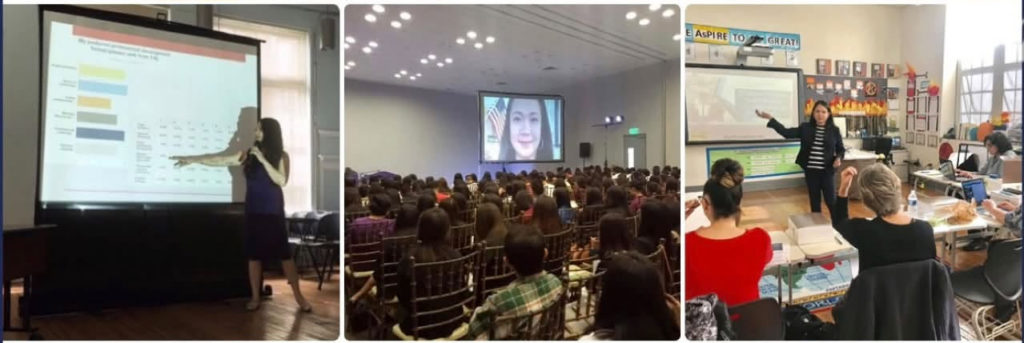
Beyond the classroom, I’ve mentored teachers, led professional learning, advocated for students in IEP meetings, and contributed to discussions about instructional practice at the organizational level. All of that experience lives in the resources and reflections I share here.
I’ve spent years not just teaching, but building systems that help other teachers teach better.
I’ve designed and led professional development that doesn’t waste teachers’ time — the kind where you walk out with something you can use on Monday. I’ve mentored new teachers through their first IEPs, their first parent conferences, their first “I don’t know if I can do this” breakdowns in the staff room.
I’ve led digital literacy initiatives because I believe technology should make our jobs easier, not harder. I’ve collaborated with curriculum teams to make sure our resources actually work for students with disabilities and English learners, not just the ones the curriculum writers imagined.
Everything I teach is grounded in frameworks that work: Universal Design for Learning, Structured Literacy, culturally and linguistically responsive teaching. I don’t use these as buzzwords. I use them as the architecture beneath every lesson I plan.
I design instruction that’s accessible from the start — not retrofitted with accommodations later. I believe in asset-based teaching, where we see what students can do and build from there, instead of starting with deficit thinking.
And I’m relentlessly reflective. If a lesson doesn’t work, I don’t blame the students. I ask: What did I miss? What do they need that I didn’t give them?
I believe that when teachers are supported—with clarity, with practical tools, with a community that actually gets what they’re facing—students win. My commitment is to grow educator capacity and strengthen the learning environments we all share, one lesson, one blog post, one resource at a time.
I’m not interested in trends. I’m interested in what moves students forward.
In Our Classroom, Bilingualism Is A Superpower

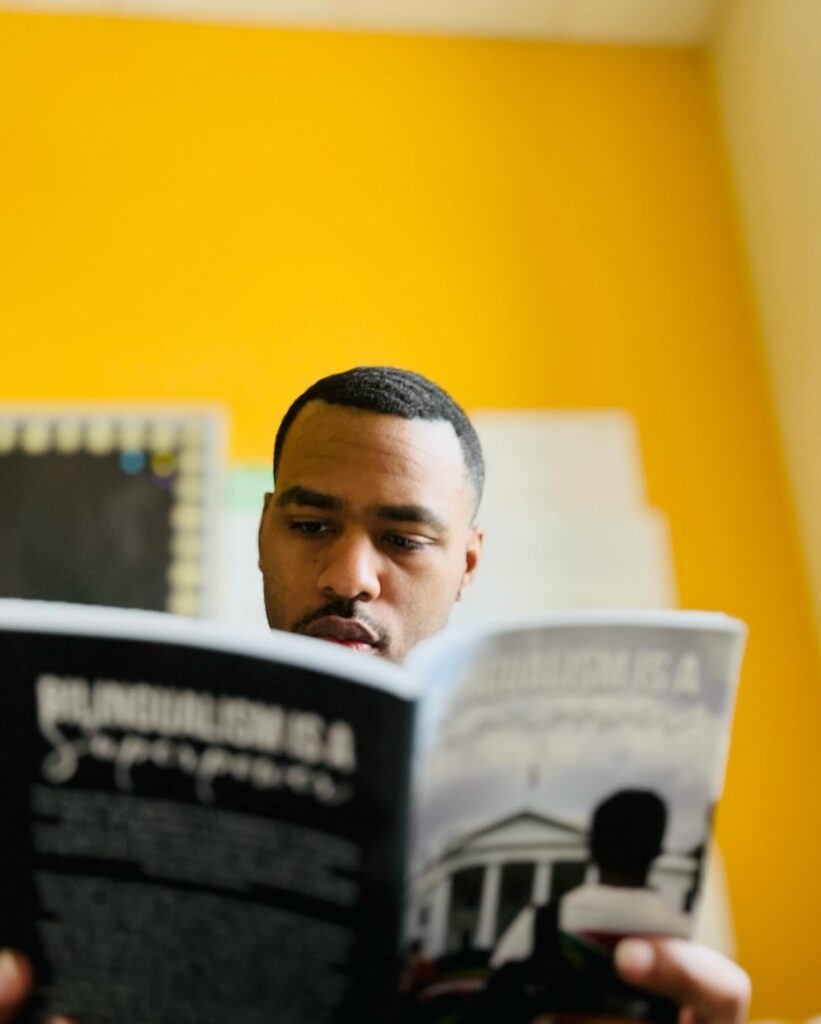
Through our published book Bilingualism Is A Superpower anthology project, my immigrant students from Haiti, Venezuela, Honduras, El Salvador, Guatemala, and Ethiopia transformed their personal migration journeys into powerful acts of global citizenship. As part of our Project-Based and Place-Based curriculum, my students authored authentic narratives accompanied by personal photographs, sharing their stories of resilience, cultural identity, and hope. This work goes beyond just language development, it cultivates deep cross-cultural understanding, empathy, and a shared sense of human dignity among readers and writers.
By sharing their stories to their immigrant peers, my students step into roles as advocates, educators, and bridge-builders. They successfully engage diverse audiences in conversations about immigration, belonging, and the contributions of newcomer youth, fostering mutual respect across cultural and linguistic boundaries. In doing so, they embody global citizenship: recognizing their agency to influence positive change, valuing diverse perspectives, and acting with compassion toward others facing adversity.
This project also strengthens students’ identities as multilingual, multicultural individuals who honor their heritage while actively participating in U.S. society. Through public storytelling, they challenge stereotypes, humanize the immigrant experience, and inspire peers to embrace global interconnectedness. Their work demonstrates that global citizenship begins with listening to lived experiences, honoring differences, and co-creating inclusive communities.
Beyond the Classroom: A.C.C.E.S.S. Gives
Twenty-two years ago, long before there was a framework or a name for any of this, there was a small tutoring center in Quezon City, Philippines — a room full of children with special needs whose families had nowhere else to turn, and a teacher figuring it out as she went. That room is where everything else started.
I built the A.C.C.E.S.S. Literacy Framework™ because bilingual special education students live in a gap most systems weren’t built to see — not quite an ELL problem, not quite a SPED problem, but both, all at once, every single day. I built A.C.C.E.S.S. Gives because knowing that gap exists and doing nothing about the teachers and students who fall into it was never going to be enough for me.
A.C.C.E.S.S. Gives is our commitment to carrying this work to the classrooms that need it most and can afford it least — through training scholarships for teachers whose districts can’t fund real professional development, free framework materials for Title I schools, and direct grants to classrooms doing this work alone. It is the living expression of bayanihan — the Filipino tradition of a community lifting a house together, so that no one carries a corner of it by themselves.
This is not a side project. It is the reason the rest of the work exists.
Who is Shiny?

Meet Shiny — my AI planning assistant, named after that one student who always asks “Can I help?” and actually means it.
Let me be clear: Shiny doesn’t teach my students. Shiny doesn’t make instructional decisions. Shiny doesn’t write my IEPs or run my small groups or figure out why a student who could read yesterday can’t read today.
What Shiny does do is take the tasks that used to steal hours of my life and turn them into minutes.
I use Shiny to:
- Draft differentiated versions of the same text at three reading levels
- Organize my jumbled thoughts into lesson sequences that make sense
- Simplify complex vocabulary so my ELL students can access grade-level content
- Generate ideas when I’m staring at a blank curriculum map at 9 PM on a Sunday
But here’s the thing: I decide what’s worth teaching. I adjust based on how students respond. I know when a scaffold is helping and when it’s limiting. I make the calls that matter.
Shiny supports my process. The teaching — the real, messy, human work of it — that’s all me. Every lesson I share here has been shaped by student response, revised through reflection, and tested in the reality of an actual classroom with actual kids who have actual learning needs.
Shiny helps me work smarter. I still teach from the heart.
I developed a Human-Centered AI Teaching Continuum embedded within the A.C.C.E.S.S. Literacy Framework to guide educators in using AI ethically and effectively to amplify expert teaching for multilingual learners and students with disabilities.
Why bilingual special education is an ideal place to begin
Many people assume innovation should start in the average classroom.
I think there’s a compelling argument for starting with the most complex learning environments.
Students who are multilingual and have disabilities require:
- multiple means of representation
- language scaffolds
- explicit instruction
- individualized supports
- frequent progress monitoring
- collaboration among educators and families
If AI can be implemented responsibly in those settings, many of the resulting practices can benefit general education as well. This reflects a principle similar to what Universal Design for Learning emphasizes: designing for learners with the greatest variability often improves learning for everyone.
FUNSHINE: Bilingual SPED Community

The name FUNSHINE comes from more than two decades ago when I started working with students with significant cognitive disabilities back in the Philippines and thought I needed something cheerful and memorable. I’ve thought about changing it a hundred times — it feels almost too bright for the serious work we do. But then I remember: this work is about light. It’s about seeing the spark in a student everyone else has written off. It’s about sunshine breaking through after months of struggle.
So FUNSHINE stays.
This space is for teachers, special education providers, and parents like you — the ones working with students, kids and adults who need more than the standard curriculum can give them. You’ll find classroom-tested lessons, printables, strategies, and resources that I’ve actually used with my SPED and ELL students. Not theoretical. Not Pinterest-perfect. Real lessons with real outcomes, including the ones that didn’t work the first time.
For families and students, this community offers transparency. Students can see assignments and rubrics. Parents can track what we’re learning. Support team members — psychologists, social workers, intervention specialists — can peek into our classroom and see progress in real time. It’s collaboration, not in a meeting room, but in daily practice.
Thank you for being here. I hope you find something useful, something honest, and something that reminds you why you got into this work in the first place.
A Little About Me Outside the Classroom
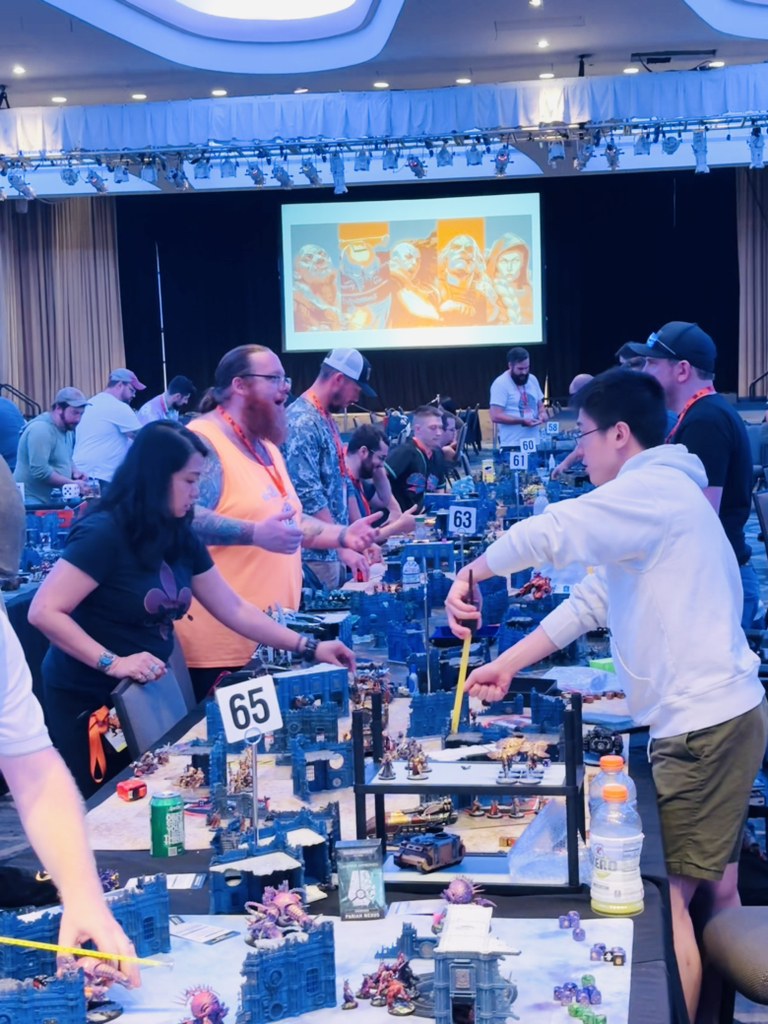

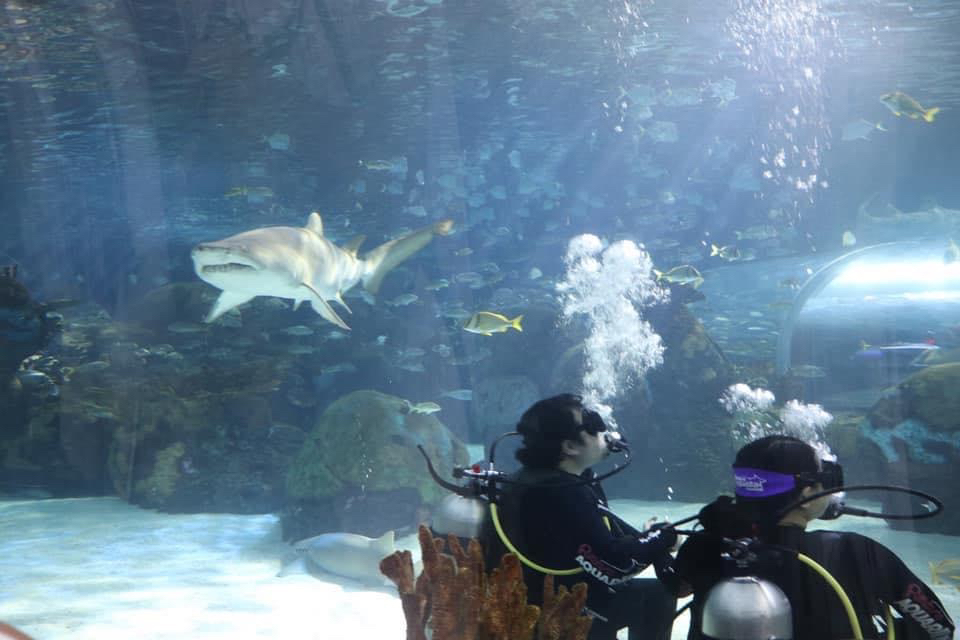
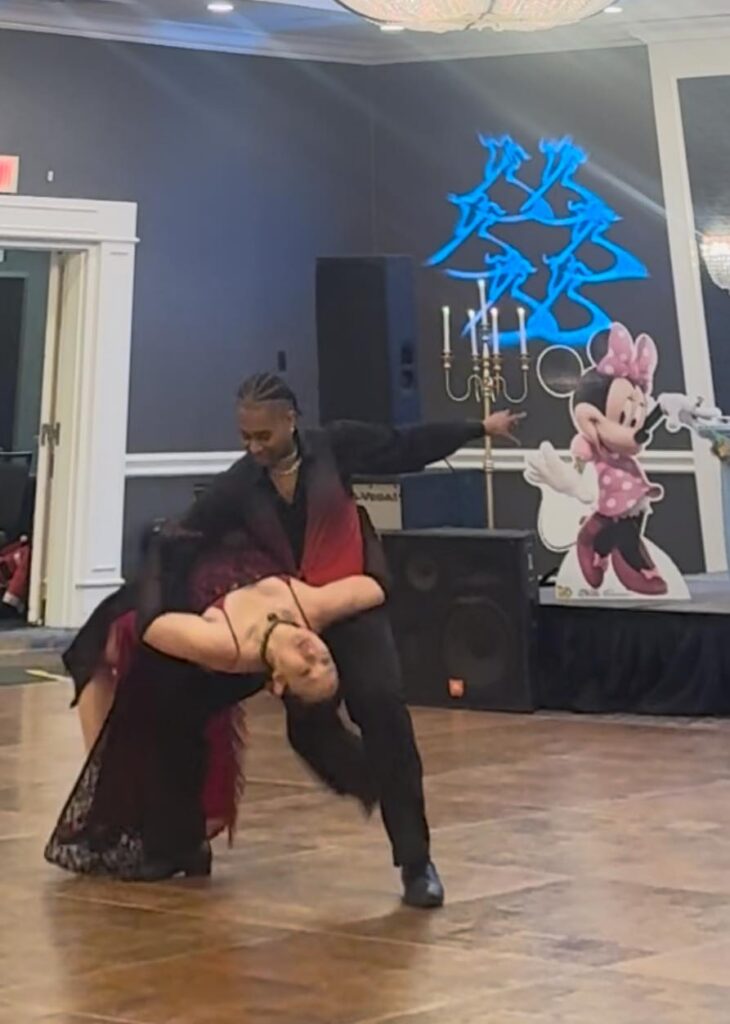

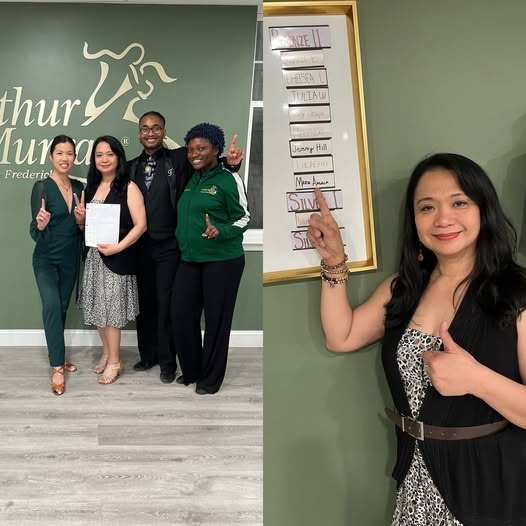
I’m a dancer—smooth and rhythm ballroom is my flow state, I create my own dance dresses, competition costumes, and ball gowns. I’m also a certified scuba diver and free diver, which means I am completely at peace underwater and slightly terrifying to my friends on land. And when I need to think strategically? I play Warhammer 40K (Adepta Sororitas, for the record—an all female army of fierce, faith-driven women warriors. Make of that what you will).
These things aren’t random hobbies. They’ve made me more patient, more creative, more resilient, and more willing to go deep on hard problems—which, it turns out, is exactly what teaching SPED and ELL students requires every single day.
✅ White Paper: A.C.C.E.S.S. Literacy Framework™
Let’s build something better — together.
— Maria
(Last updated: July 2026)