Transforming Education: The A.C.C.E.S.S. Framework for Students
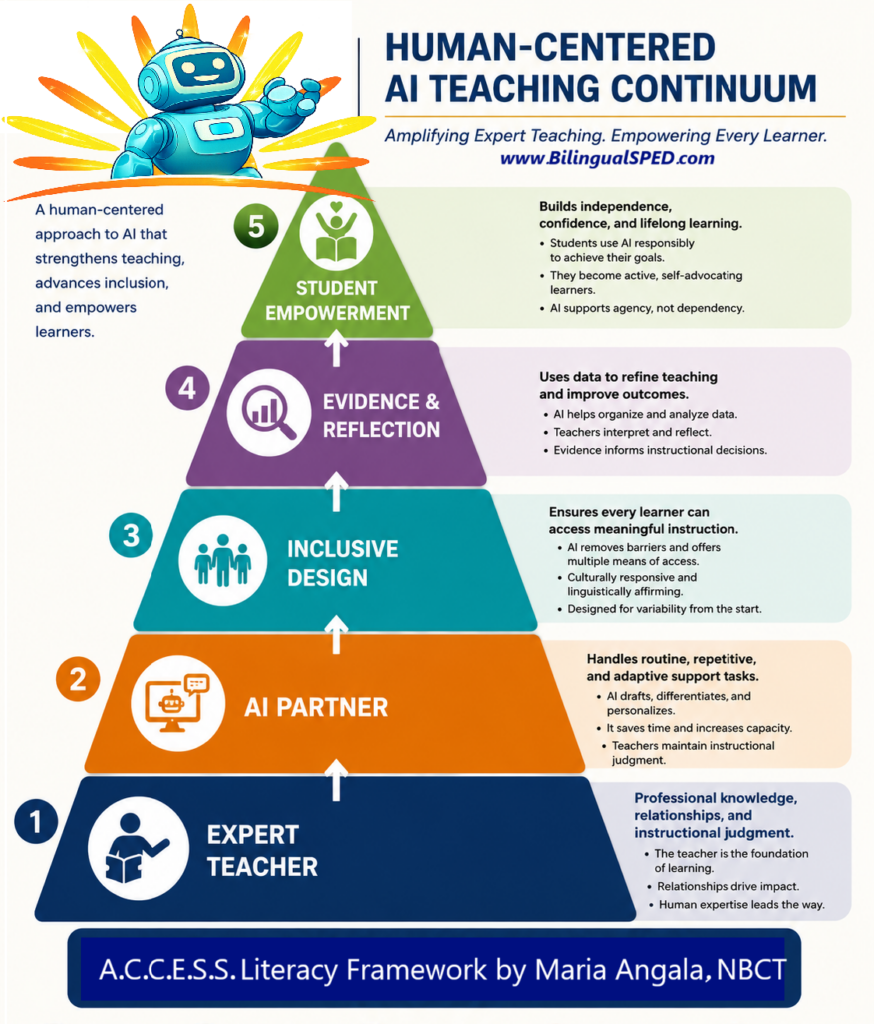
Human-Centered AI Teaching Continuum: Connecting AI with the A.C.C.E.S.S. Literacy Framework
The Human-Centered AI Teaching Continuum is embedded within the A.C.C.E.S.S. Literacy Framework to guide educators in using AI ethically and effectively to amplify expert teaching for multilingual learners and students with disabilities.
This infographic illustrates how the Human-Centered AI Teaching Continuum complements the A.C.C.E.S.S. Literacy Framework by positioning artificial intelligence as a collaborative partner that enhances—rather than replaces—the expertise of educators. The continuum demonstrates a developmental journey in which teachers progress from being Expert Teachers to effectively partnering with AI, designing inclusive learning experiences, using evidence to inform instruction, and ultimately empowering students to become confident, independent learners.
This infographic shows how AI strengthens each component of the A.C.C.E.S.S. Literacy Framework:
- A – Access: AI removes barriers by providing accessible texts, translation, and multimodal learning resources.
- C – Connect: AI supports language development by helping students build vocabulary, background knowledge, and meaningful connections.
- C – Cultivate: AI personalizes literacy instruction to develop reading, writing, listening, and speaking skills.
- E – Engage: AI creates interactive, relevant, and student-centered learning experiences that increase participation and motivation.
- S – Scaffold: AI provides differentiated supports, visual aids, guided practice, and accommodations that meet diverse learning needs.
- S – Success: AI helps build student independence, confidence, and lifelong learning skills by gradually releasing responsibility to learners.
At its core, this model emphasizes that technology is most effective when guided by human expertise, ethical decision-making, equity, and meaningful relationships. AI serves as a tool to amplify great teaching, improve instructional design, foster collaboration, support data-informed decision-making, and create more inclusive learning environments for multilingual learners, students with disabilities, and all students.
We built the A.C.C.E.S.S. AI Instructional Systems with our Guiding Principle: AI with a Human Heart. Literacy Without Limits. This philosophy reflects the belief that the future of education lies not in replacing teachers with technology, but in empowering educators to use AI responsibly to expand opportunities, remove barriers, and ensure every learner can thrive.
A.C.C.E.S.S. Literacy Framework™ / Copyright & Attribution / © 2026 Maria Angala, NBCT. All rights reserved.
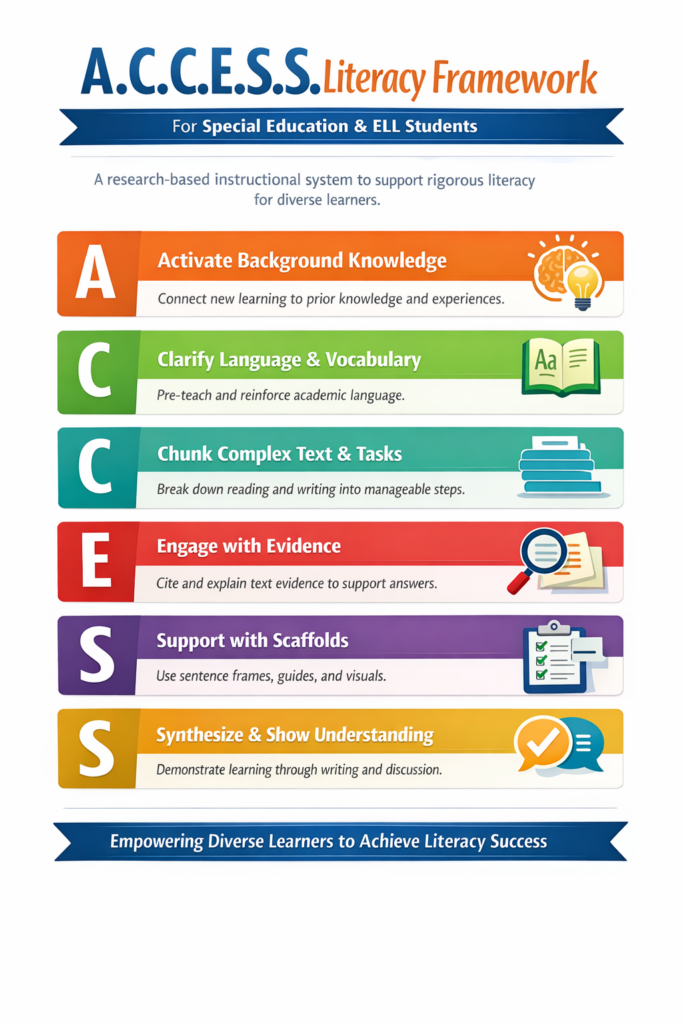
The A.C.C.E.S.S. Literacy Framework™ is an original instructional model created by Maria Angala, NBCT designed to support rigorous literacy instruction for diverse learners, including students receiving Special Education services and English Language Learners.
The A.C.C.E.S.S. Literacy Framework™—including its structure, terminology, instructional sequence, and associated training materials— the intellectual property of Maria Angala, NBCT. The framework was developed through classroom practice and informed by established research in literacy instruction, cognitive science, and language development.
Educators are welcome and encouraged to implement the A.C.C.E.S.S. Literacy Framework™ in their classrooms to support student learning. However, the framework name, visual model, training materials, and professional development content may not be reproduced, republished, distributed, or used for commercial training purposes without written permission from the author.
When referencing or sharing the framework in presentations, publications, or educational materials, please include the following attribution: Angala, M. (2026). A.C.C.E.S.S. Literacy Framework™
✅ White Paper: A.C.C.E.S.S. Literacy Framework™
✅ A.C.C.E.S.S. Literacy Framework™ Blogposts:
- From Data to Direction: What Assumption Iloilo’s Teachers Told Us — and the Strategic Plan That Answers Them
- Why the A.C.C.E.S.S. Literacy Framework Image Is Built Like a Bridge — And Why That’s the Whole Point
- How My Thinking Evolved: The Behind-the-Scenes Story of Going From PLUSS to A.C.C.E.S.S.
- It’s Time for the Philippines to Adopt the A.C.C.E.S.S. Literacy Framework — A Direct Conversation With Filipino Teachers, School Leaders, and Education Policymakers
- Why We’re Bringing the A.C.C.E.S.S. Literacy Framework to Myanmar — And Why This Work Is the Most Meaningful Thing I’ve Done
- How Linda Darling-Hammond’s Equity Mandate Inspired Me to Build the A.C.C.E.S.S. Literacy Framework for Multilingual Learners and Students With Disabilities
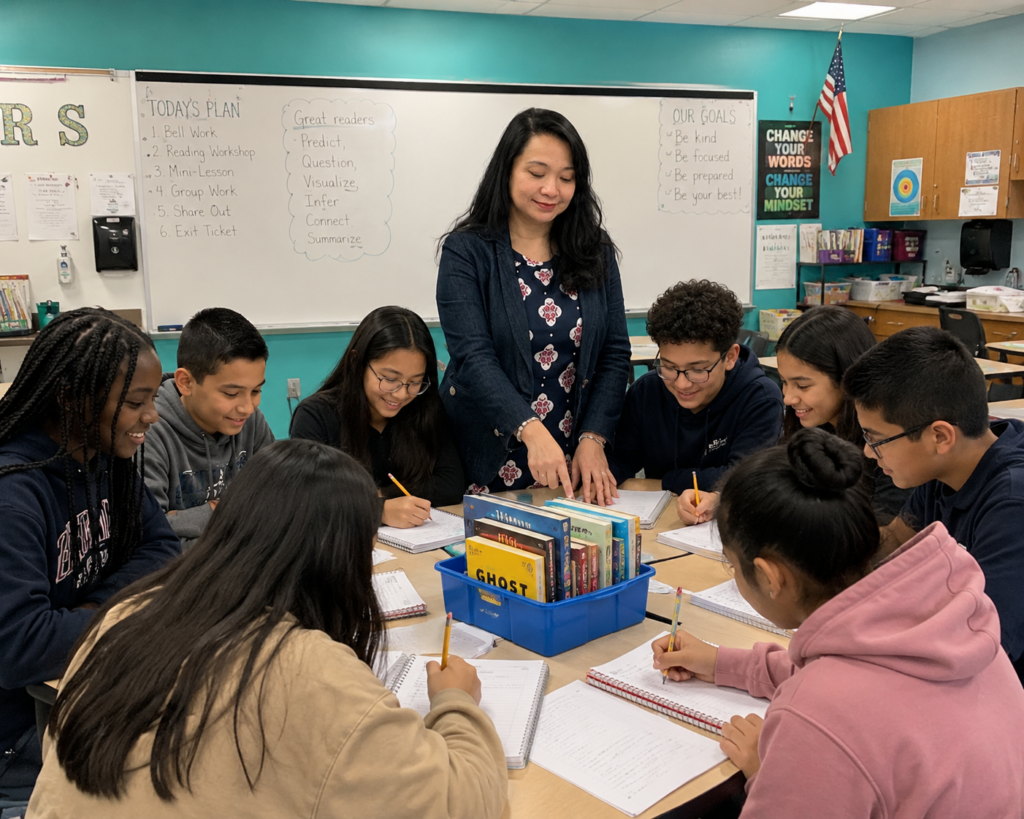
Evidence of Student Growth
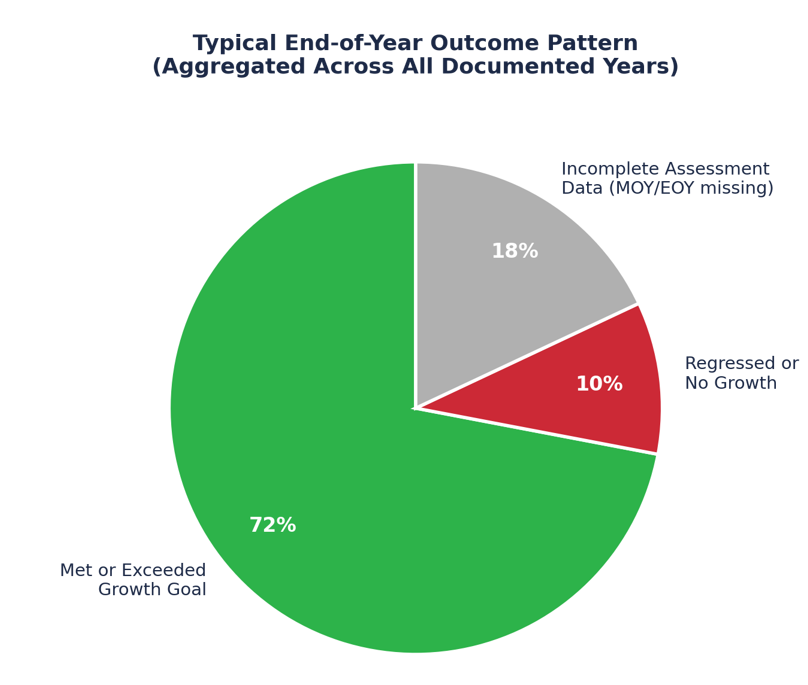
Sixteen years of evidence from students most schools have given up on
Looking at outcomes in aggregate across all documented years tells a consistent story: most students meet or exceed growth expectations, a small share regress or show no measurable change, and a meaningful share are lost to incomplete assessment data — a systems problem, not a teaching one.
The students in these records are not easy wins. They are multilingual teenagers — primarily Spanish-speaking, many recently arrived, nearly all reading two to five years below grade level. They carry IEPs. They are flagged for special education. Some have experienced interrupted schooling. They are, statistically, the students least likely to show measurable reading gains in a single school year.
These data span four public high schools — referred to here as School 1, School 2, and School 3 to protect student and institutional confidentiality — and one intervention program of reading pull-out classes. Every number here comes from a third-party standardized assessment — the Reading Inventory (Lexile), InSight Reading Plus, Read 180 / System 44 SRI, or EBWR writing rubrics. No teacher-created test. No grading. No subjectivity.
The pattern across all years is consistent: most students grew. Some grew dramatically. A few didn’t. That honesty matters — because a framework you can learn from is more credible than a story with no failures.
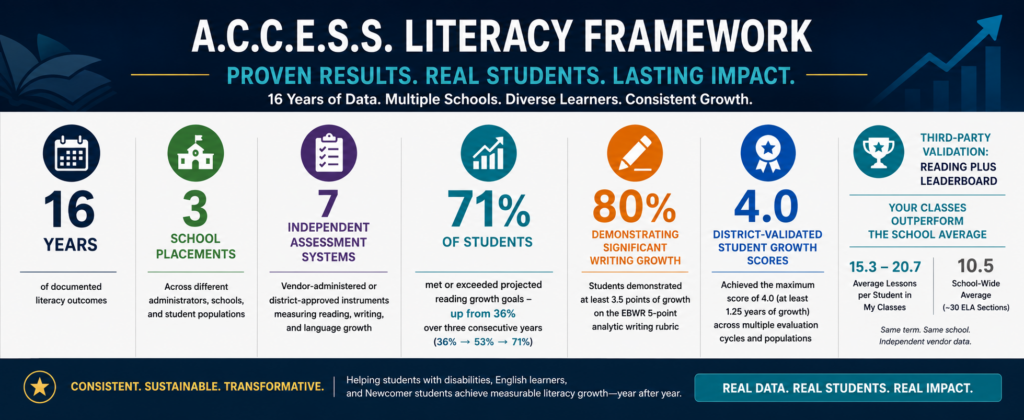
I am still in the classroom. I am still building. Sixteen years in, the data says the framework is working. What I want to find out is whether it can work at a scale beyond what one teacher, in one classroom, can reach alone. Can you help me? The doors are open. The work is underway. If your organization is looking for a giving partner in bilingual special education — let’s talk: solangala@yahoo.com.
(Last updated: July 2026)