They Marched to Mendiola Yesterday. I Was With Them in Spirit — and I Need You to Be Too.

The Teachers’ Dignity Coalition (TDC) held a major protest in Mendiola, Manila, on April 24, 2026. Hundreds of public school teachers from the National Capital Region (NCR), CALABARZON, and Central Luzon marched from the Department of Budget and Management (DBM) to demand a ₱15,000 across-the-board salary increase. This rally marks the start of a series of actions planned by the group leading up to the opening of classes in June 2026.

From Data to Direction: What Assumption Iloilo’s Teachers Told Us — and the Strategic Plan That Answers Them

I’ll be honest with you. I walked into the 2-Day A.C.C.E.S.S. Literacy Framework™ Introductory Masterclass at Assumption Iloilo with a mix of excitement and nerves that I haven’t felt in a long time. Not the nervous-I-don’t-know-what-I’m-doing kind. The nervous-this-matters-so-much kind. These are Filipino teachers. My teachers. The kind of educators who show up for every … Read more

Books, Belonging & the Bilingual Brain: Celebrating Autism Acceptance Day and International Children’s Book Day in Your Inclusive Classroom

April holds two powerful celebrations — Autism Acceptance Day and International Children’s Book Day — and for bilingual special educators, they belong together. Diverse books with visual supports, social stories, and sensory accommodations aren’t “extras.” They’re the instructional backbone of an inclusive, neurodiversity-affirming classroom. Read on for practical strategies you can use this week, plus tools that make implementation easier.

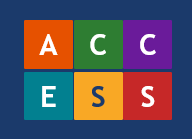
Why the A.C.C.E.S.S. Literacy Framework Image Is Built Like a Bridge — And Why That’s the Whole Point

ACCESS is a structured, scaffolded framework designed to ensure all learners can engage with grade-level literacy tasks. A – Activate Background Knowledge: Connect new learning to prior
knowledge C – Clarify Language & Vocabulary: Pre-teach and reinforce academic language C – Chunk
Complex Text & Tasks: Break tasks into manageable steps E – Engage with Evidence: Support
students in citing and explaining text evidence S – Support with Scaffolds: Use sentence frames,
visuals, and guided instruction S – Synthesize & Show Understanding: Demonstrate learning through
structured output Why ACCESS?
• Bridges the gap between the Science of Reading and classroom
practice
• Aligns with Universal Design for Learning • Designed for SPED, ELL, and struggling readers

Maintains rigor while increasing access Outcome: From access → to independence for every learner.

How My Thinking Evolved: The Behind-the-Scenes Story of Going From PLUSS to A.C.C.E.S.S.

The A.C.C.E.S.S. Literacy Framework didn’t appear fully formed one morning. It grew — slowly, messily, and honestly — out of years of PLUSS-aligned teaching that was already doing A.C.C.E.S.S. things before the acronym existed. This post tells the real story of that evolution, why naming a framework matters, and what every bilingual SPED teacher can learn from the gap between what we practice and what we call it.

It’s Time for the Philippines to Adopt the A.C.C.E.S.S. Literacy Framework — A Direct Conversation With Filipino Teachers, School Leaders, and Education Policymakers

The Philippines has some of the most dedicated teachers in the world — and one of the most persistent literacy gaps in Southeast Asia. The A.C.C.E.S.S. Literacy Framework offers a structured, repeatable, research-grounded instructional system that works in large multilingual classrooms without lowering expectations or overwhelming teachers. This post makes the case for school-wide and system-wide adoption — and shows you exactly how to start.

Why We’re Bringing the A.C.C.E.S.S. Literacy Framework to Myanmar — And Why This Work Is the Most Meaningful Thing I’ve Done

I’m joining the Advisory team for Gift of Education Myanmar to bring the A.C.C.E.S.S. Literacy Framework to Southeast Asia. Standards-based curriculum development starts now. Teacher training launches in May through a structured Professional Development Certification Program. This post is about the literacy gap in Myanmar, why the A.C.C.E.S.S. framework is built for this exact context, and what the Teachers Teaching Teachers model means for sustainable change.

How Linda Darling-Hammond’s Equity Mandate Inspired Me to Build the A.C.C.E.S.S. Literacy Framework for Multilingual Learners and Students With Disabilities

Linda Darling-Hammond’s equity mandate — that professional learning communities must disrupt predictable educational outcomes by race, language, and disability — is the intellectual foundation for the A.C.C.E.S.S. Literacy Framework. This post explores what that mandate means in real classrooms, how each stage of the framework removes specific barriers for multilingual learners and students with disabilities, and why high expectations without strong pathways is just a slogan.