
This is one of the stronger A.C.C.E.S.S. tools because it addresses a very common classroom response—“I don’t get it”—and teaches students to move from frustration to identifying the actual barrier.
I is designed around this progression:
“I don’t get it.” → “What part don’t I get?” → “Why is it difficult?” → “What do I need?” → “What can I try?” → “How will I know if it helped?”
A.C.C.E.S.S. Reflection Coach
“Turn ‘I don’t get it’ into ‘I know what I need.'”
That’s okay! Not understanding something is information. It helps you figure out what to do next.
Which sentence best describes what feels hard right now?
Knowing what you already understand gives us a great place to start!
Choose the main barrier that is blocking your progress:
Based on your barrier, select the type of support that would help you most:
Here are tailored strategies matched to your need. Pick one to try out now!
📋 MY REFLECTION SUMMARY
“”
Reflection Skills Snapshot:
Notice the problem:
Describe the problem:
Identify what I know:
Identify what I need:
Choose a next step:
💡 Growth Reflection: You are getting better at turning confusion into specific questions!
The key difference I’d preserve from our other A.C.C.E.S.S. tools is that this one should not rush students toward a strategy. First it teaches them to diagnose their own confusion at a student-friendly level.
The heart of the tool is:
“I don’t get it.” –> “What part don’t I get?” –> “What do I already understand?” –> “What’s getting in the way?” –> “What do I need?” –> “What can I try?” –> “Did it work?” –> “What will I do next time?”
That sequence is particularly valuable for multilingual learners and students with disabilities because “I don’t get it” can mean very different things: vocabulary, language load, directions, comprehension, executive functioning, sensory overload, processing time, or simply not knowing how to begin. The coach helps the learner name the barrier without turning the barrier into a deficit label.
You turned “I don’t get it” into a next step.
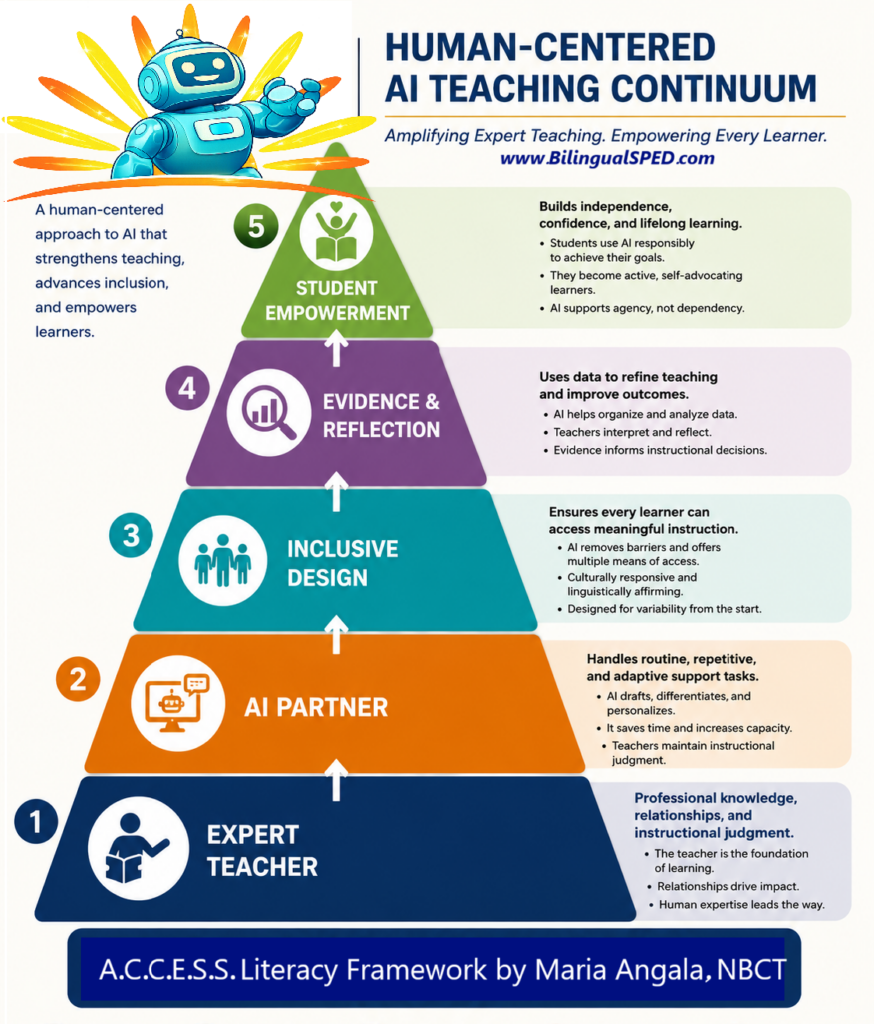
That is a very strong expression of our A.C.C.E.S.S. philosophy: the technology isn’t solving the learning problem for the student; it’s helping the student develop the capacity to understand their own learning and advocate for what they need.
You are the calm in their storm. Keep showing up, keep tracking the data, and keep respecting their dignity. You’ve got this.
.
Join our FUNSHINE Community to receive our latest free A.C.C.E.S.S. AI tools and other updates: