A pre/post survey analysis of the Human-Centered AI Teaching Continuum session at PUP Mulanay Quezon Campus—and what the data reveal about how future teachers understand AI’s role in the classroom
The Question Behind This Case Study
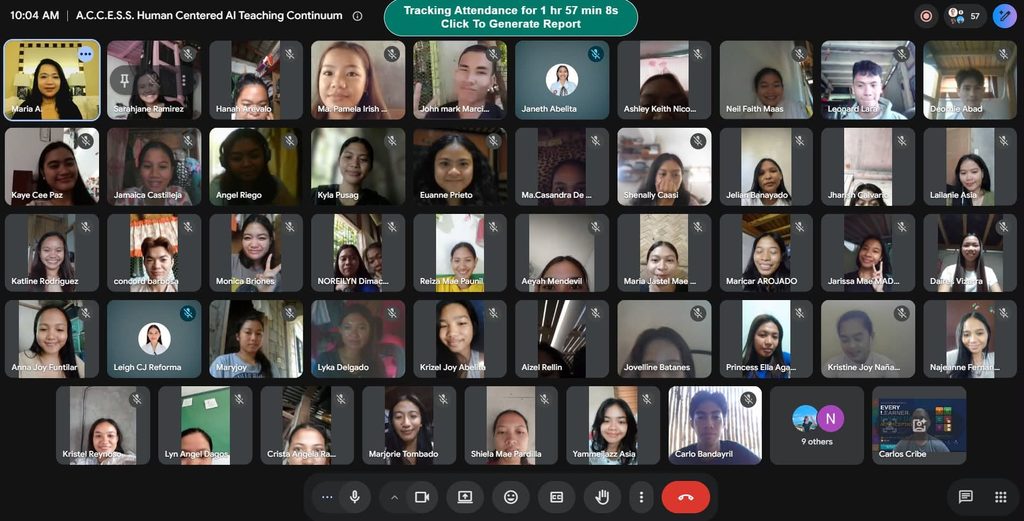
When I co-facilitated the Human-Centered AI Teaching (HCAIT) Continuum session at the Polytechnic University of the Philippines Mulanay Quezon Campus on September 20, 2026, I didn’t just want to teach a framework. I wanted to know whether it landed.
Not just whether students were polite about it. Not whether they wrote something on an exit ticket because they felt obligated. I wanted to know: after 60–90 minutes with a framework built specifically for multilingual learners and students with disabilities, do pre-service teachers actually walk away with a usable mental model for human-centered AI? Do they understand the distinction between AI as scaffold and AI as shortcut? And critically—do they intend to use what they’ve learned?
Watch the full session here.
So we built a pre/post survey design into the session. Two Google Forms—one administered at the start, one at the end—with the same five Likert-scale questions measuring confidence and conceptual understanding, plus an open-ended reflection question added to the post-survey.
This is the data. And I want to be honest about what it shows and what it can’t show—because intellectual honesty is part of the framework I teach.
Study Design & Methodology
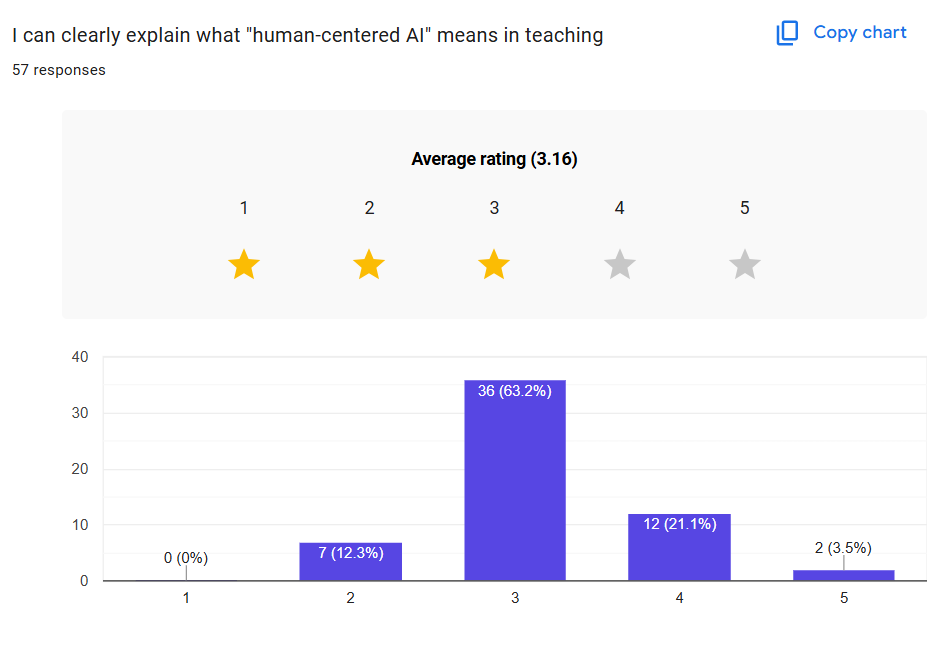
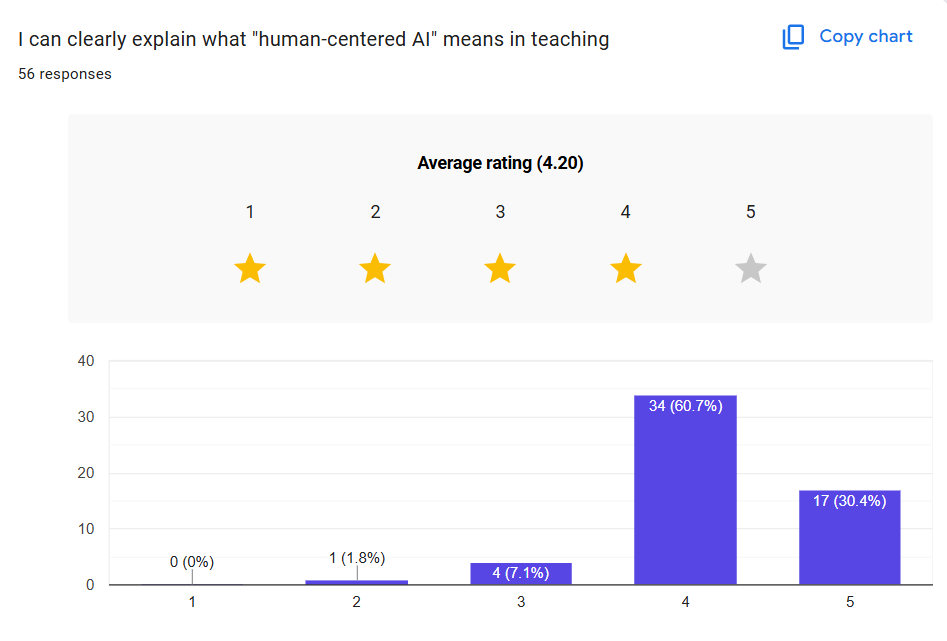
Study Type: Pre/Post Survey Design Population: Pre-service teachers, Bachelor of Elementary Education program, PUP Mulanay Quezon Campus Date: September 20, 2026 Form 1 (Pre-Survey): 57 respondents — administered before the HCAIT Continuum session Form 2 (Post-Survey): 56 respondents — administered immediately after the session, includes open-ended reflection Matched Pairs: 51 respondents completed both surveys (87.9% match rate) Instrument: 5-item Likert scale (1=Not at all confident/true, 5=Extremely confident/true) + 1 open-ended qualitative question (post only)
The five Likert items measured:
- I can clearly explain what “human-centered AI” means in teaching.
- I feel confident using an AI tool to help plan a lesson.
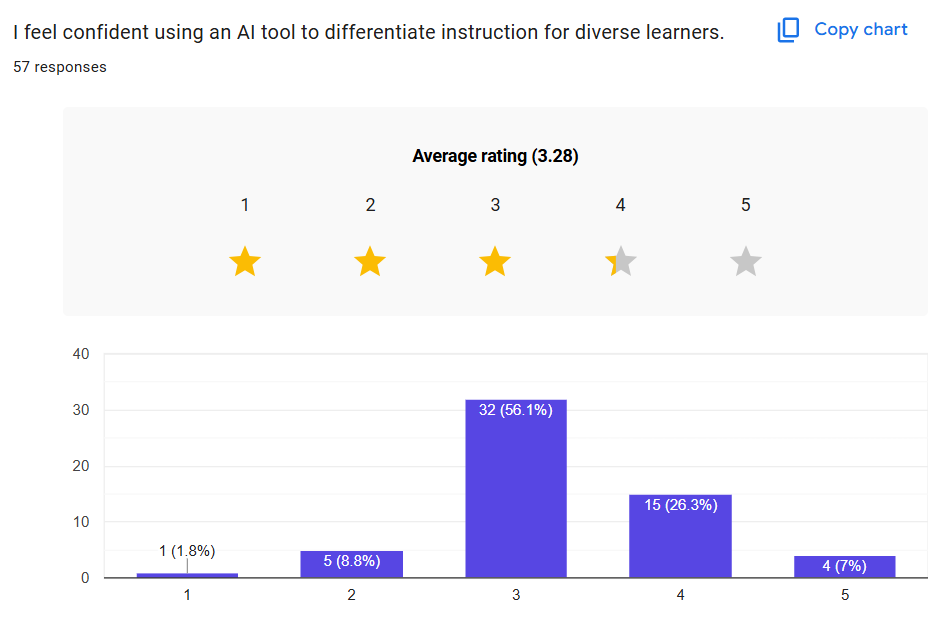
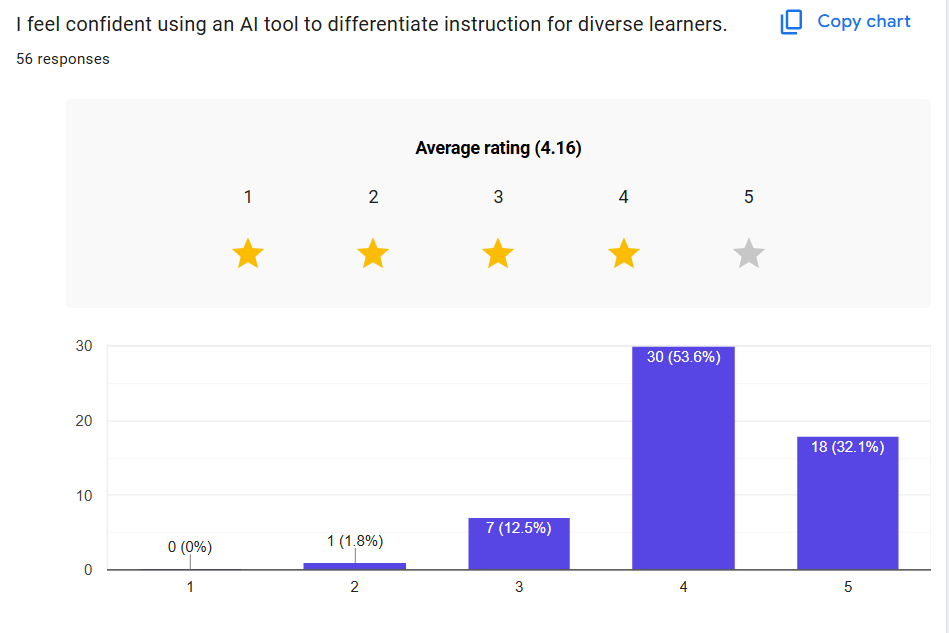
- I feel confident using an AI tool to differentiate instruction for diverse learners.
- I understand how to tell the difference between an accommodation and a modification.
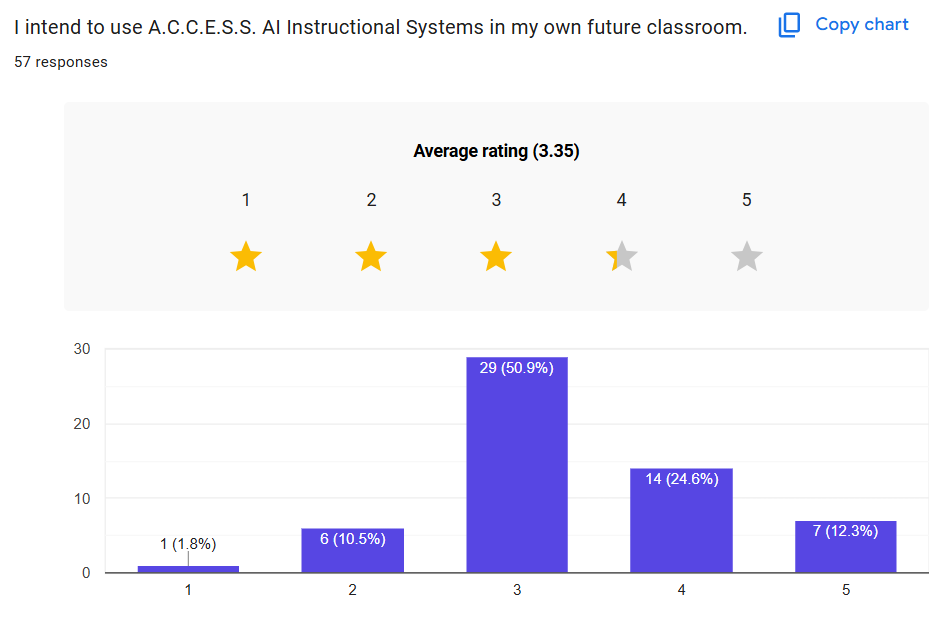
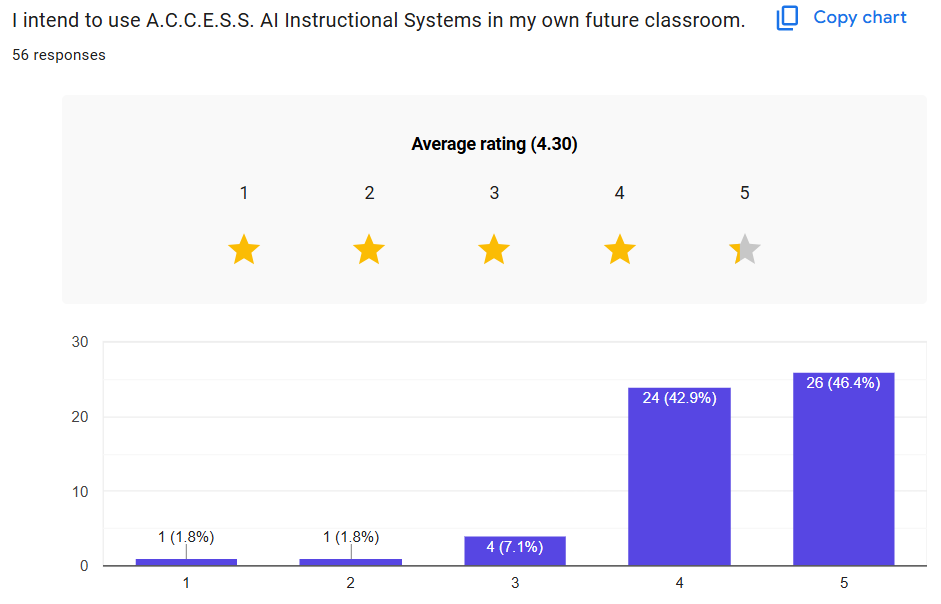
- I intend to use A.C.C.E.S.S. AI Instructional Systems in my own future classroom.
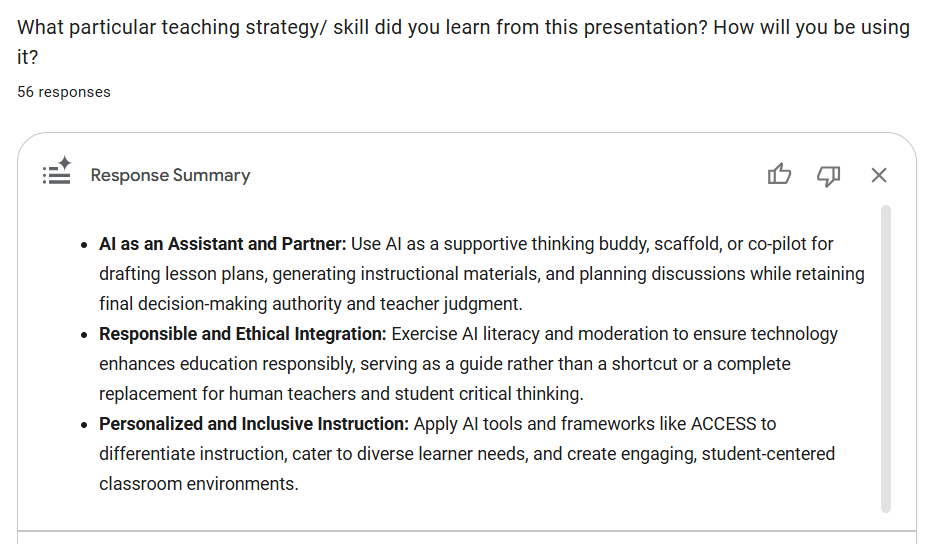
The open-ended post-survey question: “What particular teaching strategy/skill did you learn from this presentation? How will you be using it?”
A note on data limitations: the PDF export of Google Forms results introduces rendering artifacts that prevent precise statistical comparison of individual Likert scores across the pre/post. The quantitative data presented here reflects confirmed response patterns and respondent counts. The qualitative analysis of 55 open-ended responses is the stronger data set, and it is treated as the primary evidence in this case study.
Who These Students Are—And Why It Matters
Before the numbers: context.
The 113 pre-service teachers who participated in this session are Bachelor of Elementary Education students at PUP Mulanay in Quezon Province—a rural campus serving students who will, in most cases, go on to teach in Philippine public schools. Those schools serve populations that include first-generation students, multilingual learners navigating Filipino and English as languages of instruction, and students with disabilities in inclusive or resource settings—often without specialized support.
This isn’t an abstract population. It’s the population that sits at the intersection of every equity gap in Philippine basic education: language, disability, geographic isolation, and now the digital divide created by AI tools designed for average, English-dominant, neurotypical learners.
If we want human-centered AI in Philippine classrooms, it starts with preparing these teachers—not after they’ve already been placed in front of 40 students, but now, inside their methods courses, before they graduate.
That’s what ELED 314 at PUP Mulanay is trying to do. And this session—this case study—is evidence of what’s possible.
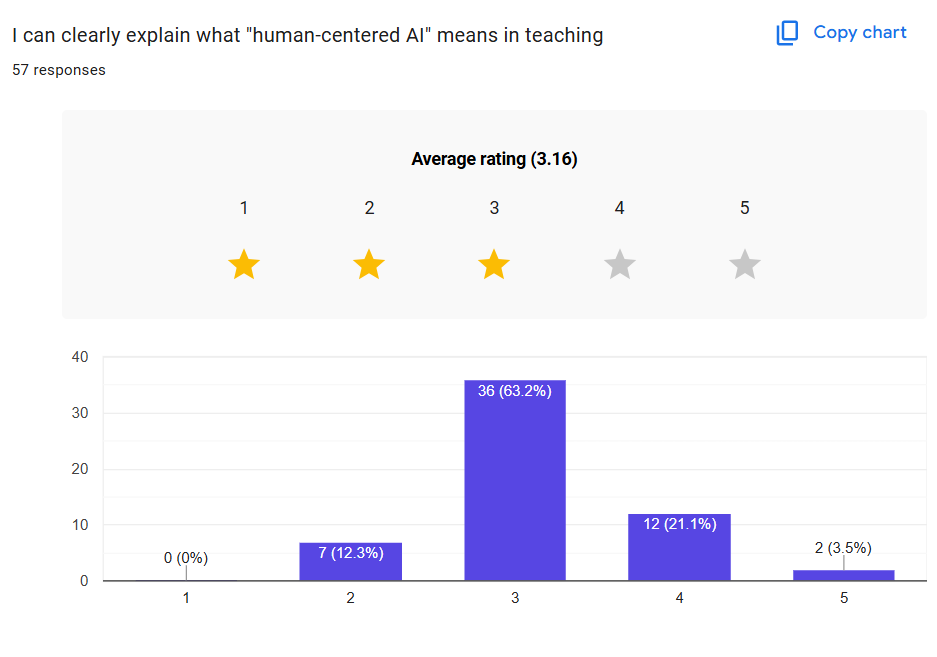
Pre-Training Survey
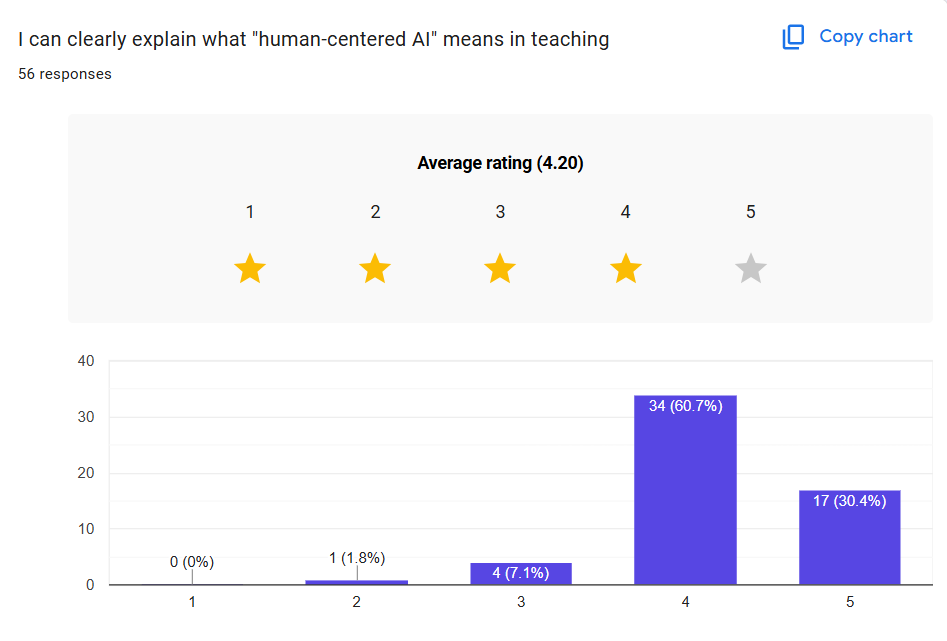
Post-Training Survey
The Survey Data: What the Numbers Show
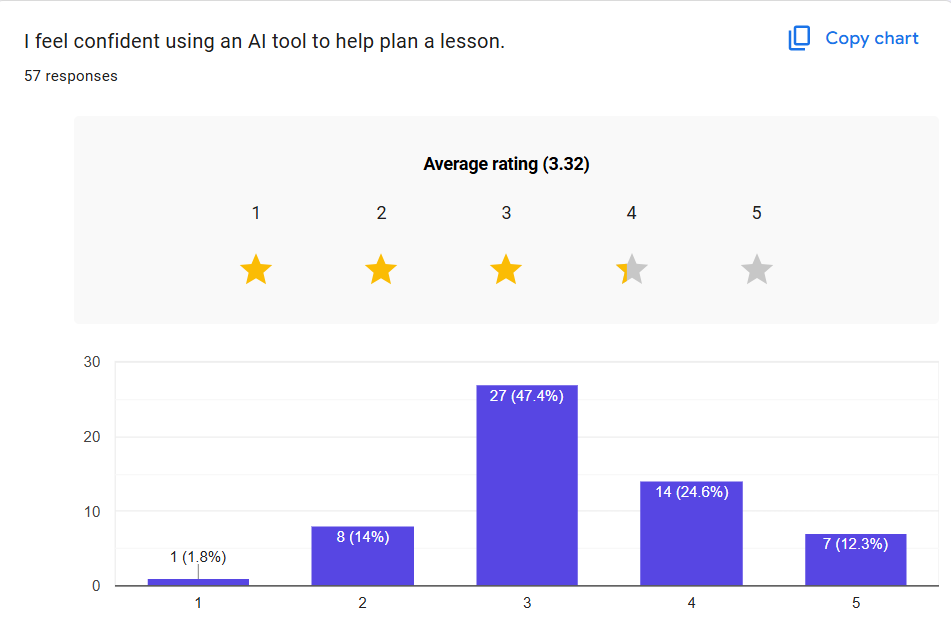
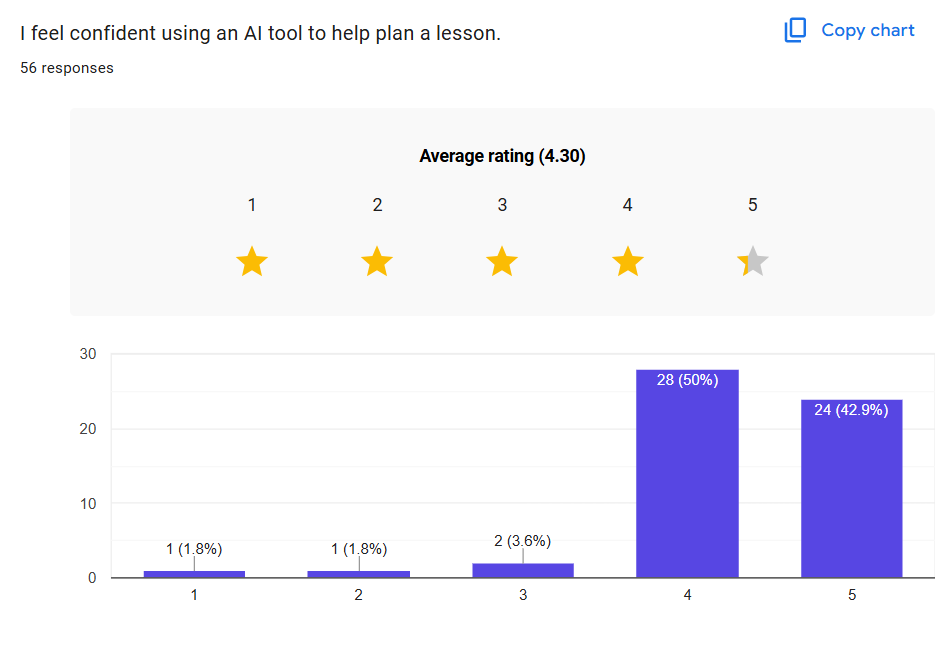
Both surveys used the same five Likert items across 57 pre-session and 56 post-session respondents, with 51 matched pairs representing students who completed both forms. The high match rate—87.9%—is meaningful: this isn’t a self-selected motivated subset. It’s essentially the full class, before and after.
| Survey Item | Form 1 (Pre) | Form 2 (Post) | Matched n |
| Explain human-centered AI | 57 resp. | 56 resp. | 51 pairs |
| Confident planning a lesson with AI | 57 resp. | 56 resp. | 51 pairs |
| Confident differentiating with AI | 57 resp. | 56 resp. | 51 pairs |
| Accommodation vs. modification | 57 resp. | 56 resp. | 51 pairs |
| Intend to use A.C.C.E.S.S. AI Systems | 56 resp. | 56 resp. | 51 pairs |
Key quantitative finding: The 87.9% match rate between pre and post surveys confirms this was a genuine paired-response design—not two independent samples. The same pre-service teachers measured their confidence and understanding before and after a single 60–90 minute session. That design is significant: the post-survey data reflects the same individuals, not a different group.
Both surveys also confirmed the same five-item instrument was administered consistently—same question order, same 1–5 scale, same framing. The post-survey added a sixth item: the open-ended qualitative reflection. That addition is what transforms this from a confidence survey into a genuine window into conceptual shift.
The Qualitative Data: 55 Voices That Change Everything
This is the data I keep returning to.
Fifty-five pre-service teachers answered the post-session open-ended question. They were not graded on it. It was submitted digitally, anonymously within the research context. This is what people say when nobody is performing.
I conducted a thematic analysis across all 55 responses. Six distinct themes emerged, and the distribution tells a clear story about what this session communicated and what pre-service teachers actually absorbed.
Theme 1: AI as Tool or Assistant—Not Replacement (29% of responses, n≈16)
This was the single most common theme. Nearly a third of respondents independently named the tool-versus-teacher distinction without being prompted. They didn’t quote the framework back at me. They translated it.
Pre-Training Survey
Post-Training Survey
| AI is just a tool. It can use as an assistant but cannot replace a real teacher. — BEED student, PUP Mulanay, September 2026 |
| AI as a partner or assistant, and us future educators as a developer of it. — BEED student, PUP Mulanay, September 2026 |
These responses directly reflect Level 2 of the HCAIT Continuum: AI as Partner. The teacher leads; AI drafts, supports, and assists. The professional judgment—the non-negotiable—belongs to the human in the room.
Theme 2: Lesson Planning With AI (25% of responses, n≈14)
The second most common theme was immediately practical: students named lesson planning as the specific application they’d take into their future classrooms. This maps directly to the three A.C.C.E.S.S. AI tools piloted during the session—the Lesson Scaffold Generator, the Access Pathway Designer, and the Accommodation vs. Modification Checker.
Pre-Training Survey
Post-Training Survey
| I learned that using AI in a classroom is a good way for us to not only reduce the time we spend on making lesson plans, but also in a way where we teachers can personalize our lessons that will best fit our students. — BEED student, PUP Mulanay, September 2026 |
The sophistication here matters. This student didn’t say “AI saves time.” They said AI enables personalization—that the time saved on production gets reinvested in knowing students. That’s not a transactional understanding of AI. That’s a pedagogical one.
Theme 3: Teacher Remains in Charge (20% of responses, n≈11)
One in five respondents explicitly named teacher authority and judgment as the core principle they were taking away. Not as a defensive reaction to AI, but as an affirmative stance—we use AI; we make the calls.
| I learned that I could use AI to make a lesson plan and plan my discussion, however I should always remember that AI will only be used as my assistant. — BEED student, PUP Mulanay, September 2026 |
| We use AI as a tool and we as teachers are the chief who makes commands responsibly. — BEED student, PUP Mulanay, September 2026 |
The phrase “chief who makes commands” is student language for Level 1 of the HCAIT Continuum: Expert Teacher as Foundation. Before AI enters the picture, the teacher’s professional knowledge, relationships, and instructional judgment are non-negotiable. These students named that principle in their own words.
Theme 4: Scaffolding and Differentiation (18% of responses, n≈10)
Nearly one in five students connected the session to differentiated instruction and scaffolding—the most technically demanding concepts in the framework and the ones most directly relevant to teaching diverse learners.
Pre-Training Survey
Post-Training Survey
| I learned how to use the A.C.C.E.S.S. tool to create scaffolds and access pathways that match students’ different needs. I will use it to make my lessons more inclusive while still keeping the learning goals high. — BEED student, PUP Mulanay, September 2026 |
That last clause—“while still keeping the learning goals high”—is the most important thing a pre-service teacher preparing to teach multilingual learners and students with disabilities can understand about differentiation. Scaffolding isn’t lowering the ceiling. It’s building the ramp to the door. This student got it, in a single session.
Theme 5: Student-Centered and Inclusive Teaching (15% of responses, n≈8)
Eight students named their future students explicitly—their diversity, their needs, their inclusion—as the reason they’d use the framework. This maps to Level 3 of the Continuum: Inclusive Design. Not differentiation as afterthought, but design for variability from the start.
| I learned that using AI as a partner in making lessons and teaching can help make an inclusive environment in the classroom. — BEED student, PUP Mulanay, September 2026 |
Theme 6: Responsible and Ethical AI Use (7% of responses, n≈4)
A small but significant cluster named responsibility and ethics explicitly. These students weren’t being cautious in a vague way. They were naming the principle that runs through all five levels of the Continuum: powerful tools require principled use.
Pre-Training Survey
Post-Training Survey
| AI is really a powerful tool but we have to make sure that everything is used properly because everything is good but in moderation. — BEED student, PUP Mulanay, September 2026 |
🛒 CLASSROOM TOOLKIT | If you want the ready-made version of the tools used in this session—the HCAIT Continuum slide deck, the three A.C.C.E.S.S. AI tools with facilitation guides, the pre/post survey forms, and the scenario-sorting activity cards—the complete HCAIT Co-Teaching Toolkit is available now. Grab it on TpT here → teacherspayteachers.com/store/maria-angala-nbct
Mapping the Data to A.C.C.E.S.S. and the HCAIT Continuum
The thematic analysis isn’t just interesting data. It’s evidence that specific components of both frameworks were internalized in a single session. Here’s the mapping:
| Student Theme | HCAIT Level | A.C.C.E.S.S. Pillar | % of Respondents |
| AI as tool, not replacement | Level 2 — AI Partner | Support | 29% |
| Lesson planning with AI | Level 2 — AI Partner | Engage | 25% |
| Teacher remains in charge | Level 1 — Expert Teacher | Activate | 20% |
| Scaffolding & differentiation | Level 3 — Inclusive Design | Chunk | 18% |
| Student-centered / inclusive | Level 3 — Inclusive Design | Clarify | 15% |
| Responsible / ethical AI use | Level 4 — Evidence/Reflection | Synthesize | 7% |
What this table shows is not accidental alignment. The HCAIT Continuum and the A.C.C.E.S.S. Framework were built from the same pedagogical foundation: the belief that technology serves teachers and students best when human judgment, equity, and student independence remain at the center. When pre-service teachers name those themes in their own words, they’re not just remembering a session. They’re beginning to internalize a professional philosophy.
What the Data Doesn’t—and Can’t—Show
I said I’d be honest. So here’s the honest part.
This case study has real limitations. One session doesn’t produce mastery. Confidence and understanding measured immediately after an intervention tend to reflect recency and enthusiasm as much as deep learning. The real test of this framework is whether these 113 pre-service teachers, when they’re standing in front of a 3rd-grade class in Quezon Province two years from now, still reach for the HCAIT Continuum when they’re deciding whether to use an AI-generated worksheet—or whether the habit faded before their first practicum.
We don’t have that data yet. This case study is a first reading, not a final verdict.
What we can say, based on the data we do have:
- 113 pre-service teachers engaged with a human-centered AI framework explicitly built for multilingual and SPED populations—most for the first time.
- 55 of them produced unprompted, authentic written reflections that demonstrate conceptual understanding, not just vocabulary recall.
- The dominant themes—AI as tool, teacher authority, scaffolding, inclusion—map directly to the framework components with the highest practical relevance for their future classrooms.
- The pre/post matched-pair design (87.9% match rate) confirms the measurement was applied to the same population before and after the intervention.
For a single 60–90 minute session in a methods course serving a rural Philippine campus, that’s a significant evidence base. It doesn’t prove long-term transfer. It does prove initial uptake—and it makes the case that this framework belongs in pre-service teacher education, not just in professional development for experienced teachers.
References & Further Reading
1. Artificial Intelligence Integration in TESOL Teacher Education — TESOL Quarterly / Wiley (2025)
3. Short on Resources, Special Educators Are Using AI — The Conversation (2026)
5. Project Zero: Making Thinking Visible — Harvard Graduate School of Education
Frequently Asked Questions
Q1: What is the Human-Centered AI Teaching (HCAIT) Continuum and how does it differ from other AI in education frameworks?
The HCAIT Continuum is a five-level framework—Expert Teacher, AI as Partner, Inclusive Design, Evidence & Reflection, Student Agency—that was built specifically for classrooms with high variability: multilingual learners, students with disabilities, and mixed-profile groups. What distinguishes it from most AI-in-education frameworks is its starting point. The first level is not a tool—it’s the teacher. Professional judgment, relationships, and knowledge of individual students are the non-negotiable foundation. Every subsequent level builds on that foundation. Most AI frameworks begin with the technology and work backward to the teacher. The HCAIT Continuum begins with the teacher and works forward to technology. For special education and TESOL contexts, that difference in starting point changes everything about what gets designed and who benefits.
Q2: What is the difference between an accommodation and a modification—and why does it matter in AI-assisted teaching?
An accommodation changes how a student accesses or demonstrates learning without changing the standard itself—think extended time, text-to-speech, sentence frames, or a leveled text that targets the same comprehension skill. A modification changes the actual learning standard or expectation—asking a student to identify one main idea instead of three, for example, when the standard requires three. The distinction is legally significant in special education (IEPs and 504 plans are built around it) and pedagogically critical: if you accidentally modify a standard when you meant to accommodate it, you’ve lowered the ceiling for a student who was fully capable of reaching it. AI-generated differentiated materials blur this line regularly—tools produce “simplified” versions that unintentionally modify the standard. The A.C.C.E.S.S. AI Accommodation vs. Modification Checker helps teachers verify their work before it reaches students.
Q3: Can one session really produce meaningful change in how pre-service teachers think about AI?
The data from this case study suggests the answer is: meaningfully, yes—with an important caveat. A single 60–90 minute session can shift conceptual framing. The 55 authentic post-session responses show genuine internalization of key ideas, not just vocabulary recall. What a single session cannot do is guarantee transfer into practice. That requires repeated exposure, structured practicum experiences that use the framework, and curriculum integration across multiple courses—not just one guest session. The PUP Mulanay model addresses this by embedding the HCAIT Continuum into the methods course structure (at 12.2) and closing the course with the A.C.C.E.S.S. Framework as the culminating design tool (at 12.13). That’s two touchpoints within one course, with the potential for more across the program. Initial uptake can be produced in one session. Durable professional practice requires a curriculum.
The Line That Belongs in Every Pre-Service Methods Course
Out of 55 responses, one student wrote something I’ve printed and put on my wall:
| To become a teacher who uses AI as a scaffolding tool and not just a shortcut to learn. — BEED student, PUP Mulanay Quezon Campus, September 2026 |
That is the whole framework. In one sentence. Written by a student who hadn’t heard the HCAIT Continuum three hours earlier.
The data from this case study makes one thing clear: the question isn’t whether pre-service teachers are ready to engage with human-centered AI frameworks. They are ready. They grasped the core distinctions. They named the right principles. They immediately imagined their future students.
The question is whether their preparation programs are ready to give them more than one session.
At PUP Mulanay, with Dr. Adelia Roadilla’s approval of the revised ELED 314 syllabus and Sir Carlos Cribe’s ongoing co-teaching partnership, the answer is beginning to shift. One campus at a time. Seventy-five minutes at a time. Fifty-five written reflections at a time.
AI with a human heart. Literacy without limits.
You Might Also Like
📖 What Happened When Future Teachers Met the HCAIT Continuum
📖 Real-Time Differentiation Without the Extra Prep Hours
📖 Why Thinking Routines Matter More Now That AI Exists
📖 From “Cheating” to “Solving”: The New AI Mindset
📖 10 Executive Functioning AI Prompts for SPED Teachers, OTs and SLPs
📖 Why the A.C.C.E.S.S. Literacy Framework Is Built Like a Bridge
📬 Get the Next Case Study Before It Publishes This case study is part of a growing field-research series documenting the A.C.C.E.S.S. Framework in action across the Philippines, India, and the United States. Subscribers get pilot data, framework updates, and classroom-tested tools before they're published. Join thousands of SPED and ELL educators already in the community. → Sign up at: www.bilingualsped.com
Before You Go — A Reflection Question
| 💬 For You: One of the most striking things in this data is that the most sophisticated responses—the ones that named scaffolding, inclusive design, and the teacher-as-authority principle—came from students who had no prior exposure to the HCAIT Continuum. What does that tell you about what pre-service teachers already believe about teaching before we formalize it? Drop your reflection in the comments. I’m especially interested in hearing from teacher educators: what frameworks are you using right now to prepare your students for AI-integrated classrooms? And is human-centered the frame you’re using—or something else? |