I remember the first time a veteran teacher handed me a decodable reader and said, “Forget the pictures. If they can’t sound it out, they aren’t reading.” At the time, I was struggling with a group of students who had significant cognitive disabilities and were English Language Learners (ELLs). I thought, “But they need the pictures! That’s their only way into the story.”
I was wrong. Or rather, I was only half right.
If you’re a new teacher standing in that gap today, I want to coach you through one of the most important shifts in our field: the intersection of the Science of Reading and Special Education. We’ve spent years focusing on “balanced literacy” for our IEP students, often relying too heavily on guessing from context. But the data is clear—our students need Structured Literacy. They need the code.
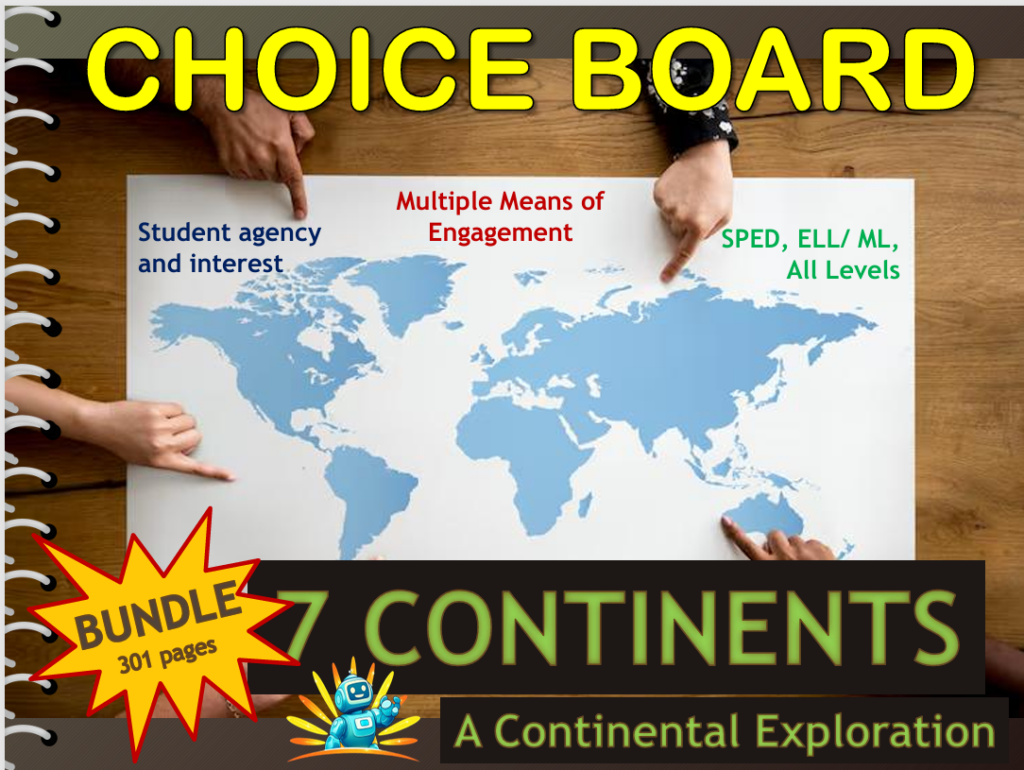
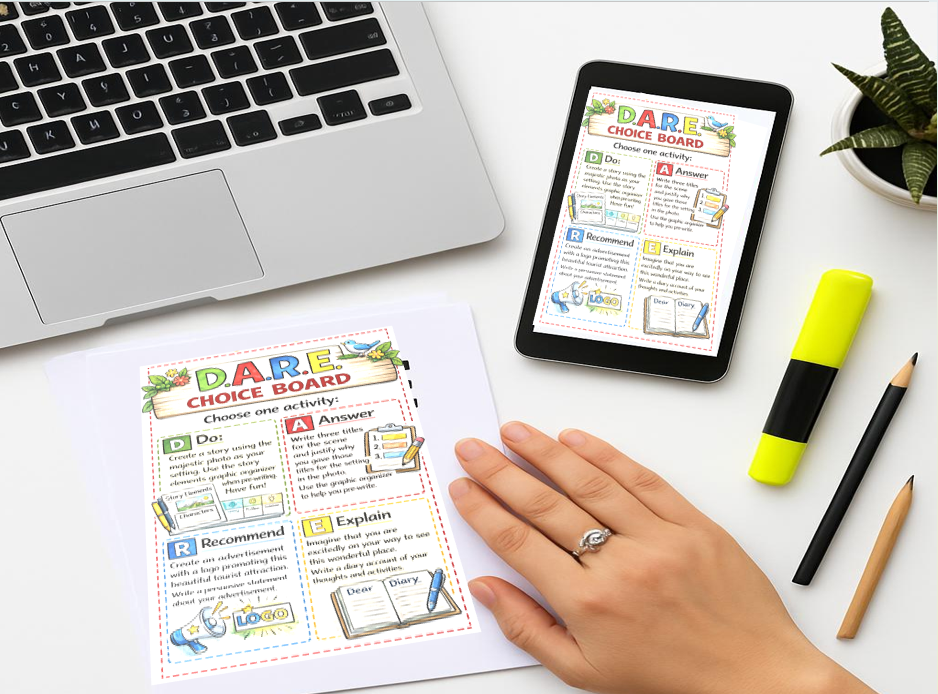
To make this transition easier, I’ve been integrating high-interest, structured content like my DARE Choice Board BUNDLE on the 7 Continents. It allows us to apply those hard-won decoding skills to real-world, age-appropriate topics, ensuring that our 50-minute English block isn’t just about phonemes, but about the world.
1. What is Structured Literacy in a SPED Context?
Structured Literacy is the “how” of the Science of Reading. For a student with an IEP, it means instruction must be explicit, systematic, and cumulative. We don’t wait for them to “catch on” to a phonics rule; we teach it directly.
The Orton-Gillingham (OG) Adaptation
You’ve likely heard of Orton-Gillingham. It’s the gold standard for dyslexia, but for our students with significant cognitive disabilities, we have to adapt the pace, not the process.
- The Coaching Tip: In a traditional OG lesson, you might introduce two phonograms a week. In my classroom, we might stay on the letter “S” for two weeks, finding it in our Financial Literacy “Savings” unit and our Digital Literacy “Security” unit.
2. Multisensory Techniques: Engaging the Whole Brain
Our students often have “glitchy” working memory. Multisensory techniques create multiple pathways to the brain. If the “visual” highway is blocked, maybe the “tactile” highway is open.
The “Sand and Sky” Method
- Visual: See the letter m.
- Auditory: Say the sound /m/.
- Kinesthetic: Trace the letter in a sand tray or on a carpet square.
- Tactile: Feel a 3D letter made of sandpaper.
Digital Tool: I love using Writing Wizard. It allows students to trace letters on a tablet with sensory feedback, which is a great bridge into our Digital Literacy goals.
3. Decodable vs. Predictable Texts
This is the “hill to die on” for Science of Reading advocates.
- Predictable Texts: “The bear is in the house. The bear is in the car.” (Students guess based on the picture).
- Decodable Texts: “The fat cat sat on a mat.” (Students must use phonics knowledge).
For our Level 1 and 2 learners, predictable texts create a “false sense of security.” They look like they are reading, but they aren’t gaining the skills to read a “Warning” sign at a future job site.
Where to Find Decodables:
- Flyleaf Publishing: High-quality, engaging decodables.
- Expressive Phonics: Specifically designed for older learners with lower reading levels.
- Tar Heel Reader: While these are user-generated, you can search for “decodable” stories that fit your students’ specific phonics targets.
When we move into our 7 Continents unit using the DARE Choice Board BUNDLE, I make sure to pull decodable sentences from the text so students are practicing their “code-cracking” on real-world content.
4. The 50-Minute English Block: A Sample Flow
How do you fit “Science of Reading” into a modified classroom? Follow the PLUSS framework:
- First Five (Transition): Phonemic Awareness warmup (e.g., “Say ‘cat’ without the /k/”).
- Do Now (Warm Up): Reviewing 5 previous phonogram cards.
- Whole Group (I Do): Direct instruction of a new sound (e.g., /sh/).
- Practice (We Do): Reading “sh” words together on the SmartBoard.
- Partner Work (We Do): Using the 7 Continents Choice Board to find words with the target sound in a map or a caption.
- Individual Work (You Do): Reading a 3-sentence decodable passage and answering one “RACE” strategy question.
5. Metacognition and “Productive Struggle”
We have to teach our students to be “Phonics Detectives.” When they get stuck, I don’t say, “Look at the picture.” I say, “Look at the letters. What is the first sound? What is the vowel doing?”
This is the metacognitive process. We are teaching them how to think about language. For our ELL students, this is vital. They need to know that English is a code with rules, even if the rules feel inconsistent at times.
Apps like Simplex Spelling are fantastic here because they explain why a word is spelled a certain way, supporting that metacognitive growth.
Conclusion: Literacy is Civil Rights
For a student with an IEP, learning to read is the ultimate form of self-advocacy. If they can read, they can navigate a digital world, manage their own finances, and eventually, hold a certificate-bearing job.
Science of Reading isn’t a “trend”; it’s a return to what works for the students who struggle the most. By combining these structured techniques with high-interest resources like the DARE Choice Board BUNDLE, you are giving them the “Key to the Continent”—both literally and figuratively.
Ready to Code-Switch Your Classroom?
Don’t let the “Science” intimidate you. Start with one sound, one tray of sand, and one decodable sentence.
Your Action Plan:
- Ditch One Predictable Text: Replace it with a decodable sentence this week.
- Level Up Your Resources: Grab the DARE Choice Board BUNDLE to give your students a functional, global context for their new reading skills.
- Join the Think Tank:
Reflection Question: Think of your most “stuck” reader. If you stopped allowing them to look at the pictures for one lesson, what would you discover about their actual knowledge of letter sounds?