
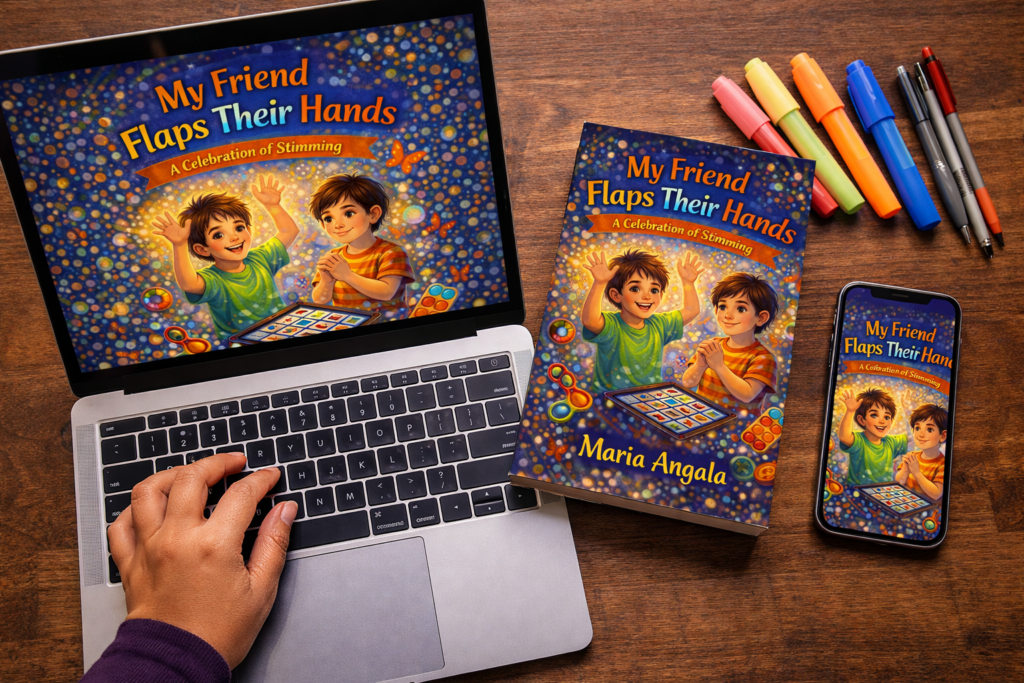
April is a full month. And honestly, for those of us in bilingual special education, it can feel like the universe finally remembered we exist.
We get Autism Acceptance Day on April 2 — not awareness, acceptance — and International Children’s Book Day on April 2 as well. And then on April 14, We Need Diverse Books Day arrives, asking every educator, parent, and reader to do one simple, radical thing: read and share a diverse book. Tag it. Celebrate it. Make it visible.
For us? That’s not a side activity. That’s the work.
I’ve been teaching at the intersection of bilingual education and special education for years — and I can tell you that the single most powerful thing I have ever put in front of an autistic multilingual learner is a book where they recognized something of themselves. A character who communicated differently. A story told in two languages. A protagonist who didn’t fit the mold — and didn’t need to.
That recognition? It changes everything. The engagement, the trust, the willingness to try. All of it shifts.
So today’s post is my coaching letter to newer bilingual SPED teachers — the ones figuring out how to honor these celebrations inside real classrooms with real kids and real constraints. I’m going to walk you through what I’ve learned, what the research backs up, and how to make it actually work. And yes, I’ll point you to some ready-made classroom tools that cut your prep time significantly — including resources from my BilingualSPED TpT store that I’ve built specifically for this intersection.
Why “Autism Acceptance” Changes Everything — Including How We Choose Books
Let’s start here, because the language matters.
We moved — intentionally — from “autism awareness” to “autism acceptance.” And that shift carries instructional weight. Awareness says: look at this thing that is different. Acceptance says: this difference belongs here. In your classroom. On your bookshelf. In the stories you read aloud every morning.
Research from the ALSC Blog (ALA) reminds us that most autistic characters in mainstream media are depicted as white, male, and neurotypically adjacent. Which means most of our students — especially our BIPOC autistic learners and our autistic multilingual learners — are not seeing themselves. In fact, the data is striking: white children are 19% more likely to receive an autism diagnosis than Black children, and 65% more likely than Latinx children. Yet the autistic community is every bit as diverse as the general population.
Here’s what that means practically: if you are a bilingual SPED teacher with autistic students who are also English learners, the representation gap you’re fighting is double. And your book choices become a form of advocacy.
| 🏆 Quick Win Do a quick audit of your classroom library this week. How many books feature autistic characters? How many are bilingual or multilingual? How many center characters who are BIPOC AND neurodivergent? If you can count them on one hand — that’s your starting point, not a failure. That’s just information. |
What Do Mirrors and Windows Have to Do with Autism Acceptance? Everything.
Dr. Rudine Sims Bishop’s framework of “mirrors, windows, and sliding glass doors” is one of those ideas that becomes more useful every year I teach. A mirror book lets a child see themselves in the pages. A window book lets them see someone else. And a sliding glass door lets them step into a world entirely different from their own.
The research is clear: Colorín Colorado’s guide on diverse books notes that when multilingual students do not see their linguistic and cultural resources reflected in the curriculum, they can feel like something is wrong with them. That’s not a small thing. For autistic students already navigating sensory differences, social communication, and a school system not built for them — add on the layer of not seeing yourself in any book, and you have a recipe for disconnection.
And the flip side is also true. A peer-reviewed study on culturally relevant books in bilingual classrooms found that when Latinx students encountered books that reflected their language, family structures, and everyday experiences, engagement went up, reading connections deepened, and students expressed wanting to read more. More. From students who had previously said “nunca” — never — when asked if they saw themselves in books.
That “nunca” breaks my heart every time. And it is entirely within our power to change it.
| 🏆 Quick Win Use the “Our Story” app from We Need Diverse Books to help students and families create their own bilingual books. It’s a powerful mirror-making tool — and it costs nothing. |
If you want the ready-made version of a diverse-books classroom toolkit — structured activities, visual supports, and multilevel scaffolding already built in — I created a complete set of ELA and SEL classroom resources in my BilingualSPED TpT store. They’re designed specifically for the students you’re describing: the bilingual ones, the neurodivergent ones, the ones who sit at multiple intersections of identity. Grab what fits your classroom — no reinventing the wheel required.
How Do I Actually Do This? Sensory Accommodations, Visual Supports & Social Stories in a Read-Aloud

Okay. Here’s where I want to coach you through the actual classroom moment. Because “use diverse books” is great advice in theory. But you have a student who needs a sensory break every 8 minutes, another who is an emergent bilingual, and a third who is working on narrative comprehension at a completely different level. And you have 20 minutes before specials.
I see you. Let’s talk through it.
Step 1: Set Up the Sensory Environment Before the Book Even Opens
Autistic students often process language more effectively when their sensory needs are regulated. This is not a workaround. This is neuroscience. Before your read-aloud:
- Offer fidget tools at seats — putty, textured bands, seated wobble cushions.
- Dim overhead lights if possible, or allow a student to wear sunglasses or a visor.
- Use a visual schedule strip so students know: “First we read. Then we discuss. Then we draw.” Predictability reduces anxiety.
- Post a simple 5-point scale or check-in near the read-aloud area so students can communicate their regulation level before you begin.
These are not extras. They are access.
Step 2: Pre-Teach with Visual Supports in Multiple Languages
Here’s the thing about shared reading with bilingual learners and autistic students: front-loading vocabulary and story concepts in the home language is one of the highest-leverage moves you can make.
Before the read-aloud, use a visual word wall or vocabulary anchor chart with:
- The word in English
- The word in the home language(s) of your students — Spanish, Burmese, Tagalog, whatever fits your community
- A simple picture or symbol representing the concept
Apps like Snap Core First and Proloquo2Go are excellent for students who use AAC and can access vocabulary boards in multiple languages. And Boardmaker allows you to create bilingual visual supports quickly — symbols paired with text in English and Spanish or other languages your students speak at home.
Step 3: Use a Social Story to Frame the Celebration
One of the most underused tools in our toolkit for autism acceptance days is the social story. Not just for managing transitions or routines — but for building identity narratives.
Write or find a simple social story that says something like:
| 📖 Sample Social Story Starter “Today is a special day. We celebrate people who think and learn differently. Some people’s brains work in their own special way. That is called being autistic. Autistic people are important. They have great ideas. They belong in our classroom. They belong in our books.” [In Spanish]: “Hoy es un día especial. Celebramos a las personas que piensan y aprenden de manera diferente. Algunas personas tienen cerebros que funcionan de una manera especial. Esto se llama ser autista. Las personas autistas son importantes. Tienen grandes ideas. Ellas pertenecen a nuestro salón. Ellas pertenecen en nuestros libros.” |
Pair this with images of real diverse autistic people — writers, artists, scientists — using Canva or Google Slides to create a simple bilingual slide deck or print-and-display board. Low-tech is fine. The content is what matters.
| 🏆 Quick Win Create a simple 3-slide bilingual “Today We Celebrate” visual using Canva. Include: (1) What is Autism Acceptance Day, (2) What is a diverse book, (3) Our classroom celebration plan. Print it. Post it. Your ELLs and your visual learners will thank you. |

Which Books Actually Belong on Your Shelf? What I’ve Learned the Hard Way
I’m going to be honest with you: early in my career, I thought diverse meant “the book has a character who is not white.” And that’s a starting point, sure. But it’s not enough.
The most powerful diverse books for our students — bilingual autistic learners and their classmates — share some specific qualities. After years of choosing, reading aloud, watching student response, and revising my list, here’s what I look for:
- Own voices or authentic community representation. Books written or illustrated by autistic authors, by bilingual authors, by authors of color. Not just about marginalized communities — from them.
- Multilingual text or linguistic authenticity. Books that include code-switching, Spanish phrases, or home-language words organically — not as decoration.
- Non-tragic narratives. Books where autistic and disabled characters are the heroes of their own full lives. Not books that center pity or cure.
- Multiple reading entry points. Picture books work for a surprising age range when paired with the right discussion questions. Don’t dismiss them for upper elementary or middle school.
A few titles that have worked beautifully in my experience across grade levels: A Different Tune by Casey “Remrov” Vormer (autistic author), Each Kindness by Jacqueline Woodson, Marisol McDonald Doesn’t Match by Monica Brown (bilingual, Latinx identity), and for older students, We’re Not Broken by Eric Garcia.
The Library Journal Autism Acceptance Reading List updates annually and is one of the most curated, educator-friendly sources I return to every spring. Bookmark it.
And speaking of ready-made classroom tools — my BilingualSPED TpT store includes resources like scaffolded ELA and SEL activity sets that pair with diverse literature at multiple reading levels. They’re structured so you can actually use them during April and not feel like you’re adding another full unit to your plate.
We Need Diverse Books Day on April 14: How to Celebrate in a Bilingual SPED Classroom
The ask for We Need Diverse Books Day is simple: read a diverse book on April 14 and share it on social media with #WeNeedDiverseBooksDay.
But in a bilingual SPED classroom, “simple” has layers. Here’s how I approach it:
Before April 14: Build the Anticipation
- Create a visual countdown calendar with your students. 5 days, 5 diverse books — one per day leading up to the celebration.
- Send home a bilingual family note explaining the celebration and inviting families to share a book from their culture or home language. Frame it as an asset: “You are the expert on your family’s stories.”
- Use Epic! (the digital reading app) — which has a solid collection of diverse books in multiple languages, including read-aloud features — to let students preview the week’s selections at their own reading level.
On April 14: The Classroom Celebration
- Do a book tasting — set up 4-5 diverse books at stations around the room. Students rotate, spend 5 minutes with each book, and record one thing they noticed on a simple graphic organizer.
- Pair this with a social media moment — take a class photo (with families’ consent) holding the day’s book, or share a student-created drawing of their favorite character. Post it. Use #WeNeedDiverseBooksDay and #BilingualSPED.

- Close with a bilingual reflection prompt: “One thing I noticed about this character… / Algo que noté sobre este personaje…” Let students respond in any language, through drawing, speaking, or writing.
| 🏆 Quick Win Download the free “Our Story” app from We Need Diverse Books and have students create a 3-page digital book about themselves. It’s fast, it’s meaningful, and it puts students in the author’s chair — which is its own kind of acceptance. |
If you want a complete classroom toolkit for diverse book celebrations — graphic organizers, visual supports, multilevel writing scaffolds, and more — check out my BilingualSPED TpT store. I’ve built these specifically for the bilingual SPED classroom, so they meet your students where they are, in both their languages.
Frequently Asked Questions
Q: My autistic students struggle with new routines. How do I introduce a book celebration without triggering anxiety?
Great question — and it’s one I hear often from newer teachers. The answer is: structure the novelty. Use your usual read-aloud spot, your usual carpet signal, your usual timing. Change only the book itself, not the routine around it. If you’re introducing something like a “book tasting,” prime students ahead of time with a visual schedule showing exactly what will happen, step by step. Predictability is the foundation. The joyful surprise can live inside the book’s pages.
Q: What if I’m not bilingual myself? Can I still use multilingual books in my classroom?
Absolutely yes. And honestly, using multilingual books as a non-bilingual teacher is a powerful modeling moment. It says: “I don’t know everything, and that’s okay. Let’s learn together.” Invite a bilingual family member, paraprofessional, or community volunteer to read the book aloud in the home language. Use the bilingual text as a visual support even if you only read aloud in English. Apps like Voscreen or Google Translate’s camera function can help you preview text in advance. You do not have to be fluent to value linguistic diversity.
Q: How do I choose a diverse book that’s actually good — not just “checking a box”?
The best test I know: does the book treat the diverse identity or experience as central and complete — or as background decoration? A book that “checks a box” usually makes the character’s difference the problem to be solved. A genuinely diverse book makes the character’s full humanity the story to be told. Also: prioritize books by own-voices authors whenever possible. The WNDB Walter Award list is one of the best curated starting points I know.
References & Credible Sources
- ALSC Blog: Embracing Diversity During Autism Acceptance Month
- Colorín Colorado: Why Diverse Books Matter — Mirrors and Windows
- Colorín Colorado: Windows and Mirrors — Latinx Experiences in Children’s Literature
- Library Journal: Autism Acceptance Month 2025 Reading List
- Tandfonline: Culturally Relevant Books in Bilingual Classrooms
You Might Also Like
| Related Posts from BilingualSPED.com → The A.C.C.E.S.S. Framework: How to Scaffold Literacy for Bilingual Learners with IEPs → IEP Accommodations vs. Modifications: What Every Bilingual SPED Teacher Needs to Know → Sensory-Friendly Classrooms for ELL Students with ASD: A Practical Setup Guide → Social Stories in Two Languages: A How-To for Bilingual Special Educators → TpT Resources for Bilingual SPED Teachers: What’s Worth Your Time (and Budget) Explore all posts at: www.bilingualsped.com/blog/ |
Take Action This Week
Three things you can do right now:
- Pick your book. Choose one diverse book featuring an autistic character, a bilingual family, or an underrepresented community. Read it by April 14.
- Share it. Post about it with #WeNeedDiverseBooksDay and #BilingualSPED. Tag me @BilingualSPED. Let’s build a community booklist together.
- Grab a ready-made tool. Visit my BilingualSPED TpT store for classroom resources that make this week’s celebrations easier and your students’ learning deeper.
| ✨ Join the FUNSHINE Community Want more strategies like this — delivered straight to your inbox, ready to use on Monday morning? Sign up for the BilingualSPED email newsletter and join the FUNSHINE Community — a growing network of bilingual special educators who are done doing this work in isolation. You’ll get: → Monthly book recommendations curated for bilingual SPED classrooms → Free visual supports and classroom tools → Early access to new TpT resources → A community that actually gets what you do → Yes! Sign me up at BilingualSPED.com |
💭Reflection Question for You
| Think About It When you look at your classroom library right now — honestly — which of your students finds themselves in those pages? And which students are still looking? Drop your answer (or your chosen book for April 14) in the comments. I read every one. |