Teaching students to use AI responsibly is about more than just tech—it’s about empowering them to be ethical problem-solvers. By blending AI tools with clear guardrails, we can help our SPED and ELL learners tackle real-world challenges while building the executive functioning skills they need for the future.
I remember the first time a student handed me an essay that was clearly written by a machine. My stomach dropped. I thought, Is this the end of original thought? Honestly, I felt like I was losing a battle I hadn’t even signed up for. But then I sat down with that student—a bright young man with a significant learning disability who usually spent forty minutes just staring at a blank cursor. He told me, “For the first time, I didn’t get stuck at the start.”
That was my “Aha!” moment.
If you’re a new teacher, you might be scared of AI. But look, here’s the thing: our students are already using it. The question isn’t whether they’ll use it, but whether they’ll use it to solve problems or just to skip the work. I’m coaching you today to help you see that responsible AI use is the ultimate life skill for our students.
How Can Responsible AI Use Build Executive Functioning?
For our students with significant cognitive disabilities, “starting” is often the hardest part. The cognitive load of organizing a thought, picking a word, and typing it is a mountain.
The Problem: The “Blank Page” Paralysis
I’ve noticed that many of my Level 1 and Level 2 learners have the solution in their heads, but it gets lost in translation. They want to solve a community problem—like “the park is too dirty”—but they don’t know how to write a letter to the mayor.
The Solution: AI as a “Thinking Partner”
We need to teach them to use AI as a scaffold. According to recent research, explicit instruction in AI ethics helps students see these tools as supports for thinking, not substitutes for it (Understood, 2025).
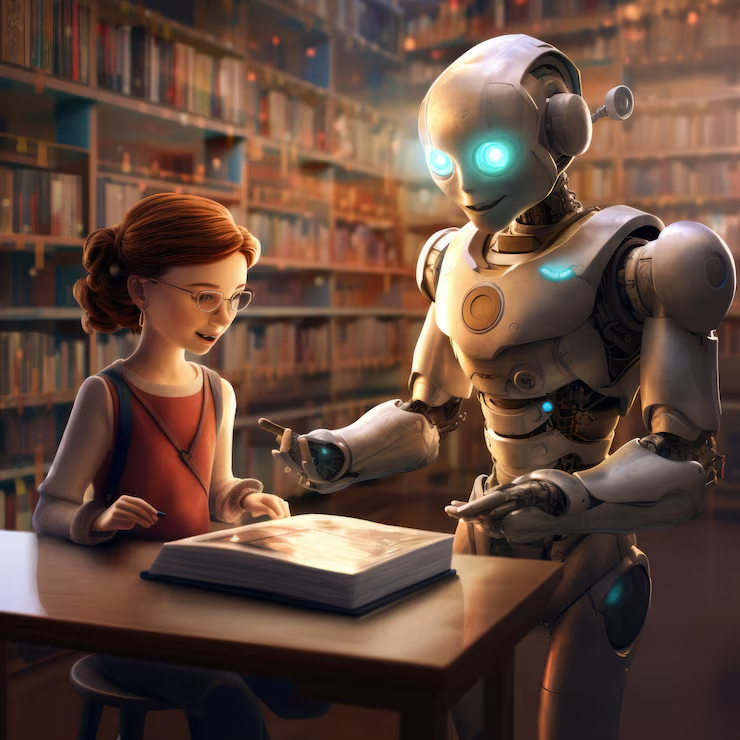
- Step 1: Use a Social Story to explain that AI is like a “smart librarian” who can help find ideas but can’t “be” the student.
- Step 2: Use Goblin.tools to help students break down “Solving a Problem” into tiny, manageable tasks. It’s surprisingly effective for reducing anxiety.
Quick Win: Have students use the “Magic To-Do” feature in Goblin.tools to break down a vocational task like “Organizing the classroom pantry.” It turns a big scary job into a visual checklist.
Why Is Multilingual Support the Heart of AI Ethics?

In our ELL space, AI isn’t just a tool; it’s a bridge. But if we don’t teach them to use it responsibly, it can become a wall.
Personal Observation: I’ve seen students use AI to translate their whole life, which is great until the AI gets a cultural nuance wrong. Which is insane when you think about how much we rely on it. We have to make sure they are “Trusting but Verifying.”
Sensory and Linguistic Scaffolds
- Visual Supports: Use Canva Magic Media to generate high-contrast images for students who need visual cues in their home language.
- Dual-Language Prompts: Teach students to ask AI: “How do I explain this problem in English and Spanish?” This keeps their native language (L1) as a strength while they build their English (L2) muscles.
As noted in the guide on how to teach responsible AI, modeling is key. I always show my students how I use Google Lens to translate a difficult text, then double-check it with a peer. It’s about showing them the “Metacognitive” process.
Can AI Help Students Solve “Real-World” Problems?
During our class, we often talk about community problems—like high food costs. This is where “Responsible AI” shines.
The Task: Create a solution for a local problem.
- English Block: Students use Grammarly (with the AI features turned on) to draft a pitch.
- Financial Literacy Block: They use AI to help calculate a simple budget for their solution.
- Digital Literacy Block: They create a visual presentation using AI-generated icons.
Here’s the kicker: the student must be the one to “vet” the AI. I’ve noticed that when I ask, “Is the AI right about this?” they start to develop a critical eye. They become the “H” in the H-AI-H (Human-AI-Human) loop.
The “Productive Struggle” in a World of Instant Answers
Look, I know what you’re thinking. “If they have AI, they won’t struggle!” But here’s the thing… we want them to struggle with the right things.
Instead of struggling with spelling, they struggle with “Is this the best way to help my neighbor?” We are shifting the struggle from the mechanical to the meaningful. But you have to set the guardrails early. I tell my students, “The AI is your intern. You are the boss.”
Plus, as the Understood article reminds us, we must protect student privacy. Never let them put names or addresses into a bot. Honestly? That’s the most “responsible” lesson of all.
Final Thoughts: You Are the Expert, Not the Bot
New teacher, don’t let the tech overwhelm you. You know your students. You know their IEP goals. AI doesn’t know that “Student B” needs a sensory break every ten minutes or that “Student C” thrives when things are color-coded.
Teaching responsible use of AI is just the next frontier of Digital Literacy. You are building a bridge to the workforce. And that bridge is built on ethics, critical thinking, and a whole lot of love.
Ready to Build Responsible Solvers?
The future is being written in your classroom every single day.
Your Action Plan:
- The AI Check-in: Tomorrow, ask your students: “If a computer gives you an answer, how do you know it’s true?”
- Try a Tool: Use MagicSchool AI to create a Social Story about “Being an AI Boss.”
- Stay Connected:
Reflection Question: When a student uses AI to “skip” a step, is it because they are being “lazy,” or because the cognitive load of that specific step was too high? How can we adjust the prompt to keep the “productive struggle” alive?