
AI can make a task more accessible—or quietly make the thinking easier.
This A.C.C.E.S.S. AI Rigor Preservation Checker compares the original task, differentiated version, and intended learning objective and determines whether the access support preserved the intellectual work.
A.C.C.E.S.S. AI Rigor Preservation Checker
“Differentiate access. Preserve the thinking.”
📌 1. Original Learning Task
🎨 2. Differentiated / Adapted Version
✅ Quick Rigor Check (5 Key Evaluation Questions)
📊 Side-by-Side Dimension Comparison
Evaluates changes in cognitive process, reasoning, evidence demand, and language functions between original and differentiated versions.
| Instructional Dimension | Original Task Expectation | Differentiated Task Expectation | Preservation Status |
|---|
⚖️ “What Changed?” (Access Support vs. Potential Rigor Reduction)
✏️ Rigor-Preserving Alternative Proposal
If cognitive demand was reduced, use this replacement option to scaffold the language and access without scaffolding away the thinking.
💡 Actionable Recommendations (Keep, Change, Add)
🛣️ “Same Rigor, Different Pathways” Options
Multiple ways to access the same grade-level objective while keeping essential cognitive demand intact.
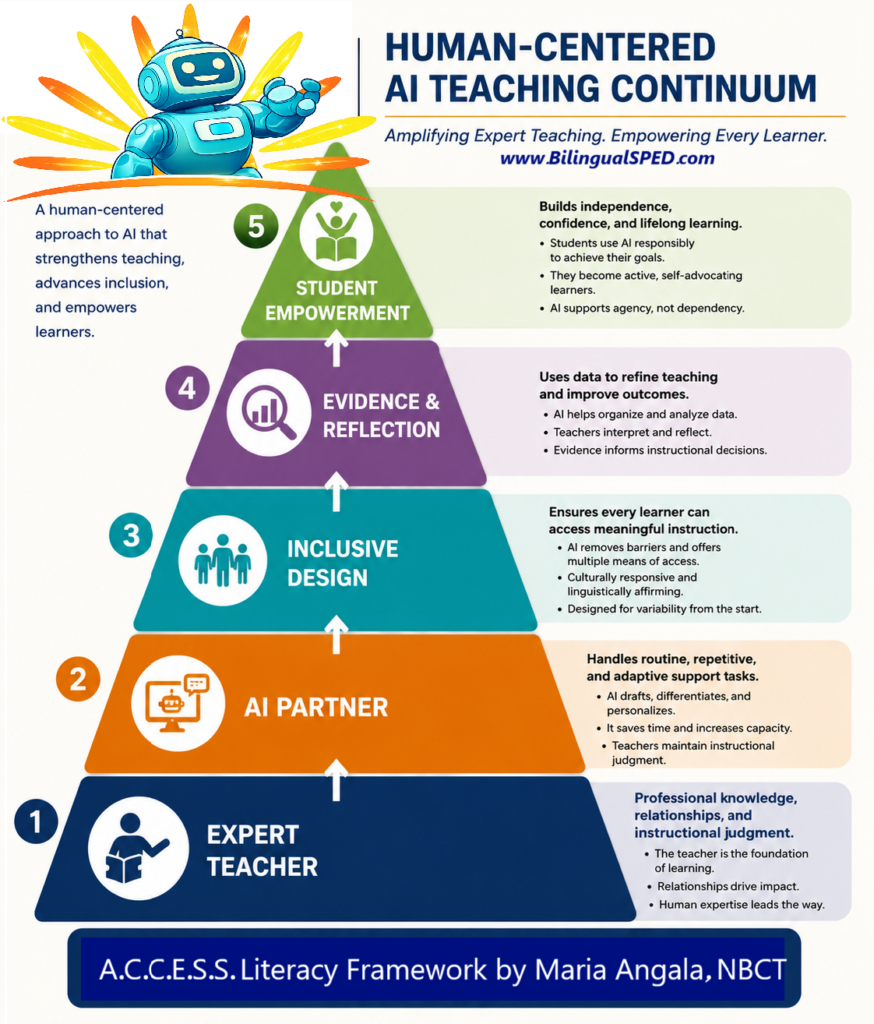
🔄 Human-Centered AI Continuum & Scaffold Fade Lifecycle
AI should not merely differentiate instruction. It should help teachers design access while protecting rigor and progressively transferring control to the learner.
You are the calm in their storm. Keep showing up, keep tracking the data, and keep respecting their dignity. You’ve got this.
.
Join our FUNSHINE Community to receive our latest free A.C.C.E.S.S. AI tools and other updates: