Bilingual special education classrooms run on flexibility, differentiation, and daily problem-solving that most general education systems only encounter occasionally. This post explores what global education systems — from Universal Design for Learning to culturally responsive teaching to multilingual instruction — can borrow from bilingual SPED practice, and why these “niche” classroom strategies are actually blueprints for better education everywhere. Written from 22+ years of bilingual special education classroom experience, not a policy think tank.
The Conference Question That Stuck With Me
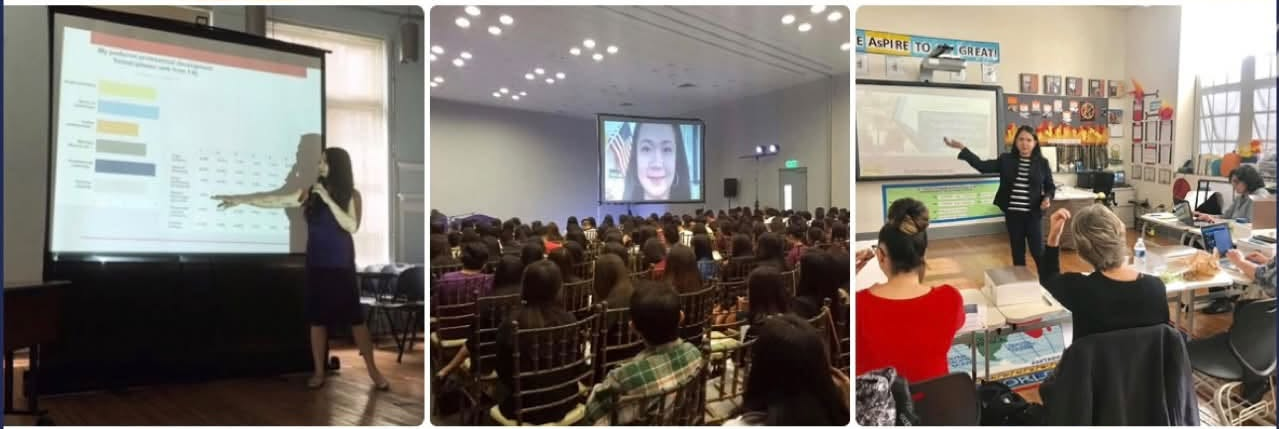
A few years ago, I was presenting at an international education conference — different country, different education system entirely, translator in the room — and a general education teacher asked me something that’s stuck with me since: “How do you plan for that many differences in one classroom, every day, without losing your mind?”
I laughed, honestly, because that’s just… Tuesday for us. But it’s actually a great question, and answering it made me realize something. What feels like “just how bilingual SPED works” to those of us in it is, to most of the education world, an unsolved problem they’re just starting to take seriously. Multiple languages in one room. Multiple disability profiles. Multiple cultural backgrounds, sometimes with conflicting expectations about school itself. We’ve been building solutions for this for decades. Nobody handed us a manual — we built the manual, lesson by lesson, mistake by mistake.
So here’s the argument of this post, plainly: bilingual special education isn’t a specialized corner of the field that only applies to a small group of kids. It’s a working laboratory for exactly the kind of flexible, differentiated, culturally responsive instruction every education system on earth is currently trying to figure out how to do at scale. Let’s dig into what that actually looks like, and what any teacher, anywhere, can borrow from it.
Why Do Bilingual SPED Classrooms End Up Solving Problems Other Systems Are Still Facing?
Simple answer: we don’t get the luxury of a “typical” learner to design around. Every single day requires differentiation for language, for disability, for culture, sometimes all three stacked on top of each other in one kid. That constraint — annoying as it is some days — forces a kind of instructional creativity that general education classrooms often don’t develop until they’re forced to, usually when their own student population starts looking more like ours already does.
And that shift is happening everywhere, fast. Education systems worldwide are grappling with increasingly diverse classrooms — multiple home languages, a wider range of learning profiles, students arriving with vastly different prior schooling experiences. The tools bilingual SPED teachers have refined out of necessity are exactly the tools general education is now scrambling to build from scratch.
Quick Win: If you’re a general education teacher reading this, borrow one habit from bilingual SPED classrooms this week: build every lesson with three access points in mind — visual, verbal, and hands-on — instead of defaulting to one and differentiating only when a student struggles.
What Bilingual SPED Classrooms Can Teach the World About Universal Design for Learning
Universal Design for Learning — the framework built on multiple means of engagement, representation, and action/expression — isn’t a special education invention exactly, but bilingual SPED classrooms have been living inside it out of necessity longer than most. CAST, the organization behind UDL, describes it as research-based practice for building equitable, effective learning environments — which is, frankly, just a formal description of what we do before first period every day.
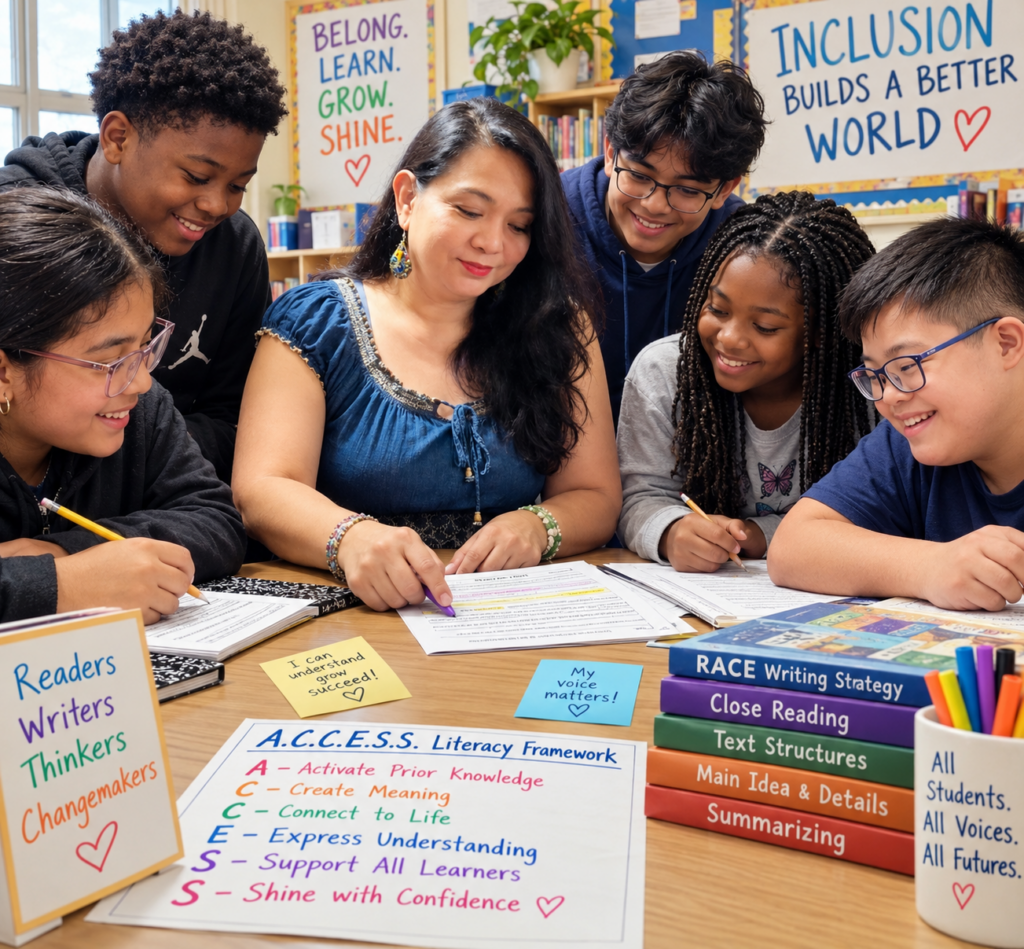
Here’s the part that doesn’t get said enough: UDL done well isn’t extra work bolted onto a lesson. It’s the lesson, designed from the start to reach more than one kind of learner. In my experience, a visual schedule built for a student with autism helps the emergent bilingual student too, since visuals cross language barriers a lot faster than verbal directions do. A chunked reading passage built for a student with a specific learning disability helps every single kid whose attention wanders by minute four. UDL done in bilingual SPED isn’t three separate accommodations. It’s one well-designed lesson doing triple duty.
Research on UDL adoption in higher education, including comparative work between US and South African institutions, keeps landing on the same conclusion: UDL strengthens inclusion broadly, not just for students with disabilities — which tracks exactly with what bilingual SPED classrooms have shown for years at the K-12 level.
Quick Win: Pick your next lesson and ask: is there a visual pathway, a verbal pathway, and a hands-on pathway built in from the start? If you only have one, you’re not doing UDL yet — you’re doing traditional instruction with an accommodation added on afterward.
What Global Education Can Learn About Culturally Responsive Teaching
Here’s something I’ve noticed after years of international teacher training work — culturally responsive teaching gets talked about as a “nice addition” in a lot of general education spaces, something you layer in if there’s time. In bilingual SPED, it’s not optional. It can’t be. A social story that ignores a family’s cultural norms around, say, how children are expected to respond to adults, simply doesn’t work. A behavior plan that assumes one culture’s definition of “appropriate eye contact” can actively backfire with a family from a different background.
What this teaches the rest of education, honestly, is that culturally responsive practice isn’t a soft skill. It’s a technical skill, the same way differentiating a reading level is a technical skill — and it requires the same rigor. I built entire units of professional development content around exactly this, because “just be culturally aware” isn’t specific enough to actually change classroom practice.
A Lesson That Shows This Working in Real Time
Classroom context: A small group of students, wildly different profiles — one autistic student who needed predictable, visual structure, one emergent bilingual student with a specific learning disability, working through a unit on personal narratives.
The instructional challenge: A single writing prompt wasn’t going to work for either student as written. One needed the entire task broken into visual steps with zero ambiguity about what came next. The other needed language support in two directions — home language first, English second — plus extra scaffolding for the actual writing mechanics.
The lesson approach: I built the personal narrative unit around three access points from the start, not as an afterthought. A visual graphic organizer broke the writing process into small, predictable steps for the autistic student. A sentence-starter bank was available in both languages for the bilingual student, alongside a social story about sharing personal experiences that respected the fact that this particular family’s culture treated certain personal topics as more private than the assignment initially assumed — something I only knew because I’d built a relationship with that family over time, not because any curriculum guide told me to check.
Student response: Genuinely one of the stronger units of the year. The autistic student completed the full narrative independently, working straight through the visual steps without needing constant redirection. The bilingual student produced a narrative rich enough in her home language that translating it into English became almost secondary — the ideas were already there, fully formed, once the language barrier stopped being the obstacle.
Teacher reflection: I’ll be honest, I almost used a generic personal narrative prompt from a shared curriculum folder, the kind that assumes every family shares certain topics openly. Glad I paused. In my experience, the cultural adjustment mattered just as much as the language adjustment — sometimes more, and it’s the piece that’s easiest to skip when you’re pressed for time.
What I’d refine next time: I’d build a standing “cultural check” step into my planning process for any personal or reflective writing unit, rather than relying on memory of individual family conversations. It’s exactly the kind of thing that’s easy to do well once and then forget to repeat systematically.
If you want a ready-made structure for building exactly this kind of multi-access lesson — sensory accommodations, visual supports in multiple languages, and social stories included — I created a complete classroom toolkit for this, and you can grab it on TpT here.
What Global Education Systems Are Still Catching Up On
This isn’t a criticism aimed at any one country or system — it’s a pattern I’ve seen across every place I’ve trained teachers, from Southeast Asia to South Asia to the Philippines. General education, worldwide, tends to treat differentiation as a response to a struggling student rather than a built-in design principle. Bilingual SPED flips that entirely: you design for variability from the very first draft of a lesson, because you already know a single approach will leave someone out.
Multilingual scaffolding is the other piece that keeps coming up in my international work. Countries with growing multilingual student populations are increasingly looking at exactly the visual-support and home-language-first strategies bilingual SPED classrooms have used for years — not as a special accommodation, but as sound instructional design for any classroom with more than one language represented in the room.
Quick Win: If you’re building curriculum for a system just starting to address multilingual or diverse learners, start with the bilingual SPED question: “How would I teach this if I couldn’t assume shared language or shared cultural background?” That question alone reshapes most lesson plans for the better.
Frequently Asked Questions
What is Universal Design for Learning, and how does it relate to bilingual special education?
UDL is a framework built on offering multiple means of engagement, representation, and expression so more learners can access instruction without needing individual retrofits. Bilingual special education classrooms have practiced this out of necessity for years, since a single instructional approach rarely reaches every student’s language, disability, and cultural needs at once.
Can strategies from special education classrooms really apply to general education systems worldwide?
Yes — strategies like visual scaffolding, chunked instruction, and culturally responsive lesson design were refined in special education contexts but benefit any classroom with diverse learners, which describes most classrooms globally given rising multilingual and neurodiverse student populations.
Why is culturally responsive teaching considered a technical skill rather than a soft skill in bilingual SPED?
Because getting it wrong has concrete instructional consequences — a behavior plan or social story that ignores cultural context can actively fail, not just feel insensitive. Bilingual SPED treats cultural responsiveness with the same rigor as academic differentiation because the stakes are just as real.
References
- CAST, “Until Learning Has No Limits” — Universal Design for Learning (2026)
- EBSCO Research Starters, “Universal Design for Learning (UDL)” (2026)
- Journal of Learning Styles, “Universal Design for Learning as a Pedagogical Framework for Addressing Learner Diversity” (2025)
- NCBI/PMC, “Inclusion, Universal Design and Universal Design for Learning in Higher Education: South Africa and the United States”
- Council for Exceptional Children (High-Leverage Practices), “Universal Design for Learning” (2025)
Where to Go From Here
Bilingual special education classrooms have been quietly solving the exact problems global education is now racing to catch up on — reaching multiple languages, multiple disability profiles, and multiple cultural backgrounds in the same room, every single day. That’s not a niche skill set. It’s the blueprint. The rest of the field is just starting to notice.
If you want a ready-made resource built around exactly these multi-access, culturally responsive principles, the classroom toolkit — sensory accommodations, multilingual visual supports, and social stories included — is available on TpT here.
Want more of this kind of thinking — bilingual SPED strategy that applies far beyond special education classrooms? Sign up for my email newsletter and I’ll send new strategies and international classroom stories straight to your inbox.
Reflection question: Think about one strategy you use regularly in your classroom because a specific student needed it. Now ask — could that same strategy actually help every student in the room, if you built it into the lesson from the start instead of adding it on later?
You Might Also Like
More strategy and tools like this over at the BilingualSPED.com blog — including posts on the A.C.C.E.S.S. Literacy Framework, Universal Design for Learning in practice, and culturally responsive instruction for multilingual classrooms.