ADHD qualifies for special education services under the IDEA category called Other Health Impairment (OHI) — not its own stand-alone category. Students must show that ADHD creates a significant educational impact. This post walks you through what OHI means, what ADHD looks like in real classrooms, and how to actually support these students — especially bilingual learners — using evidence-based, sensory-aware, multilingual strategies.

Let me start with something I don’t often say out loud in professional spaces.
ADHD is not a theoretical concept to me. It’s not something I only know from graduate coursework or a chapter in a textbook. I live with it — every day, at home, in the most intimate way possible. My husband was officially diagnosed with ADHD in his 50s. But here’s the thing: I knew since we were in college and grad school together at the University of the Philippines (Diliman, Quezon City).
I was studying MA Psychology and I was sitting in special education classes learning about executive function deficits and impulsivity and the way certain brains struggle with sustained attention — and I kept looking across the library table at this man I loved and thinking, oh. That’s him. That’s what this is.
I never made a big deal of it. I quietly helped him build systems — visual schedules, reminders, structured routines — without framing it as “you have ADHD and I’m managing you.” Because he would have shut that down immediately. I did take him to a developmental psychologist at one point and he shook it off. Didn’t take it seriously. Couldn’t see what I could see.
Fast forward to his 50s. ADHD had been quietly affecting his work, his relationships, his sense of self — for decades. Finally, he went to a psychiatrist for a full evaluation. And the diagnosis came back confirmed.
I wasn’t surprised. Not even a little. I was just relieved that he finally had a name for it. And a path forward.
I tell you this because when I talk about ADHD in classrooms — when I coach new teachers on how to support students who can’t sit still or forget their homework for the seventh time in a row or interrupt constantly — I’m not talking about an abstract category. I’m talking about someone I love. And probably someone you love too. Or someone sitting in your classroom right now wondering why everything feels so hard.
And if you want a ready-made starting point for supporting these students visually and linguistically, I built a set of AI-Enhanced Anchor Charts for SPED & ELL students on TpT that I reference throughout this post — because the right visual support at the right moment changes everything for a student with ADHD.
What Is Other Health Impairment (OHI) Under IDEA — And Why Does ADHD Live Here?
This surprises a lot of people. Parents especially. They’ll come into an IEP meeting expecting to see “ADHD” checked on the eligibility form and instead they see “Other Health Impairment.” And their face falls a little. Like, other? That sounds like a catch-all.
But OHI is actually one of the most clearly defined categories in IDEA. Under 34 CFR §300.8(c)(9), OHI means the student has a condition that results in “limited strength, vitality, or alertness — including a heightened alertness to environmental stimuli — that results in limited alertness with respect to the educational environment.” And that condition must adversely affect the student’s educational performance.
ADHD fits this definition because it creates exactly that: limited alertness to what matters in the classroom, heightened alertness to everything that doesn’t (the fly on the window, the conversation two tables over, the pattern on the ceiling tile). It’s not that these students aren’t paying attention. They’re paying too much attention. To everything. Simultaneously. Which makes focusing on one thing — like a reading passage or a math problem — genuinely exhausting.
According to the Centers for Disease Control and Prevention (CDC), approximately 9.8% of U.S. children ages 3–17 have been diagnosed with ADHD — that’s roughly 6 million children. And yet, it remains one of the most under-identified conditions among bilingual and multilingual learners, because the behaviors are often attributed to language acquisition rather than a neurological difference.
⚡ Quick Win: When explaining OHI to a parent: “ADHD qualifies your child for special education services because it’s affecting how their brain processes and responds to the school environment — not because they’re a ‘bad student’ or not trying hard enough. The category is called Other Health Impairment, and it’s actually very specific about what ADHD does to the brain’s alertness and attention system.” That reframe takes two minutes and changes the whole tone of the meeting.
What Does ADHD Actually Look Like in Your Classroom? (Because It’s Not Always What You Think)
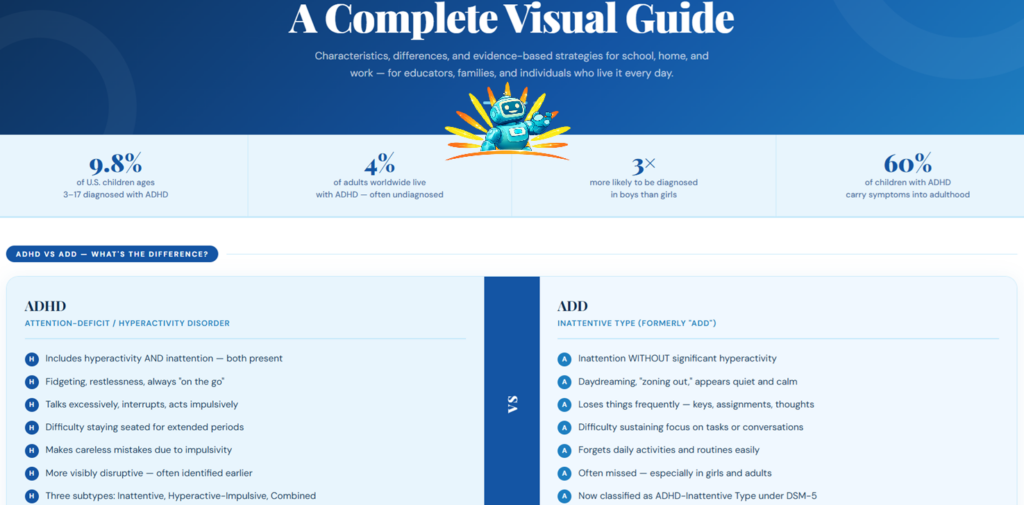
Here’s where I want to coach you the way I wish someone had coached me early in my career. ADHD doesn’t always look like a kid bouncing off walls. That’s the hyperactive presentation, and yes — it’s real, and it’s exhausting for everyone including the student. But there are three presentations of ADHD, and if you’re only watching for the bouncy kid, you’re missing two-thirds of the picture.
ADHD — Predominantly Inattentive Presentation
This is the quiet kid. The one who stares out the window. The one whose paper is half-blank at the end of class not because they’re defiant but because they genuinely lost track of what they were doing. In my experience, this presentation is dramatically under-identified in girls and in bilingual learners — because the behavior doesn’t disrupt the class, so nobody flags it.
ADHD — Predominantly Hyperactive-Impulsive Presentation
This one gets caught fast. Can’t sit still, calls out, interrupts, gets up without permission, acts before thinking. Teachers notice. But sometimes the response is behavioral intervention when what the student actually needs is executive function support and sensory accommodation.
ADHD — Combined Presentation
Both. Which, honestly, is what most of the diagnosed students I’ve worked with have. The inattention and the impulsivity, at different times and in different settings. My husband is a combined presentation. You’d never know it in a one-on-one conversation because he’s brilliant and engaging. But put him in a meeting with an agenda and fifteen items? He’s gone by item three.
💗 A Personal NoteLiving with someone who has ADHD means learning to communicate differently. It means not starting a serious conversation mid-task. It means building in transitions and check-ins instead of assuming follow-through. It means separating the behavior from the intention — because the intention is almost always good. The brain just gets in the way sometimes. I apply everything I know as a special educator to my marriage. And it works. Not perfectly. But it works.
How Do You Qualify a Student for OHI? What Does the Evaluation Actually Look For?
This is the question I get from new teachers most often. And it’s a good one — because the process matters.
To qualify under OHI for ADHD, the school must conduct a full and individual evaluation that includes:
- A medical diagnosis or documentation from a qualified physician or licensed mental health professional (like the psychiatrist who finally evaluated my husband)
- Rating scales completed by teachers and parents — typically the Conners Rating Scales or the Vanderbilt ADHD Diagnostic Rating Scale
- Evidence of educational impact — this is the key part. A diagnosis alone doesn’t qualify a student. The ADHD must be making school harder in a measurable way.
- Review of records, observations, academic performance data
For bilingual learners: the evaluation must account for language background. A student who is still acquiring English may score differently on attention measures simply because processing in a second language is cognitively demanding. Make sure your school psychologist has experience with bilingual evaluations, or advocate loudly for one who does.
⚡ Quick Win — For New Teachers Writing OHI IEPsThe most important sentence in an OHI IEP is the one that explains how ADHD impacts learning. Not just “student has difficulty with attention” — but something specific: “Student’s limited sustained attention affects his ability to complete multi-step math tasks independently and to retain orally-presented directions without visual support.” Specific. Measurable. Connected to the classroom.
What Actually Works in the Classroom for Students With ADHD? (Evidence-Based, Not Pinterest-Based)
Look — I’ve seen a lot of “ADHD tips” floating around that amount to “give them fidget spinners and hope for the best.” And while sensory tools are genuinely useful (more on that in a second), they’re not a strategy. They’re a support. There’s a difference.
Here’s what the research actually says:
1. Executive Function Scaffolds — Every Single Lesson
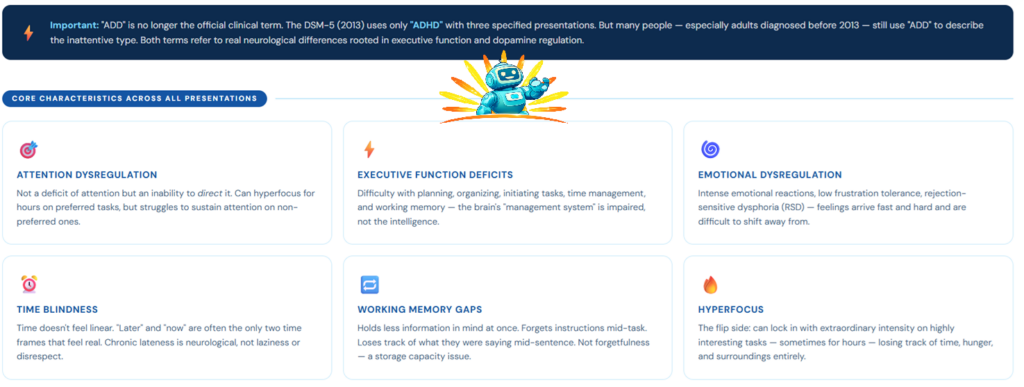
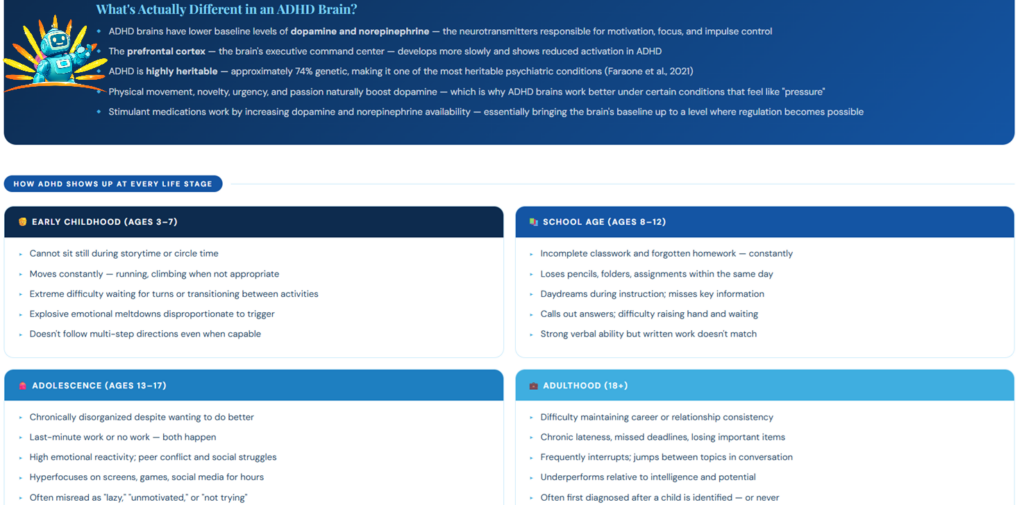
ADHD is fundamentally an executive function disorder. The brain’s capacity to plan, organize, initiate tasks, shift attention, and regulate behavior is impaired — not because the student is lazy, but because of how the prefrontal cortex develops in ADHD brains. According to Barkley (2012) in the Journal of Attention Disorders, ADHD is better understood as a disorder of self-regulation than simply a disorder of attention.
What this means practically: you can’t hand a student with ADHD a three-step direction and walk away. You need:
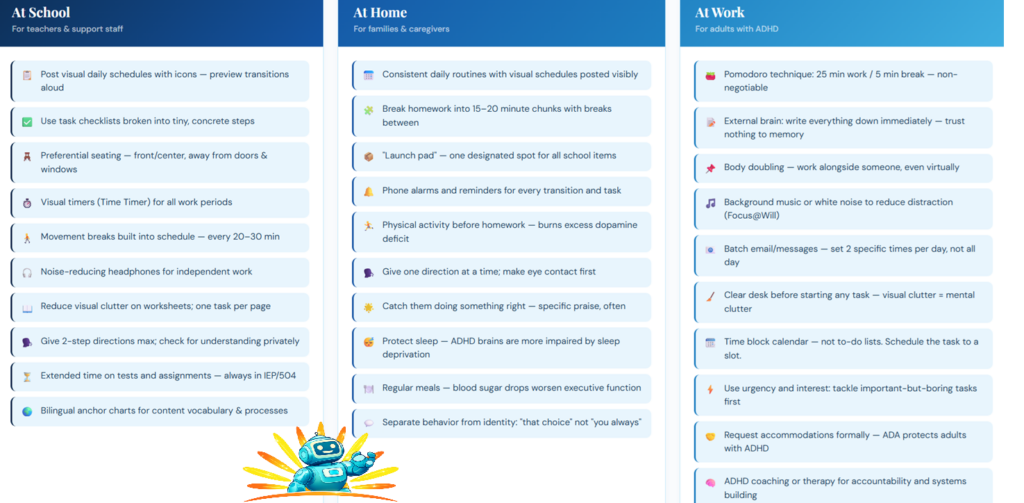
- Visual step-by-step task cards — broken into the smallest possible steps
- Checklists they can physically check off
- Clear start signals (“You have 3 minutes, and here’s what done looks like”)
- Anchor charts posted at eye level that show the process, not just the product
I’ve used anchor charts for task analysis with ADHD students for years. The visual anchor does what the verbal reminder can’t — it’s there, consistently, without requiring the student to ask for help or the teacher to repeat themselves. My anchor chart bundle on TpT was built exactly for this — with SPED and ELL students in mind, and bilingual versions included. It covers reading, math, and writing processes in a format that students with ADHD can actually use independently.
2. Sensory Accommodations That Actually Make a Difference
Sensory accommodations for ADHD aren’t about giving kids toys. They’re about reducing the sensory load of the environment so the brain can do its actual job.
Things that work:
- Preferential seating — not in the back where distractions multiply, and not isolated in a corner which can feel punitive. Near the front, near the teacher, away from high-traffic areas and windows.
- Movement breaks built into the schedule — not as a reward for good behavior but as a neurological necessity. Research from multiple studies shows physical movement increases dopamine and norepinephrine — the exact neurotransmitters that ADHD brains are short on.
- Noise-reducing headphones for independent work periods — not silence, but reduced auditory input
- Flexible seating — wobble cushions, standing desks, floor options. These aren’t gimmicks. For a hyperactive-impulsive student, having somewhere to put the physical energy while the brain works is genuinely helpful.
- Reduced visual clutter in the classroom and on worksheets — busy borders and crowded pages are kryptonite for inattentive presentations
⚡ Quick Win — Sensory CheckBefore a student with ADHD hits behavioral dysregulation, look for the early signs: fidgeting escalating, off-task behavior increasing, pencil tapping, looking around. These are sensory/regulatory signals, not defiance. A 3-minute movement break at that moment prevents 30 minutes of behavior management afterward. I’ve clocked this in my own classroom. It’s not even close.
3. Technology Tools That Build Independence (Not Dependence)
For students with ADHD, the goal is always to build internal regulation over time — but in the meantime, external tools fill the gap.
- Time Timer — a visual countdown clock that makes abstract time concrete. Surprisingly effective for students who have no intuitive sense of how long 10 minutes actually is.
- Focus@Will — background music specifically engineered to support sustained attention. I’ve had students with ADHD do their best independent work with this running quietly.
- Forest App — a focus timer where students grow a virtual tree while staying on task. Weirdly motivating for middle schoolers especially.
- Tiimo — a visual daily planner app designed specifically for ADHD and autism that uses icons and colors instead of text-heavy schedules
- Goblin Tools — an AI-powered task-breaking tool that takes a big overwhelming task and breaks it into tiny steps automatically. This is gold for executive function support at home or school.
4. Visual Supports in Multiple Languages
For bilingual students with ADHD, this is non-negotiable. When a student is managing ADHD and processing academic content in their second language, the cognitive load is enormous. Visual supports in the home language aren’t a crutch — they’re a lifeline that frees up working memory so the student can actually attend to learning.
Practically, this means:
- Classroom schedules in both English and the home language (with icons — always with icons)
- Direction cards that use visuals alongside text
- Bilingual anchor charts for content vocabulary — so the student isn’t spending cognitive energy on translation when they should be spending it on comprehension
The anchor charts I created for SPED and ELL classrooms were built with this exact student in mind — a child who is simultaneously managing an attention difference and a language difference. The visual scaffolding works for both.
5. Social Stories for Students With ADHD
Social stories aren’t just for autism. They’re for any student who needs help understanding why certain expectations exist — and ADHD students often genuinely don’t understand why it’s a problem to call out in class, or why they need to wait their turn, or why getting up without asking is disruptive to others. Their brain moves fast and the social reasoning takes a beat to catch up.
Here’s a simple social story you can adapt:
“Sometimes my brain moves really fast. I get excited and want to share right away. But in class, everyone needs a turn to talk. When I raise my hand and wait, my teacher knows I have something to say. Waiting is hard for me, but I can practice. And when I wait, I feel proud of myself.”
Translate and customize for home language. Read it together. Keep it in the student’s folder. Revisit after difficult moments — not as punishment, but as a reset tool.
🛠️ Grab the Ready-Made Classroom Toolkit
If you want the ready-made version of the visual supports, bilingual anchor charts, and task analysis tools I described throughout this post — I put it all together in one place. Don’t build it from scratch at 9pm the night before a Monday IEP.→ Get the AI-Enhanced Anchor Chart Bundle on TpT
What Would I Refine? (Teacher Reflection — Because None of Us Get It Perfect)
Here’s my honest reflection after years of working with OHI students and living with ADHD in my own home:
I would have started the sensory accommodations conversation earlier. Way earlier. For years — both in my classroom and at home — I defaulted to behavioral strategies when what was really needed was a physiological intervention first. You can’t out-strategy a dysregulated nervous system. You have to address the regulation before you can address the behavior.
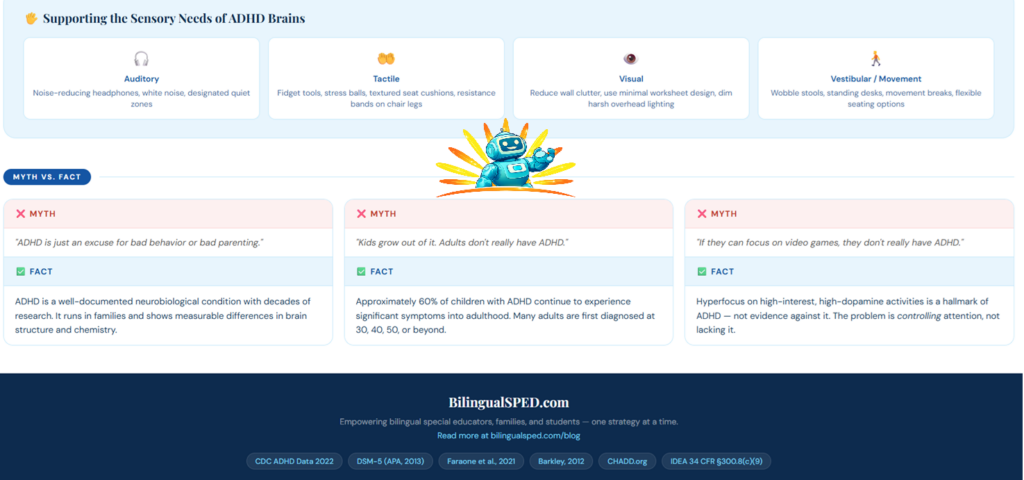
I also would have been more explicit with families earlier about what ADHD actually is — not a discipline problem, not a character flaw, not something you outgrow (my husband is living proof of that last one). The earlier parents understand the neuroscience, the better the home-school partnership gets.
And for bilingual families especially — I’d build in translated resources from day one. Not as an afterthought when communication breaks down. A parent who understands what OHI means in their home language is a parent who becomes your partner in the IEP process instead of a passive observer.
3 FAQs About Other Health Impairment and ADHD
❓ Does an ADHD diagnosis automatically qualify a student for special education under OHI?
No — and this is one of the most common misconceptions I encounter. A medical diagnosis of ADHD is necessary but not sufficient. The student must also demonstrate that the ADHD adversely affects their educational performance. Some students with ADHD are high-achieving enough that they don’t qualify for an IEP — but may still qualify for a 504 Plan, which provides accommodations without special education services. The evaluation team makes this determination based on the full body of evidence, not the diagnosis alone.
❓ Can ADHD be identified in bilingual or English Language Learner students without misidentification?
Yes, but it requires a careful, culturally and linguistically responsive evaluation. The key is comparing the student’s behavior across both languages and settings, and comparing their performance to peers with similar linguistic and cultural backgrounds — not to a monolingual English-speaking norm group. ADHD symptoms should be present in multiple settings (home and school) and should not be fully explained by the language acquisition process. A bilingual school psychologist or a team with bilingual assessment training is essential for accurate identification.
❓ What’s the difference between an IEP and a 504 for a student with ADHD?
An IEP (Individualized Education Program) is a special education document under IDEA. It provides specialized instruction, related services, and legally binding accommodations. A 504 Plan is under the Rehabilitation Act and provides accommodations and modifications without special education services. For ADHD specifically: if the student needs specialized instruction (a different way of being taught), they likely need an IEP. If they just need accommodations (extended time, preferential seating, reduced assignments), a 504 may be sufficient. The decision should be driven by what the student needs — not by what’s easier to write.
References
- Centers for Disease Control and Prevention. (2022). Data and Statistics About ADHD. cdc.gov/ncbddd/adhd
- U.S. Department of Education. IDEA Regulations, 34 CFR §300.8(c)(9): Other Health Impairment. sites.ed.gov/idea
- Barkley, R.A. (2012). Executive functions and self-regulation: An evolutionary neuropsychological perspective. Neuropsychology Review, 11(1), 1–29. ncbi.nlm.nih.gov
- Colorín Colorado. (2020). ADHD and English Language Learners. colorincolorado.org
- National Resource Center on ADHD. ADHD and Co-occurring Conditions. chadd.org
💜 Want More Resources Like This in Your Inbox?
Join the BilingualSPED community — practical, research-backed strategies for bilingual special educators delivered straight to you. IEP tips, classroom tools, freebies, and the kind of real talk you won’t find in a textbook.
📚 One More Thing Before You Go
Everything I described in this post — the bilingual anchor charts, visual task supports, and SPED-ready classroom tools — it’s all in one downloadable bundle. Built for SPED and ELL teachers who are doing the real work every single day.→ Grab the AI-Enhanced Anchor Chart Bundle on TpT
💬 Reflection Question
Think about one student on your caseload — or maybe someone in your own life — whose ADHD has been misread as a behavior problem instead of a neurological difference. What’s one thing you could shift in how you respond to them this week — in your classroom, your communication with their family, or your own internal narrative about what they’re capable of?
Drop your answer in the comments. I genuinely read every single one. This community is built on exactly these kinds of honest conversations.
📌 You Might Also Like
- Specific Learning Disabilities in Special Education: What Every Teacher Needs to Know About Dyslexia, Dyscalculia & Dysgraphia
- How to Write IEP Goals That Actually Work for Bilingual Special Education Students
- ELL Students in Special Education: How to Avoid Misidentification and Build Real Support
- Visual Supports and Anchor Charts That Work for SPED and ELL Classrooms
- IEP vs. 504: What Bilingual Families Need to Know and How to Explain the Difference
Thank you for this blog. I have a nephew with non-diagnosed ADHD. He fits in perfectly with the symptoms you describe. The way I interact with him are basically simple directions to make sure he can perform individually to the requests. With this information, I will also now make sure to follow up on the original task and make sure to finish one in order to go to the next one.
I can ask myself what this student needs right now to be successful. This recognizes that a student might may want to complete tasks but struggle with getting started or staying on task. Shifting my mindset will help build trust with students in order for them to be successful.