The AI Misconception Mapper does not merely count wrong answers—it helps teachers see the different thinking patterns behind those answers, while clearly separating a true conceptual misconception from language, access, or task-related difficulty.
A.C.C.E.S.S. AI Misconception Mapper
“From wrong answers to patterns in student thinking.”
📌 1. Lesson Context & Expected Success Criteria
📝 2. Student Responses (Paste Multiple Lines)
Making mistakes is how we learn! Revising our thinking helps us build deeper understanding.
🌐 Visual Concept Misconception Map
🛠️ Teacher Verification & Cluster Control (Teacher in Loop)
You remain the decision-maker. Confirm, edit, or merge AI-identified clusters before planning instruction.
⚖️ Contrastive Teaching & Misconception Repair Questions
- “Is light energy a material object you can touch, or an energy source?”
- “How does a plant turn light energy into chemical glucose?”
- “What evidence from our visual model shows that glucose is the food, not sunlight?”
⚡ 5-Minute Misconception Reteach Plan
5-Min Warm-Up Script: “Class, today we are contrasting energy sources with food. Sunlight provides the energy input, but glucose is the chemical food output. Look at this visual model…”
Language Scaffold: Provide sentence stem: “Sunlight is the energy used to make ____, not ____.”
📊 Categorized Student Response Breakdown
| Student | Submitted Response | Classification / Cluster | Inferred Thinking / Barrier | Confidence Level |
|---|
🔍 Transparent AI Reasoning Breakdown
📄 Complete AI Misconception Analysis Report
Our architecture becomes much more interesting:
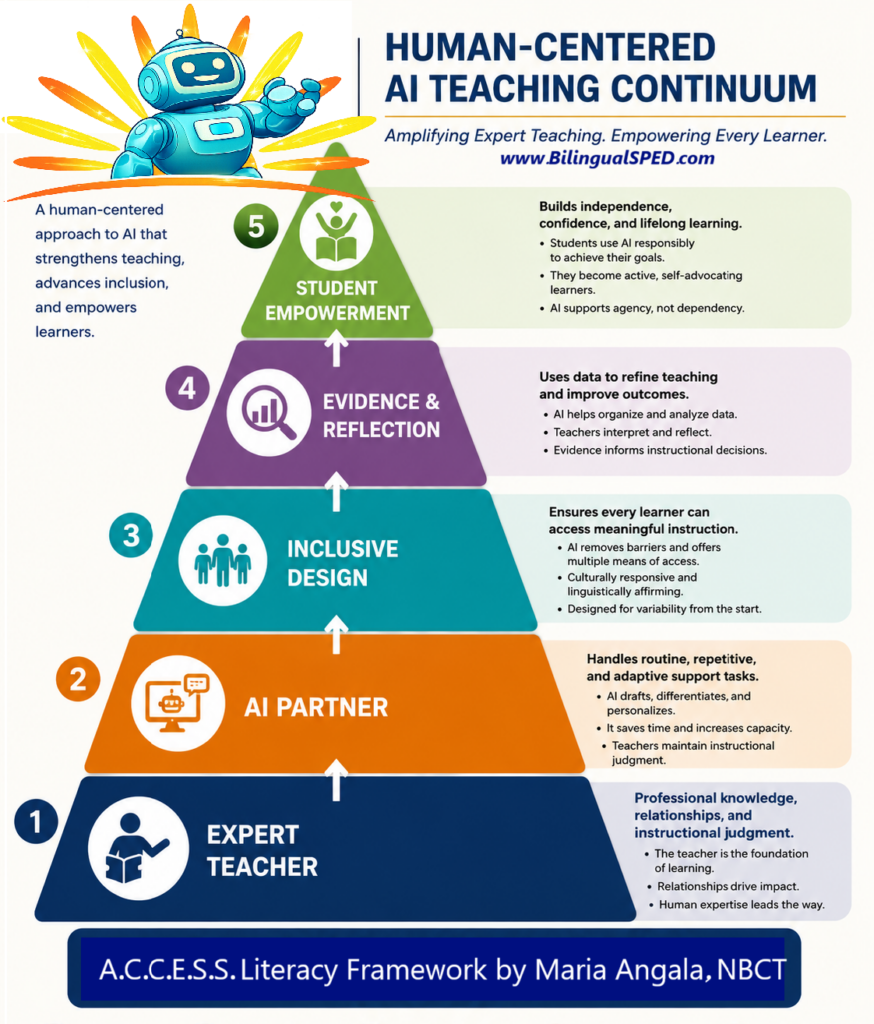
Student responses → AI clusters patterns → teacher verifies the pattern → AI suggests an instructional response → teacher reteaches → students demonstrate again → system tracks whether the misconception actually changed.
That is a much more sophisticated evidence loop than simply telling a teacher, “60% of your students got this wrong.”
And strategically, this tool pairs beautifully with:
AI Exit Ticket Pattern Analyzer: What patterns are appearing across the class?
AI Misconception Mapper: What different misconceptions may be underneath those patterns?
AI Learning Barrier Detector: Could the problem actually be access rather than understanding?
AI Rigor Preservation Checker: Can I make the task more accessible without lowering the thinking?
AI Scaffold Dependency Detector: Is the support helping or creating dependence?
AI Independence Readiness Analyzer: What can the learner increasingly do independently?
You are the calm in their storm. Keep showing up, keep tracking the data, and keep respecting their dignity. You’ve got this.
.
Join our FUNSHINE Community to receive our latest free A.C.C.E.S.S. AI tools and other updates: