
How I Tried This “St. Patrick’s Day” Differentiated Writing Lesson With My SPED Students — Here’s the Data and Student Growth

As a Special Education and English Learner teacher, I used this lesson with students who struggle with reading comprehension and written expression at my Washington DC school. In the high-stakes environment of my classroom, my days are spent navigating the intersection of cognitive disability and language acquisition. I am the lead teacher for a group … Read more

The AI Wild West: Are We Leading or Just Following?

AI is transforming classrooms fast — but are SPED and ELL teachers leading the change or just along for the ride? Drawing on the 2025 UNESCO report, veteran NBCT Maria Angala breaks down how special educators can use AI as a powerful scaffold for accessibility without losing the irreplaceable human connection. From “priming” AI prompts for students with significant cognitive disabilities, to using tools like MagicSchool AI and TalkingPoints for differentiated instruction and family communication, this post offers practical, boots-on-the-ground strategies. Maria also tackles algorithmic bias, data privacy as a life skill, and the importance of “productive struggle” in the age of AI. The takeaway: we hold the pen — and our students deserve educators who write the story intentionally.

Teaching Life Skills to Neurodivergent Learners: A Real-World Guide for Special Educators

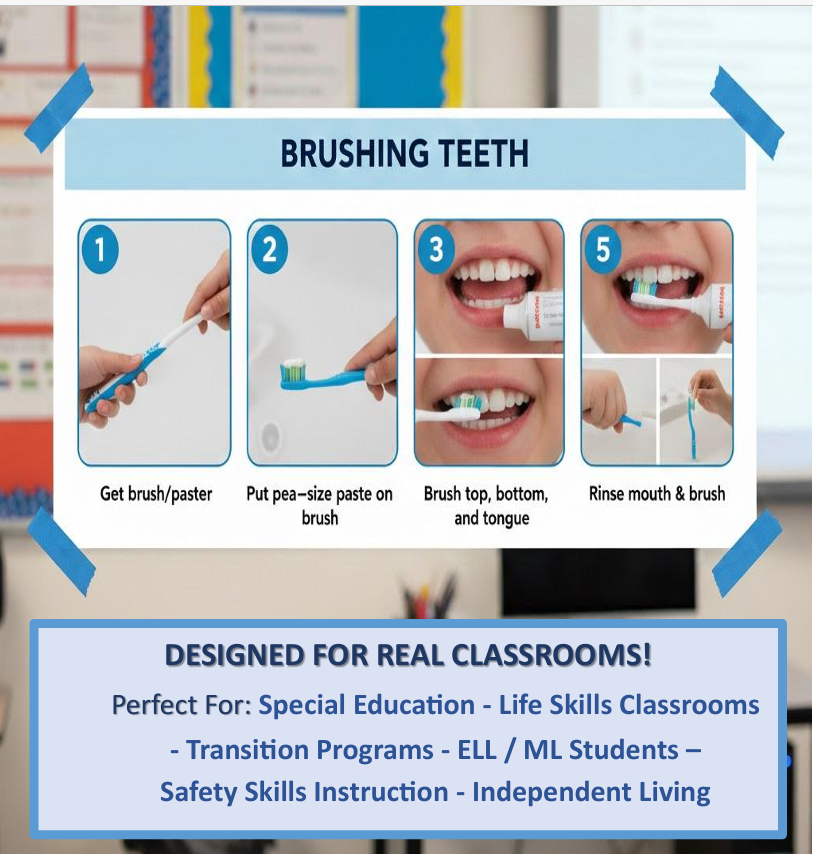
Academic gains mean little if students can’t brush their teeth, pack a lunch, or ask for help at a store. In this candid, real-world guide, special educator Maria Angala, NBCT, makes the case for putting life skills at the center of special education — not as extras, but as the whole point. From conducting honest skills assessments to creating visual supports that actually work, embedding skills into daily routines, and addressing the sensory barriers that block acquisition in the first place, Maria offers no-fluff strategies built from years in a self-contained classroom. She tackles the gap nobody wants to name: students graduating with academic knowledge but no practical independence. Written with honesty, urgency, and deep respect for families who ask “will they be okay when I’m gone?”, this post is the transition-focused teaching guide every special educator needs in their corner.

We Made It! Welcome to Our New Home at BilingualSPED.com

I’m sitting here at my desk at 11 PM on a Saturday night, staring at a WordPress dashboard that finally looks like a real website, and I have to tell you—I’m equal parts exhausted and exhilarated. We did it. We’re here. Welcome home. If you’ve been following along (or if you’re just discovering this space … Read more

Big News: We’re Moving to a New Home!

Hey everyone, I need to share something exciting with you. After years of writing here on Blogspot, FUNSHINE (Digital Anthology) is moving to a brand new home! If you’ve been following along, you know I’ve always been honest about what works and what doesn’t in my special education classroom. Well, I’m about to take my … Read more

Top 10 Special Education Blog Categories and Labels

  The process of getting back to blogging is not as easy as I thought it would be. As I’ve shared in my recent blog post on January 23, 2026, my first post after 10 years of being away from blogging, I’m back at the keyboard—this time with clearer purpose and hard-earned perspective. Having this as my … Read more

How My Special Education & ELL Students Used “Citing Textual Evidence” Lesson — And What Actually Worked

As a Special Education and English Learner teacher, I used this lesson with students who struggle with reading comprehension and written expression, and what I witnessed was a powerful shift in how they engaged with informational text. My name is Maria, and for the past 22 years as a teacher in an inner city school … Read more

How to Teach RI 6.7 Analyzing Text Features AI Enhanced Visual Lesson for SPED & ELL

I often tell new teachers that our students often miss the “signposts” that authors leave behind. These signposts—headings, captions, charts, and bold words—are not just decorations; they are the keys to the kingdom of informational text. In the 6th-grade landscape, specifically under Standard RI.6.7, we focus on integrating information presented in different media or formats. … Read more

How I’m using AI to Enhance my Lesson Planning

Tired of spending hours rewriting the same lesson for students at different levels? In this post, National Board Certified Teacher Maria Angala pulls back the curtain on how she uses AI as an “iteration partner” in her bilingual special education classroom. Teaching students who are navigating both IEPs and English language learning, Maria once spent evenings manually differentiating every text three ways. Now, AI handles the drafts — and she handles the decisions. She shares exactly where AI saves her time (leveling texts, generating sentence frames, simplifying vocabulary) and where it falls short (missing cultural context, overestimating reading levels, using idioms that confuse ELL students). The result? More time for one-on-one instruction, stronger lesson delivery, and a less burned-out teacher. A must-read for any SPED or ELL educator curious about AI — but wanting to stay firmly in the driver’s seat.

How I Tried This Differentiated “Valentine’s Day” Reading Lesson With My SPED Students — Here’s the Data and Student Growth

As a Special Education and English Learner teacher, I used this lesson with students who struggle with reading comprehension and written expression at my Washington DC school. In the world of intensive intervention, the arrival of February often brings a specific kind of anxiety. While the rest of the building is focused on candy and … Read more