From QR Codes to Artificial Intelligence: How Human-Centered Innovation Leads the Future of Education

AI isn’t replacing teachers β€” it’s asking us to get more intentional, not less human. Using the same “student first, tool second” thinking behind Dr. Ranjitsinh Disale’s QR-coded textbooks, I walk through the Human-Centered AI Teaching Continuum and show you exactly how I use AI to build sensory accommodations, multilingual visual supports, and social stories β€” the stuff that actually moves the needle for multilingual learners and students with disabilities.

Interactive Vocabulary Builder & Scaffold Generator

A complete, web-based Interactive Vocabulary Builder & Scaffold Generator. It takes any target academic task or vocabulary objective and breaks it down across all 5 WIDA English Language Proficiency Levels (Beginning to Bridging), provides Formative (2-tier) and Summative (3-tier) rubric templates with emoji supports, and features multilingual self-reflection blocks across multiple languages.

AI SPED Inclusion Accommodations Weekly Monitoring Generator

This AI tool, AI SPED Inclusion Accommodations Weekly Monitoring Generator, addresses a real need that many SPED teachers face every week: documenting how accommodations were implemented, not simply listing them.

Designing “STAR Reading Strategy” Lessons for Real Students: What My Classroom Has Taught Me About

As a Special Education and English Learner teacher at my Washington DC school, I have spent a career working with students who find the act of reading to be an exercise in endurance rather than exploration. In my Digital Literacy Academy, I am the lead teacher for students with significant cognitive disabilities, many of whom … Read more

Assignment Translator & Scaffold Generator

A complete, interactive Assignment Translator & Scaffold Generator web application. It takes complex grade-level instructions and instantly simplifies them across 4 WIDA Proficiency Levels, generates Formative (2-tier) and Summative (3-tier) assessment rubrics, and includes multilingual self-reflection prompts.

Interactive Lesson Scaffold & Assessment Generator

A complete, interactive Lesson Scaffold & Assessment Generator web application. It combines automated lesson scaffolding (vocabulary, sentence frames, visuals, graphic organizers, small-group strategies, and extensions) with a built-in WIDA-aligned Rubric & Self-Reflection Generator.

Why Do We Keep Treating SPED Like a “Side Room” Task?

Special Education isn’t a separate island; it’s the blueprint for effective teaching for every single learner. By using Universal Design for Learning (UDL), we create high-access classrooms where sensory supports and visual scaffolds benefit SPED, ELL, and general education students alike. I remember my first year as a lead teacher in the Digital Literacy Academy. … Read more

Can AI Actually Help Multilingual Learners and Students with Disabilities?

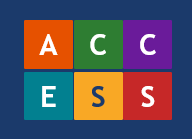
The A.C.C.E.S.S. Literacy Framework (Activate, Clarify, Chunk, Engage, Support, Synthesize) is a six-step instructional sequence built for multilingual learners and students with disabilities β€” and the Human-Centered AI Teaching Continuum is the guardrail that keeps AI in a supporting role instead of a driving one. Used together, they don’t just make lessons “accessible.” They make grade-level rigor reachable, without lowering the bar. Grab the ready-made version at the end if you’d rather skip straight to implementation.

Interactive ELL Rubric Generator

A complete, interactive ELL Rubric Generator system. It includes a ready-to-run web-based generator tool (HTML/JS) you can save and run in any browser, along with pre-designed templates aligned with WIDA Can-Do Descriptors, visual emoji supports, and multilingual self-reflection prompts.

What Is A.C.C.E.S.S. Gives?

A.C.C.E.S.S. Gives funds three things β€” training scholarships, free classroom materials for Title I schools, and direct micro-grants β€” so bilingual and special education teachers stop paying out of pocket for tools their dually-identified students need right now. It’s already supported 205 teachers and an estimated 4,150 students across five countries. You can apply, check Title I eligibility, or just grab the free starter resources today.

