A.C.C.E.S.S. Daily Progress Report Generator

Positive behavior support works best when expectations are clear and feedback is consistent. This AI-Enhanced Daily Progress Report (DPR) Form gives teachers a simple, structured way to track student behavior and communicate progress with families.

AI Classroom Behavior Observation Checklist

This SPED Classroom Behavior Observation Checklist PDF provides a clear, structured way to document student behavior in real classroom settings. Designed for special education teachers, case managers, and behavior teams, this checklist supports data-driven decision-making for FBAs, BIPs, and IEP meetings.

Why Do We Keep Treating SPED Like a “Side Room” Task?

Special Education isn’t a separate island; it’s the blueprint for effective teaching for every single learner. By using Universal Design for Learning (UDL), we create high-access classrooms where sensory supports and visual scaffolds benefit SPED, ELL, and general education students alike. I remember my first year as a lead teacher in the Digital Literacy Academy. … Read more

Why Is Color Coding the “Secret Sauce” for Classroom Management?

Color coding is the ultimate secret weapon for reducing cognitive load and boosting independence in the special education classroom. By assigning specific colors to subjects, students, or stations, you create a visual map that guides learners through their day with minimal verbal prompting. I remember my first year as a digital literacy lead. I had … Read more

How to Write IEP Goals for English Language Learners with Disabilities: The Complete Guide with Examples

I remember sitting in a windowless conference room early in my career, staring at a draft IEP for a student who was both a newcomer to the country and a learner with a significant cognitive disability. The goal I had written was generic: “The student will read 10 sight words with 80% accuracy.” My mentor leaned over, … Read more

10 Executive Functioning AI Prompts for SPED Teacher, OTs and SLPs

For Special Education teachers, OTs, and SLPs, AI is a powerful “cognitive prosthetic.” Let’s put my AI Assistant, Shiny, to work. These prompts are designed to create the visuals, scaffolds, and scripts that support executive functioning (EF) without overwhelming the student. Here are 10 high-impact AI prompts tailored to your Transition classroom and the specific needs of your … Read more

Books, Belonging & the Bilingual Brain: Celebrating Autism Acceptance Day and International Children’s Book Day in Your Inclusive Classroom

April holds two powerful celebrations — Autism Acceptance Day and International Children’s Book Day — and for bilingual special educators, they belong together. Diverse books with visual supports, social stories, and sensory accommodations aren’t “extras.” They’re the instructional backbone of an inclusive, neurodiversity-affirming classroom. Read on for practical strategies you can use this week, plus tools that make implementation easier.

Emotional Disturbance (ED) Under IDEA: What Every Special Education Teacher Really Needs to Know — and Why This Category Breaks My Heart a Little

Emotional Disturbance is arguably the most stigmatized IDEA disability category in the entire system. Students who qualify under ED are frequently labeled as “difficult,” “manipulative,” or “a behavior problem” — when what they actually have is a documented neurological and emotional condition that makes regulating feelings and behavior genuinely hard. This post is for new special education teachers who are about to walk into a room with an ED student and don’t feel prepared. It’s also for experienced teachers who’ve been doing this long enough to know that behavior is communication — and that the right structure, tools, and unconditional positive regard can change everything.

Teaching Life Skills to Neurodivergent Learners: A Real-World Guide for Special Educators

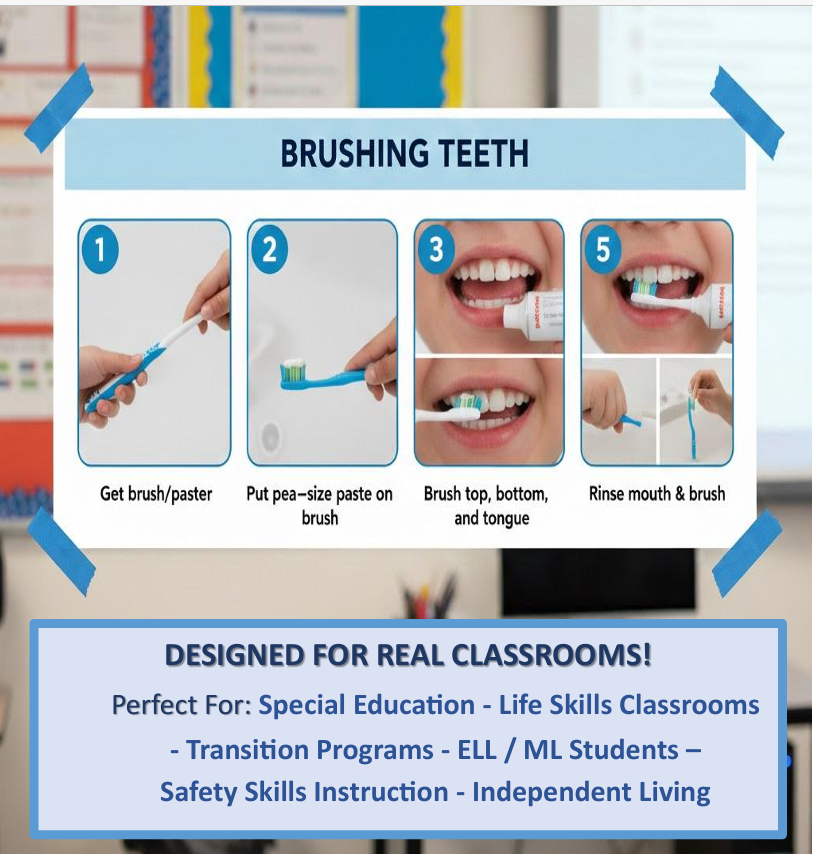
Academic gains mean little if students can’t brush their teeth, pack a lunch, or ask for help at a store. In this candid, real-world guide, special educator Maria Angala, NBCT, makes the case for putting life skills at the center of special education — not as extras, but as the whole point. From conducting honest skills assessments to creating visual supports that actually work, embedding skills into daily routines, and addressing the sensory barriers that block acquisition in the first place, Maria offers no-fluff strategies built from years in a self-contained classroom. She tackles the gap nobody wants to name: students graduating with academic knowledge but no practical independence. Written with honesty, urgency, and deep respect for families who ask “will they be okay when I’m gone?”, this post is the transition-focused teaching guide every special educator needs in their corner.

Big News: We’re Moving to a New Home!

Hey everyone, I need to share something exciting with you. After years of writing here on Blogspot, FUNSHINE (Digital Anthology) is moving to a brand new home! If you’ve been following along, you know I’ve always been honest about what works and what doesn’t in my special education classroom. Well, I’m about to take my … Read more