Meta description: A framework only changes outcomes if it travels beyond one classroom, one country, one language. This post introduces the vision behind building an international community of practice around the A.C.C.E.S.S. Literacy Framework™ — how teachers and schools across different contexts can adapt it, contribute evidence, and grow it together into something bigger than any single classroom. Written from 22+ years in bilingual special education and international teacher training, not a corporate franchise pitch.
The Moment I Realized One Classroom Wasn’t Enough
I still remember training a room full of teachers overseas, watching them adapt the A.C.C.E.S.S. Literacy Framework™ — Activate, Clarify, Chunk, Engage, Support, Synthesize — to a completely different language, a completely different set of cultural norms around classroom instruction, and honestly, a completely different school day structure than what I’d built the framework around originally. And it still worked. Not because I’d predicted every context in advance. Because the framework was built around what actually happens in a multilingual, neurodivergent-inclusive brain — and that part doesn’t change much from country to country.
That’s when it hit me, kind of all at once: this was never supposed to stay in one classroom. Or honestly, one country.
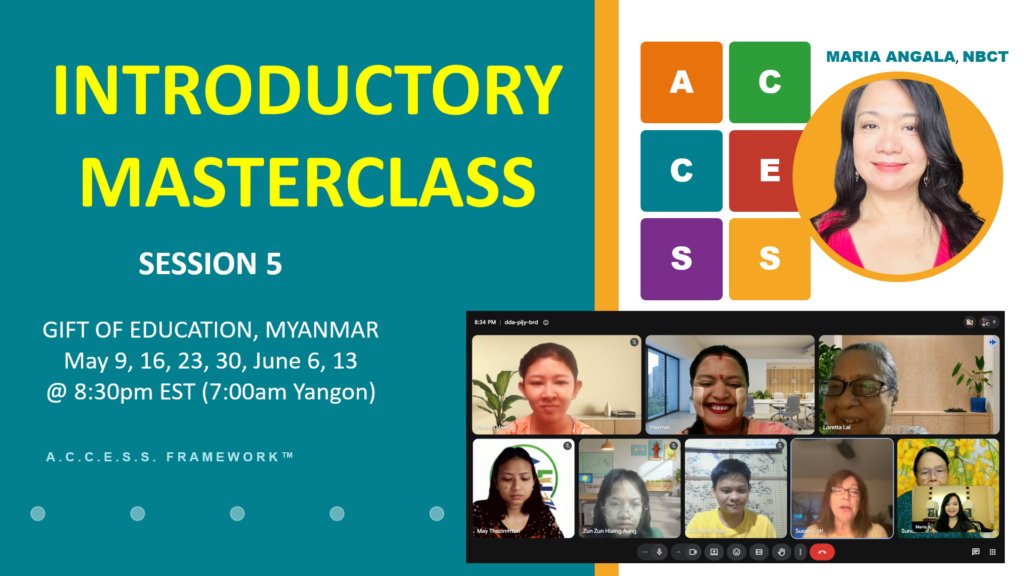
Here’s the thing about literacy frameworks in general — most of them get built, published, maybe presented at a conference or two, and then quietly stay wherever they started. Which is a waste, frankly, of good instructional thinking. The research on professional learning is pretty blunt about this: teacher development is most effective when it happens through continuous, collaborative, reflective practice — not a one-time workshop that ends the moment everyone goes back to their classrooms. So let’s dig into what it actually looks like to build something bigger than that. A living, growing, international community around a shared framework, instead of a framework that just sits still.
Why Does a Literacy Framework Need a Community, Not Just Users?
A framework without a community around it is just a document. It gets adopted once, maybe adapted a little, and then it stops evolving — because nobody’s feeding new evidence back into it. A framework with a community keeps improving, because every teacher using it in a different context surfaces something the original design didn’t anticipate.
This isn’t just my opinion. Research on networked professional learning communities has found real, measurable benefits — one case study on network PLCs found that the connection between reflective and practical learning genuinely improved teacher efficacy, with both individual and collective learning shaping actual classroom pedagogy, not just theoretical discussion. Another study, focused specifically on multilingual family engagement, found that networked PLCs spanning multiple school districts created real space for educators to jointly develop new approaches they wouldn’t have found working in isolation.
Quick Win: If you’re implementing any instructional framework in your classroom, start a simple shared log — successes, adaptations, things that didn’t work — even if it’s just for yourself at first. That log is the seed of a community of practice, whether or not you ever share it beyond your own notes.
What Does It Look Like to Adapt a Framework Across Different Contexts?
1. Language and Literacy Structure Adaptation
The “Clarify” and “Chunk” steps of A.C.C.E.S.S. look different depending on the writing system and literacy traditions a teacher is working within. A chunking strategy built around English sentence structure needs real adjustment for languages with different syntax patterns entirely. This isn’t a flaw in the framework — it’s exactly the kind of adaptation that makes a framework stronger once it’s documented and shared back.
2. Cultural Norms Around Engagement
The “Engage” step assumes certain things about classroom participation that don’t hold universally — some cultural contexts encourage vocal, immediate student response; others emphasize quiet reflection before any verbal engagement happens at all. Teachers adapting the framework internationally have to make this adjustment consciously, not assume their home context’s norms travel automatically.
3. Building in Multilingual and Sensory Supports From the Start
Wherever the framework travels, the “Support” step has to include real scaffolds — visual supports available in the languages actually spoken in that classroom, sensory accommodations for neurodivergent learners, and social stories where a student needs the “why” behind a routine explained explicitly rather than assumed. This piece doesn’t change country to country. If anything, it’s the most consistent thread across every context I’ve trained in.
I built a full toolkit specifically to make this piece easier to implement wherever a teacher is starting from — sensory accommodations, visual supports in multiple languages, and ready-to-use social stories included. If you want the ready-made version of what I’m describing here, grab the AI-Supported IEP Writing Toolkit on TpT — it’s built to travel across contexts the same way the framework itself does.
Quick Win: Before adapting any framework to a new context, ask specifically: what does “Support” mean for the languages, sensory needs, and cultural norms actually present in this room? Don’t assume the version you know translates automatically.
A Lesson That Shows What This Adaptation Looks Like in Practice
Classroom context: A training session with local teachers in a context where students were multilingual across several regional languages, with several neurodivergent learners in most classrooms — a very different linguistic landscape than where the framework was originally built.
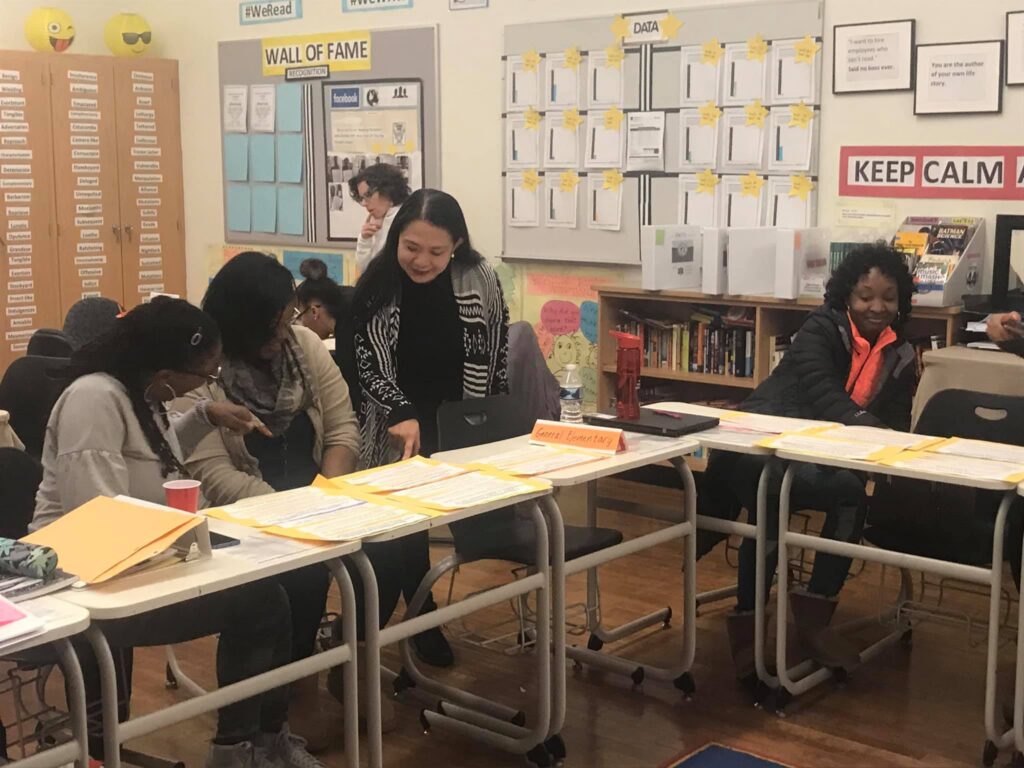
The instructional challenge: The “Chunk” step, as I’d originally designed it, assumed English sentence structure and a specific literacy progression. Teachers in the room needed to know how to apply the same underlying principle — breaking text into cognitively manageable pieces — to languages with entirely different syntax and, in some cases, different directionality on the page.
The lesson approach: Rather than handing over a fixed template, I worked with the local teachers to identify the principle behind chunking — reducing cognitive load by controlling how much new information arrives at once — and let them build the specific chunking structure around their own language’s actual sentence patterns. I paired this with visual supports built collaboratively, in their languages, and discussed how social stories might need to reflect different cultural expectations around directness and correction.
Student response: Teachers reported back weeks later that students who’d previously struggled with imported, English-structured materials were engaging far more successfully with chunked text built around their own language’s natural patterns — which, honestly, should have been obvious in hindsight, but required the framework to bend rather than the students.
Teacher reflection: I’ll admit I almost handed over the original English-based chunking template as-is during that first session, assuming it would translate cleanly enough. It didn’t, not without real adaptation — and the local teachers were the ones who actually solved that problem, not me. That’s exactly the point of building a community instead of just distributing a framework top-down.
What I’d refine next time: I’d build in a structured feedback loop from the very first training session, capturing these context-specific adaptations systematically instead of learning about them informally weeks later through follow-up conversations. That loop is basically what a community of practice is supposed to be — I just need to formalize it more intentionally going forward.
If you’re adapting instructional frameworks across contexts and want a starting structure that already builds in multilingual and sensory flexibility, the toolkit is built around exactly this kind of adaptability — check it out on TpT here.
What Would a Global Community of Practice Around This Framework Actually Look Like?
Not a franchise. Not a rigid certification pipeline that punishes deviation from the “original” version. A real community of practice, the kind the research describes, where teachers across countries contribute evidence — what worked, what needed adjustment, what surprised them — back into a shared, evolving body of knowledge. Continuous improvement research on educational networks has found that the most developed professional networks build affinity groups around specific shared problems, meeting regularly to reflect on data from testing changes in their own contexts — which is precisely the structure I’d want to see form around A.C.C.E.S.S. as it keeps growing internationally.
That means teacher-contributed case studies from different countries. Instructional leaders adapting the framework for their specific student populations and sharing what changed. Schools piloting components and reporting back evidence, not just anecdote. The framework gets stronger every time someone somewhere adapts it thoughtfully and tells the rest of the community what they learned.
Quick Win: If you’re using any instructional framework across a diverse student population, start treating your adaptations as contributions, not just private workarounds. Document them. Share them with colleagues, even informally. That habit alone builds the beginning of a community of practice.
Frequently Asked Questions
What is the A.C.C.E.S.S. Literacy Framework™?
It’s a literacy instruction framework built around six components — Activate, Clarify, Chunk, Engage, Support, Synthesize — designed specifically with multilingual and neurodivergent learners in mind, and built to be adapted rather than applied rigidly across different classroom contexts.
How can teachers in different countries adapt an instructional framework built in one context?
Successful adaptation focuses on the underlying instructional principle rather than the specific template — for example, adapting the “chunking” principle to a language’s actual sentence structure rather than importing an English-based template unchanged. Feedback and documentation from that adaptation process strengthens the framework for everyone who uses it next.
Why does building a community of practice matter more than just publishing a framework?
Research on professional learning communities consistently shows that ongoing, collaborative reflection improves teaching practice more than one-time training does. A framework without an active community stops evolving once it’s published; a framework with a community keeps improving as more educators contribute evidence from different contexts.
References
- Springer Nature, “The Influence of an Online Professional Learning Community on Teacher Professional Development for Fostering a Love of Reading”, TechTrends (2025)
- Taylor & Francis, “The Network Professional Learning Community Approach: An Effective Model for Individual and Group Learning” (2024)
- Springer Nature, “Networked Professional Learning Communities for Multilingual Family Engagement”, Journal of Educational Change (2025)
- Taylor & Francis, “Bringing Scientific-Professional Learning Communities Into Practice: Exploring Variation in Educational Improvement Network Health and Development”, Peabody Journal of Education (2025)
- Frontiers in Education, “Professional Learning Communities in Secondary Schools and Improvement of Learning in Challenging Contexts” (2025)
Where to Go From Here
A literacy framework only proves itself once it leaves the hands of the person who built it. Every teacher who adapts A.C.C.E.S.S. to a new language, a new cultural context, or a new set of neurodivergent learners isn’t just using the framework — they’re building it further, whether that gets formally documented yet or not. That’s the whole vision here: not one classroom’s framework, but a genuinely international, continuously improving community dedicated to literacy outcomes for multilingual and neurodivergent learners everywhere.
If you want a starting toolkit built around the same adaptability and inclusive design principles behind the framework itself, it’s available on TpT here — the AI-Supported IEP Writing Toolkit.
Want to be part of this growing community — practical strategies, framework updates, and real classroom adaptations from around the world? Sign up for my email newsletter and I’ll send new resources straight to your inbox.
Reflection question: Think about a strategy you’ve adapted for your specific students that started as someone else’s idea. What did you change, and would sharing that adaptation help another teacher somewhere else solve the same problem faster?
You Might Also Like
More strategy and tools like this over at the BilingualSPED.com blog — including posts on the A.C.C.E.S.S. Literacy Framework in practice, international teacher training, and building literacy outcomes for multilingual and neurodivergent learners.