
Emotional Disturbance (ED) Under IDEA: What Every Special Education Teacher Really Needs to Know — and Why This Category Breaks My Heart a Little

Emotional Disturbance is arguably the most stigmatized IDEA disability category in the entire system. Students who qualify under ED are frequently labeled as “difficult,” “manipulative,” or “a behavior problem” — when what they actually have is a documented neurological and emotional condition that makes regulating feelings and behavior genuinely hard. This post is for new special education teachers who are about to walk into a room with an ED student and don’t feel prepared. It’s also for experienced teachers who’ve been doing this long enough to know that behavior is communication — and that the right structure, tools, and unconditional positive regard can change everything.
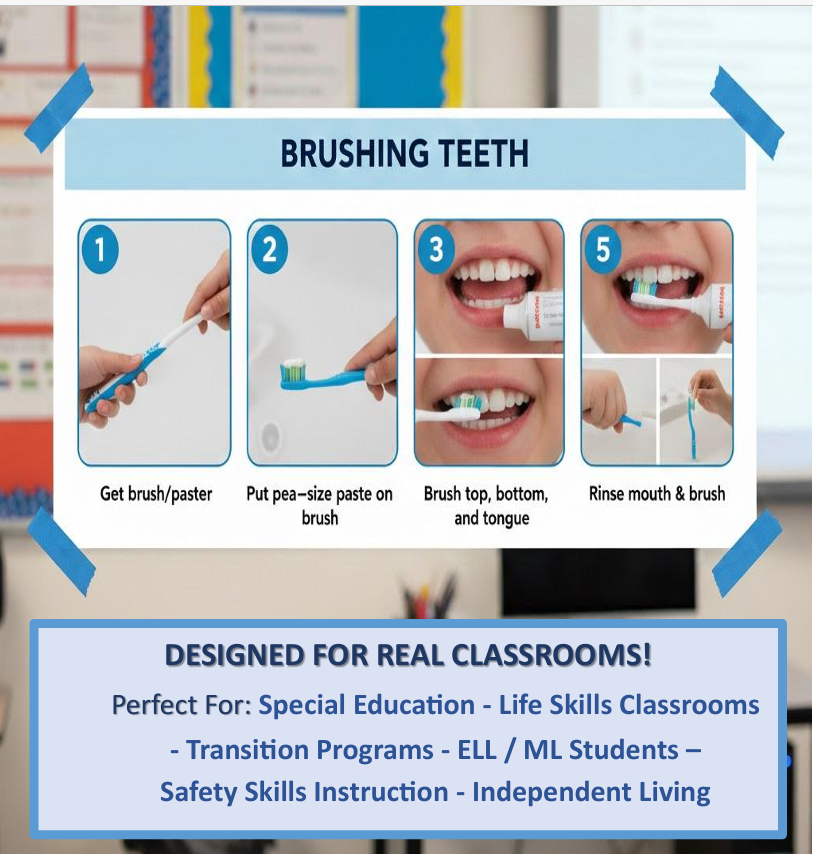

Teaching Life Skills to Neurodivergent Learners: A Real-World Guide for Special Educators

Academic gains mean little if students can’t brush their teeth, pack a lunch, or ask for help at a store. In this candid, real-world guide, special educator Maria Angala, NBCT, makes the case for putting life skills at the center of special education — not as extras, but as the whole point. From conducting honest skills assessments to creating visual supports that actually work, embedding skills into daily routines, and addressing the sensory barriers that block acquisition in the first place, Maria offers no-fluff strategies built from years in a self-contained classroom. She tackles the gap nobody wants to name: students graduating with academic knowledge but no practical independence. Written with honesty, urgency, and deep respect for families who ask “will they be okay when I’m gone?”, this post is the transition-focused teaching guide every special educator needs in their corner.

What Top 10 IEP AI Prompts I Use as a Special Education Case Manager (and Why I’ll Never Go Back)

Discover how AI-powered prompts revolutionized my IEP writing process, reducing documentation time by over half while maintaining personalization and compliance. This comprehensive guide shares the exact prompts I use daily as a special education case manager, complete with real examples, implementation tips, and troubleshooting advice. Learn how to ethically integrate AI into your special education workflow without sacrificing the individualization our students deserve, plus get access to ready-made templates that address present levels, goals, accommodations, and progress monitoring for students with diverse learning needs including sensory processing differences and multilingual learners.

What’s the Big Difference Between Language Acquisition and a Learning Disability?

A bilingual SPED coach breaks down one of the most consequential distinctions in special education: the difference between language acquisition and a learning disability. This post explains why the two can look identical on the surface—and why getting it wrong leads to either misidentification or delayed intervention. Learn the key coaching lens: language acquisition shows growth with support, while learning disabilities show persistence despite it. Includes practical pattern-based observation questions, recommended assistive technology tools for both populations, guidance on home-language assessment, and an FAQ. Essential reading for bilingual educators, new SPED teachers, and families advocating for accurate, culturally responsive evaluation of multilingual learners.

Other Health Impairment (OHI) Under IDEA: What Every Special Education Teacher Needs to Know About ADHD — And Why I Take This One Personally

Other Health Impairment (OHI) is the IDEA disability category that most teachers search for and most families don’t understand — because ADHD lives here, not in its own separate box. This post breaks down what OHI means, how ADHD qualifies under it, and what real classroom support looks like for students who are misunderstood, misidentified, and often just plain exhausted from trying to keep up with a world that wasn’t designed for their brain. It’s also personal. My husband was diagnosed with ADHD in his 50s — and I’d known since college. ADHD isn’t abstract to me. It’s at my dinner table every night.

Autism Spectrum Disorder (ASD) Under IDEA: Why a Medical Diagnosis and School Eligibility Are NOT the Same Thing — and What Every Teacher Needs to Understand

Autism Spectrum Disorder is one of the most searched IDEA categories — and one of the most misunderstood. Families arrive at IEP meetings clutching a private diagnosis from a developmental pediatrician, expecting services to begin immediately. And then they hear “we still need to do our own evaluation” and the confusion turns to frustration and sometimes rage. This post is for new teachers who need to understand why that’s true, what the school evaluation actually involves, and how to support autistic students — especially bilingual learners — with real, classroom-tested strategies, sensory accommodations, visual supports, and social stories that work.

Stop the Paperwork Panic: How to Organize Your SPED and ELL Classroom with AI-Ready Forms

This post helps teachers overcome the chaos of classroom paperwork by introducing AI-ready forms and organization systems designed specifically for SPED and ELL settings. It addresses the overwhelm that comes from managing IEP documentation, progress monitoring, behavior records, and communication logs by offering ready-to-use, customizable forms that streamline data collection and reduce cognitive load. With tips on how to integrate these forms into daily routines, organize digital and physical files, and use AI tools to automate repetitive tasks, the post offers practical solutions that save time, improve accuracy, and help educators stay focused on instruction. Educators learn how intentional organization can reduce stress, support compliance, and create a calm, purposeful workflow so they can spend more time with students and less time buried in paperwork.