
Emotional Disturbance (ED) Under IDEA: What Every Special Education Teacher Really Needs to Know — and Why This Category Breaks My Heart a Little

Emotional Disturbance is arguably the most stigmatized IDEA disability category in the entire system. Students who qualify under ED are frequently labeled as “difficult,” “manipulative,” or “a behavior problem” — when what they actually have is a documented neurological and emotional condition that makes regulating feelings and behavior genuinely hard. This post is for new special education teachers who are about to walk into a room with an ED student and don’t feel prepared. It’s also for experienced teachers who’ve been doing this long enough to know that behavior is communication — and that the right structure, tools, and unconditional positive regard can change everything.
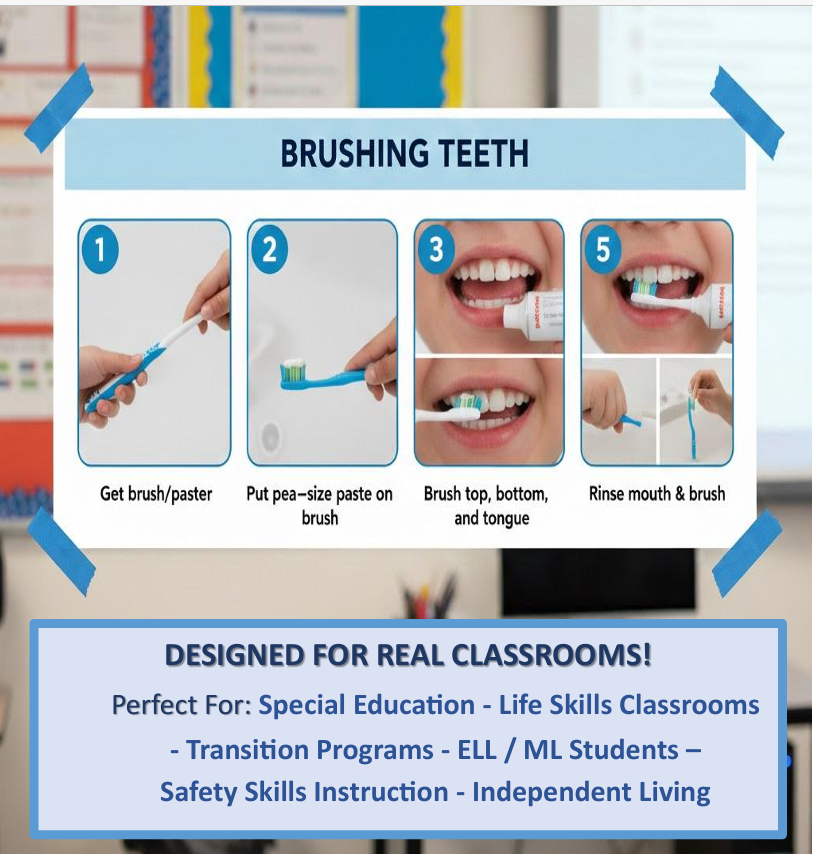

Teaching Life Skills to Neurodivergent Learners: A Real-World Guide for Special Educators

Academic gains mean little if students can’t brush their teeth, pack a lunch, or ask for help at a store. In this candid, real-world guide, special educator Maria Angala, NBCT, makes the case for putting life skills at the center of special education — not as extras, but as the whole point. From conducting honest skills assessments to creating visual supports that actually work, embedding skills into daily routines, and addressing the sensory barriers that block acquisition in the first place, Maria offers no-fluff strategies built from years in a self-contained classroom. She tackles the gap nobody wants to name: students graduating with academic knowledge but no practical independence. Written with honesty, urgency, and deep respect for families who ask “will they be okay when I’m gone?”, this post is the transition-focused teaching guide every special educator needs in their corner.

We Made It! Welcome to Our New Home at BilingualSPED.com

I’m sitting here at my desk at 11 PM on a Saturday night, staring at a WordPress dashboard that finally looks like a real website, and I have to tell you—I’m equal parts exhausted and exhilarated. We did it. We’re here. Welcome home. If you’ve been following along (or if you’re just discovering this space … Read more

Top 10 Special Education Blog Categories and Labels

  The process of getting back to blogging is not as easy as I thought it would be. As I’ve shared in my recent blog post on January 23, 2026, my first post after 10 years of being away from blogging, I’m back at the keyboard—this time with clearer purpose and hard-earned perspective. Having this as my … Read more

How I Tried This Differentiated “Valentine’s Day” Reading Lesson With My SPED Students — Here’s the Data and Student Growth

As a Special Education and English Learner teacher, I used this lesson with students who struggle with reading comprehension and written expression at my Washington DC school. In the world of intensive intervention, the arrival of February often brings a specific kind of anxiety. While the rest of the building is focused on candy and … Read more

Other Health Impairment (OHI) Under IDEA: What Every Special Education Teacher Needs to Know About ADHD — And Why I Take This One Personally

Other Health Impairment (OHI) is the IDEA disability category that most teachers search for and most families don’t understand — because ADHD lives here, not in its own separate box. This post breaks down what OHI means, how ADHD qualifies under it, and what real classroom support looks like for students who are misunderstood, misidentified, and often just plain exhausted from trying to keep up with a world that wasn’t designed for their brain. It’s also personal. My husband was diagnosed with ADHD in his 50s — and I’d known since college. ADHD isn’t abstract to me. It’s at my dinner table every night.

Why Your Blogger Teacher Returns

After ten years away, I’m back at the keyboard—this time with clearer purpose and hard-earned perspective.   For a long time, I stepped away from writing—not from teaching, but from sharing it publicly. The last ten years were full in a different way. I focused on family life, on becoming more present at home, and … Read more

How to Find Creative Rest (Before Your Best Ideas Stop Showing Up)

Opens with the deeply personal “I used to be the teacher who made things” — the specific grief of a creative person who’s gone quiet — which lands immediately for any teacher who’s felt it. Roots the concept in Dr. Dalton-Smith’s research framework and then moves through three signs of depletion before offering five targeted strategies:

Build a weekly “receiving” practice → Libby (free library ebooks/audiobooks)
Go somewhere you’ve never been — novelty is the raw material of creativity
Be a beginner at something → Skillshare · Duolingo
Curate your environment for inspiration — your spaces feed or fail your creative system
Rest from professional creativity deliberately — TpT, Pinterest, teacher Instagram all pull from the same well

The social media section names the specific problem: teacher Instagram measuring you rather than inspiring you — and offers a practical fix using One Sec, Freedom, and Are.na. Closes with the weekly/monthly/daily architecture, newsletter CTA, reflection question, 5-question FAQ, and 11 references.

How to Find Spiritual Rest (And Why Your Teaching Life Depends on It)

Opens with an immediate, inclusive disclaimer — this isn’t about religion — which is important because it keeps every teacher reading instead of clicking away. Then grounds the concept in Dr. Saundra Dalton-Smith’s definition before diving into the deeply personal “losing contact with why you chose this” framing that every veteran teacher will recognize. The 6 strategies are sequenced from internal to external, daily to seasonal:

Name your “why” in writing — the real version, not the interview answer
Keep a meaning journal → Day One — not forced gratitude, specific felt moments
Build a purpose community — faith groups, PLCs, mentorship, educator circles
Practice Sabbath — your way — research-backed, inclusive of all traditions
Spend time in nature — Attention Restoration Theory, 20 min/week minimum
Return to beauty monthly — music, art, poetry, film, receptive encounters

The social media section is especially honest — naming the performance-of-meaning that teacher Instagram often produces and why it’s antithetical to spiritual rest. App links: One Sec, Freedom, Insight Timer, Day One. Closes with daily/weekly/seasonal architecture, newsletter CTA, reflection question, 5-question FAQ, and 11 credible references.

Common Signs and Symptoms of Sensory Overload (And Why Teachers Are More Vulnerable Than Anyone Knows)

That end-of-day irritability, the buzzing skin, the refrigerator hum that feels like too much — that’s not just tiredness. It’s sensory overload. In this eye-opening post, special educator Maria Angala, NBCT, explains why teachers are among the most sensorially vulnerable professionals alive, spending six-plus hours inside loud, visually cluttered, emotionally volatile environments with no relief built into the day. She breaks down the real signs — sounds that suddenly feel unbearable, visual clutter that feels physically assaultive, and irritability that spikes without warning — and reframes them not as personality flaws but as predictable nervous system responses. Grounded in research linking sensory sensitivity to teacher stress, this post helps educators finally understand the language their body has been speaking and take meaningful steps toward sensory recovery before burnout fully sets in.