AI Scaffold Fade Analyzer

This tool is one of the strongest conceptual matches for our A.C.C.E.S.S. Framework + Human-Centered AI Teaching Continuum because it addresses a critical challenge in inclusive education: The goal of scaffolds is not permanent support. The goal is increased independence.

We’re Not Begging for Access. We’re Bringing A.C.C.E.S.S. to the World: Inside a Global Teacher Partnership Closing the Literacy Gap for Multilingual and Neurodivergent Learners

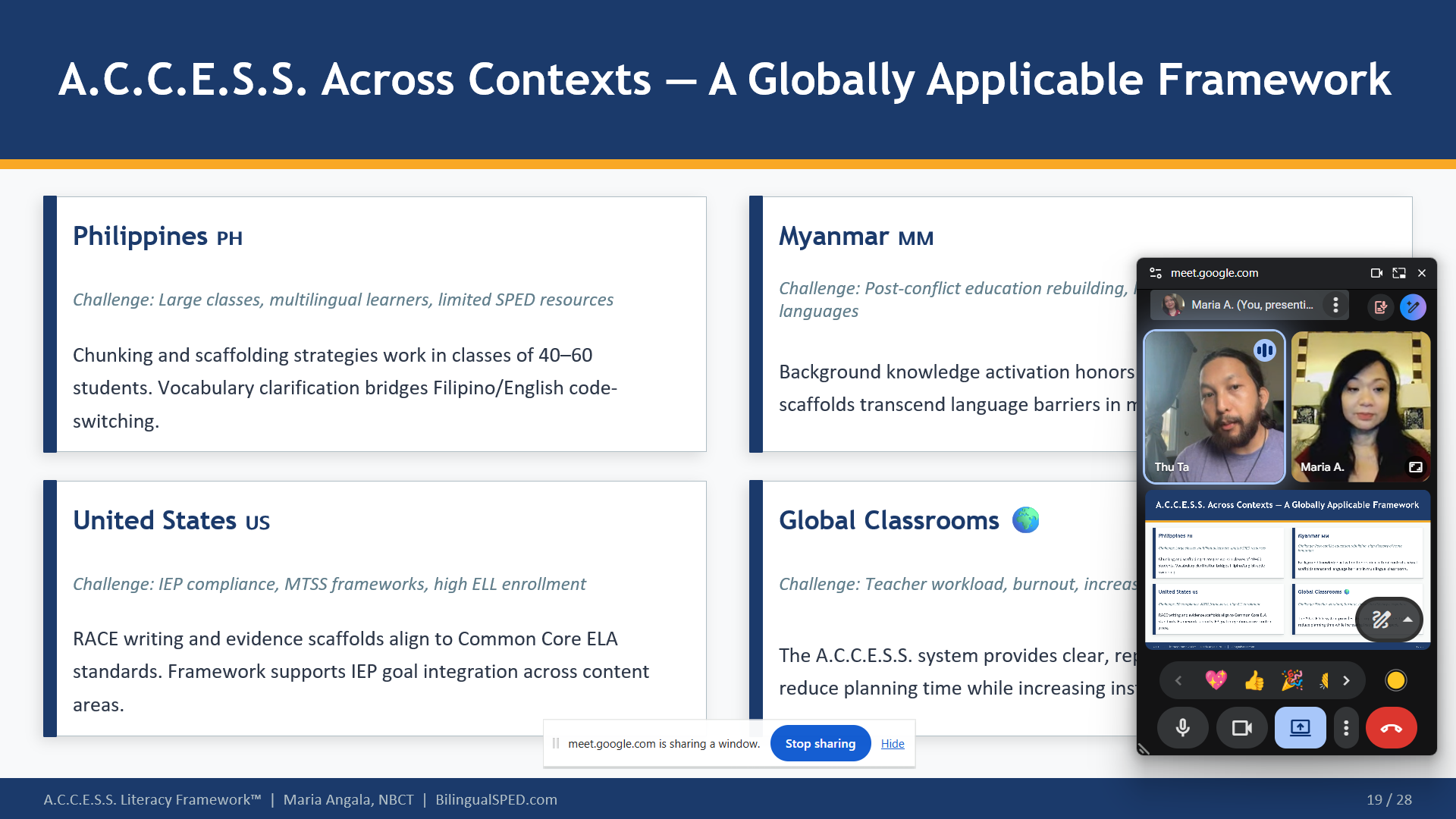
A national board–certified special education teacher and the founder of a Thailand-based nonprofit for displaced Myanmar educators sat down on a video call that kept cutting out — Bluetooth issues, bad audio, the whole mess. What came out of that hour says something true about how global education partnerships actually start: not in a boardroom, but between two people who finally stopped feeling alone in the work. This post walks through what we discussed, what the global data says about the literacy problem we’re both trying to solve, how the A.C.C.E.S.S. Literacy Framework™ became the bridge between us, and what a teacher anywhere can start using tomorrow.

How AI Became My Planning Support Tool— And Why I Still Make Every Final Call

When I use AI as a planning support for these students, I’m adding layers that I have to specify carefully. I’m not just saying “simplify.” I’m saying: shorter sentences, concrete vocabulary, familiar cultural references, no idiomatic language, visual cue compatibility, first-language cognate awareness if the student is Spanish-speaking.

AI Teacher Talk vs. Student Thinking Analyzer

This tool is a powerful next step after the Conversation Equity Analyzer. It moves from who is participating to how thinking is being developed.

The key distinction is:

Teacher talk is not the problem. The question is whether teacher talk creates pathways for student thinking.

A Human-Centered AI version of this tool helps teachers analyze: the balance between teacher explanation and student meaning-making, cognitive demand of questions, opportunities for reasoning, language rehearsal opportunities, and whether supports are temporary bridges toward independence.

AI Instructional Conversation Coach

This tool is a natural extension of our ELL / ML Language Acquisition Dashboard because academic discourse is one of the strongest pathways for multilingual learners to develop language while engaging with grade-level content.

The core design principle is:

All students think deeply. AI adjusts the language pathway—not the intellectual demand.

How to Support Dually-Identified Students (ELL + Special Education): Classroom Strategies That Actually Work

I remember the first time I sat in an IEP meeting for a student who was a “dual-identified” learner—new to English and identified with a significant cognitive disability. The room was divided. The ESL teacher spoke about language acquisition stages, while the special education team focused on processing deficits. I sat there thinking, “We are looking … Read more

AI Equity Starts With Teachers, Not Technology: Why Access Alone Isn’t Enough

Giving every student an AI tool isn’t equity — it’s just distribution. Real equity happens when a teacher decides how, when, and for whom a tool actually works, adjusting for culture, language, and disability along the way. The technology doesn’t do that part. You do.

A.C.C.E.S.S. AI Parent Communication Generator

A.C.C.E.S.S. AI Parent Communication Generator

A.C.C.E.S.S. Literacy Framework — 55-Minute Lesson Planning Generator

. This is the lesson plan AI tool that will help you design differentiated and scaffolded lessons based on your own objectives for every student in your room. Not just the ones who already fit. . The A.C.C.E.S.S. Literacy Framework™ Lesson Plan Template is the planning tool that closes the gap between what research says works and what teachers are actually … Read more

From QR Codes to Artificial Intelligence: How Human-Centered Innovation Leads the Future of Education

AI isn’t replacing teachers — it’s asking us to get more intentional, not less human. Using the same “student first, tool second” thinking behind Dr. Ranjitsinh Disale’s QR-coded textbooks, I walk through the Human-Centered AI Teaching Continuum and show you exactly how I use AI to build sensory accommodations, multilingual visual supports, and social stories — the stuff that actually moves the needle for multilingual learners and students with disabilities.




