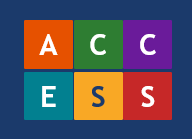
Building an International Community of Practice Around the A.C.C.E.S.S. Literacy Framework™

A literacy framework sitting in one classroom helps a handful of kids. The same framework, adapted and tested across different countries and contexts by a community of teachers, has the potential to shift outcomes for multilingual and neurodivergent learners at scale. That’s the vision behind building this out as a global community of practice, not a one-off resource.

What School Leaders Get Wrong About AI Adoption (And What Actually Works Instead)

Most schools buy the AI tool first and figure out the training later — or never. The research is blunt about this: adoption is climbing, but professional development isn’t keeping pace, and that gap is exactly where good intentions go to die. Empower the teachers first. The tool comes second.

Summer Read: Leading for Refugees and Newcomers: Cases for K–12 Educators

A special friend of mine sent me this book last week, Leading for Refugees and Newcomers: Cases for K–12 Educators. The kind you put down after a chapter and just… sit with. I haven’t finished it yet. Well, I haven’t even got into the middle of the chapters. But I sat with the first two … Read more

What Happens When You Teach “Analyzing Text Features” to Struggling Readers the Right Way

As a Special Education and English Learner teacher, I used this lesson with students who struggle with reading comprehension and written expression at my Washington DC school. In my role as the Digital Literacy Academy lead, I often see students who are essentially “information-blind” when they look at a complex page of text. For a … Read more

How to Collect and Use Progress Monitoring Data Without Burning Out

Sitting at your desk at 5:00 PM on a Friday with a mountain of crumpled sticky notes, half-filled clipboards, and the nagging feeling that you missed a data point for “Student A’s” social-emotional goal is a rite of passage in special education. But I’m here to tell you: it doesn’t have to be your reality. … Read more

How My Special Education & ELL Students Used “Making Inferences” Lesson — And What Actually Worked

As a Special Education and English Learner teacher, I used this lesson with students who struggle with reading comprehension and written expression at my Washington DC school. For my students—many of whom navigate the world through Individualized Education Programs (IEPs) for significant cognitive disabilities and the added layer of English language acquisition—abstract concepts like “inferencing” … Read more

Ten Years of Validated Literacy Growth: A Longitudinal Case Study of Reading and Writing Outcomes Under a Single Instructional Framework

This white paper presents sixteen years of longitudinal, third-party-validated evidence documenting sustained literacy and writing growth among historically underserved student populations – students with disabilities, English learners, and recently arrived Newcomer students – taught under a single instructional framework by one veteran practitioner across three school placements within a large public School District. Unlike self-reported classroom data, every figure presented here originates from the practitioner’s archived teacher evaluations scores, and specifically from its Student Achievement Data component, which the System’s official guidebook defines as a measure of “students’ learning over the course of the year, as evidenced by rigorous assessments,” approved in advance by school administration and validated after the fact by that same administration. The record spans eleven documented evaluation cycles between 2015 and 2025, drawing on nationally normed and vendor-administered instruments including the Scholastic Reading Inventory, Reading Plus, the EBWR writing rubric, and WIDA ACCESS. The data show a consistent pattern: Student Achievement Data scores at or near the maximum of 4.0 in every cycle recorded, a three-year cohort trend in which the percentage of students meeting or exceeding projected reading growth goals rose from 36 percent to 71 percent, and an independent, vendor-generated platform comparison in which the practitioner’s sections outperformed the school-wide average by a substantial margin. Taken together, this record offers a rare case study of sustainability – the same outcomes recurring across different schools, administrators, and populations – and offers preliminary evidence that the underlying instructional framework may be replicable beyond a single classroom.
AI Tools for Special Education Teachers in 2026: 20 Time-Saving Apps I Actually Use

I’ll never forget the “Spring Break of 2024.” I spent the entire week huddled in a coffee shop, surrounded by piles of data, trying to write 12 annual IEPs and plan a new vocational unit on office safety. By Wednesday, I was crying into my latte. I loved my students—especially my learners with significant cognitive … Read more

10 AI Prompts for Every Subject Area in Special Education

Welcome to the front lines of modern special education. If you’re reading this, you’re likely a few weeks or perhaps a few months into your first year, feeling that familiar mix of passion and “how-am-I-ever-going-to-finish-this-paperwork” dread. I’ve been where you are—standing in a classroom in Washington DC, balancing the needs of students with significant cognitive … Read more

How My Special Education & ELL Students Used This “Analyzing Text Features” Lesson— And What Actually Worked

I used this lesson with students who struggle with reading comprehension and written expression, and what I discovered was that for my students, a picture truly is worth a thousand words—especially when those words are embedded in a complex digital manual or a dense informational text. My name is Maria, and my classroom is a … Read more